Wine story
A Lively Tour of La Palma’s Liquid Treasures
When clouds drift up the crater like delicate curtains and the air already carries the salty taste of the Atlantic and adventure, you can be fairly sure you have landed in the southwest of La Palma.
4 min read
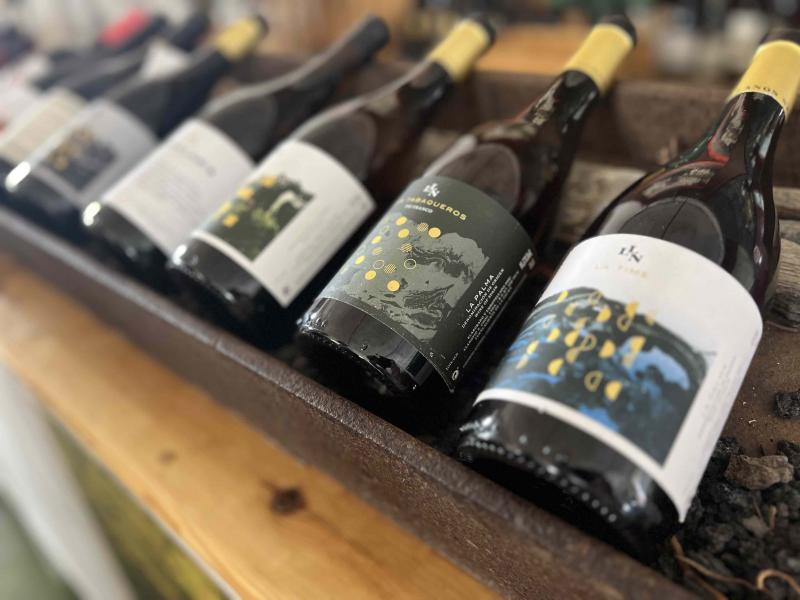
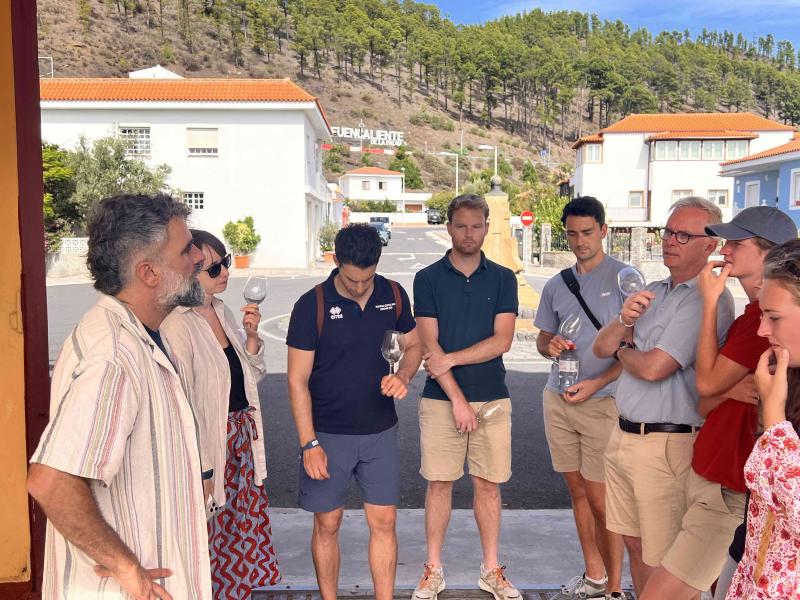
When clouds drift up the crater like delicate curtains and the air already carries the salty taste of the Atlantic and adventure, you can be fairly sure you have landed in the southwest of La Palma. More precisely: at Bodegas Teneguía, named after the volcano of the same name, which last spewed lava in 1971 – and apparently a little winemaking inspiration too.
Because what awaits us today is not a dry cellar tour full of dusty facts, but: Diego.
Wine guide, life of the party, walking wine encyclopaedia and probably the island’s secret stand-up comedian.
¡Hola y bienvenidos! – the start of a cheerful career in wine
Diego greets us with a mischievous smile and the first rule of Canarian winegrowing:
“If you’re not sweating here, you’re not drinking enough!”
And so begins our journey through vine rows, crater rims and the surprising world of white Malvasía. We – that is a couple from Holland, one from Italy, a small German hiking group, a woman from Madrid and probably the international wine-tasting version of the UN General Assembly.
Malvasía – like lava, only delicious
Right at the start, in the heart of the Teneguía winery, we get to taste a white Malvasía that not only tastes of sunshine and sea air but also carries an extra helping of patience: this wine fermented for a particularly long time in a stainless-steel tank, giving it an aromatic depth you might otherwise expect to find in philosophy students.
“It tastes like a walk by the sea when you’re barefoot and have no regrets,” whispers the Italian woman – we all nod reverently. Only Diego remarks drily:
“And that was the basic white. For 7 euros. When you try the sweet one in a moment, the sun will be shining on you from every direction.”
Negramoll – the charming red with a mighty thirst
Next, Diego pours us a Negramoll – a Canarian rarity. Light, ruby-red, easy-drinking. The perfect wine for accidentally stumbling from an afternoon straight into the sunset. According to Diego, it is “the wine for people who aren’t red-wine drinkers but still like to join in the conversation”.
By this point, the German hiking group is analysing small glasses with great seriousness – while the Dutch couple is already gazing at the labels with a slightly lovestruck look. And then it arrives: the sweet wine.
Malvasía dulce – liquid gold from a volcano’s hand
This Malvasía is not just sweet, but almost otherworldly. Bottled in half-litre bottles, it costs up to 57 euros – and honestly, every drop is worth it. From the very first sip, one thing is clear: this is not a dessert wine, it is a poem flowing through your veins.
“You don’t need to eat anything else with this,” murmurs someone in the group – probably the woman from Madrid – “just drink, talk and be in love.”
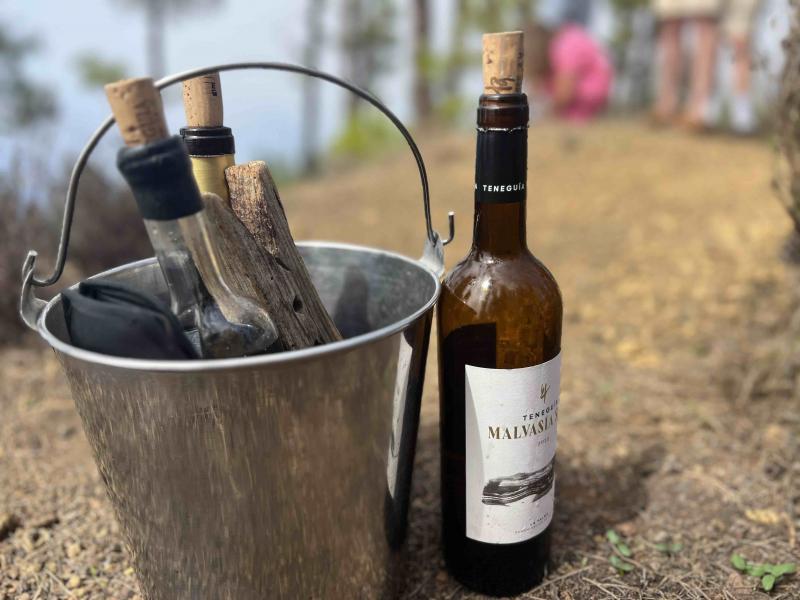
Gobelet training and pride in old roots
Outside, Diego leads us to the vines. Gobelet training is practised here – a classic bush-vine form in which the vines grow low to the ground. Ideal for this windy, dry region.
“It’s like yoga for vines,” says Diego. “Lots of sun, little evaporation – but no good for machines. Only for people with backache.” And he grins.
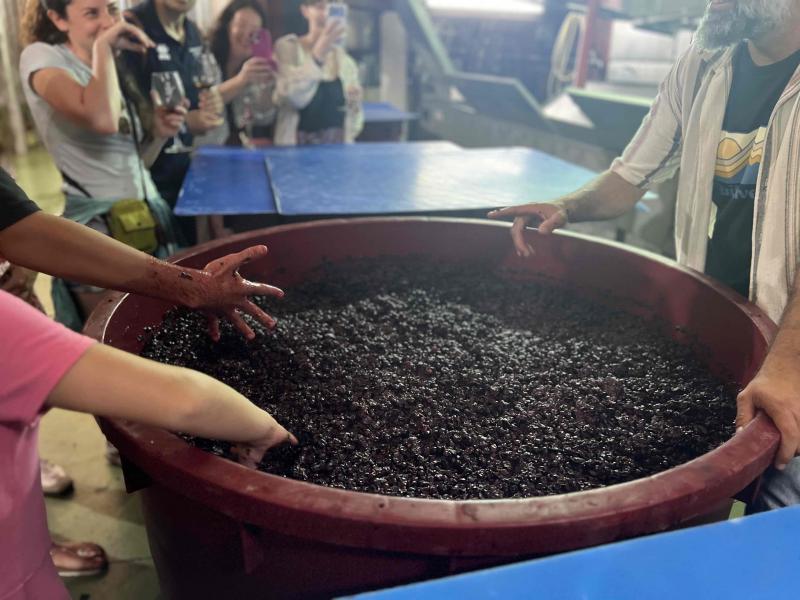
The 200 winegrowing families on La Palma do genuine manual work. They bring their grapes – some from ancient, ungrafted vines – to the cooperative, where they are made into wine. A kilo of late-harvest grapes can fetch up to 7 euros here – more than some supermarket bottles end up costing.
And this is precisely what makes it special: phylloxera never reached La Palma.
While the rest of Europe was frantically grafting onto American rootstocks in the 19th century, the Canarian vines simply remained… themselves. On their own roots. Strong. Proud. Free.
The Teneguía winery – wine with lava DNA
Bodegas Teneguía, situated at the foot of the volcano, is the island’s largest winegrowers’ cooperative and processes around 300,000 kilos of grapes each year. The cellar brings together concrete vats, stainless-steel tanks and oak barrels, modern technology and traditional knowledge.
The winery was founded in 1950 – a year before there was even a road leading to it. Today, more than 200 families keep the cooperative alive. Their vines grow on terraces, in crater hollows, on lava slopes – wherever people and nature have managed to agree on a glass.
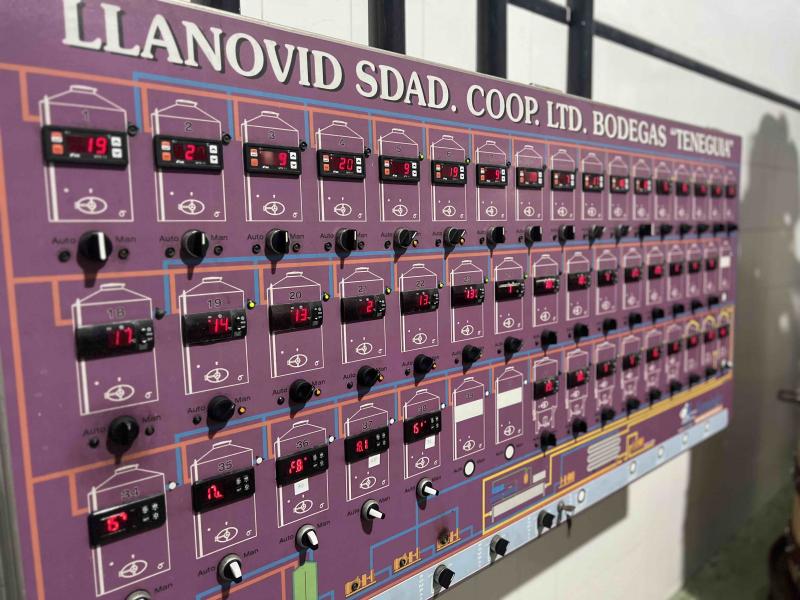
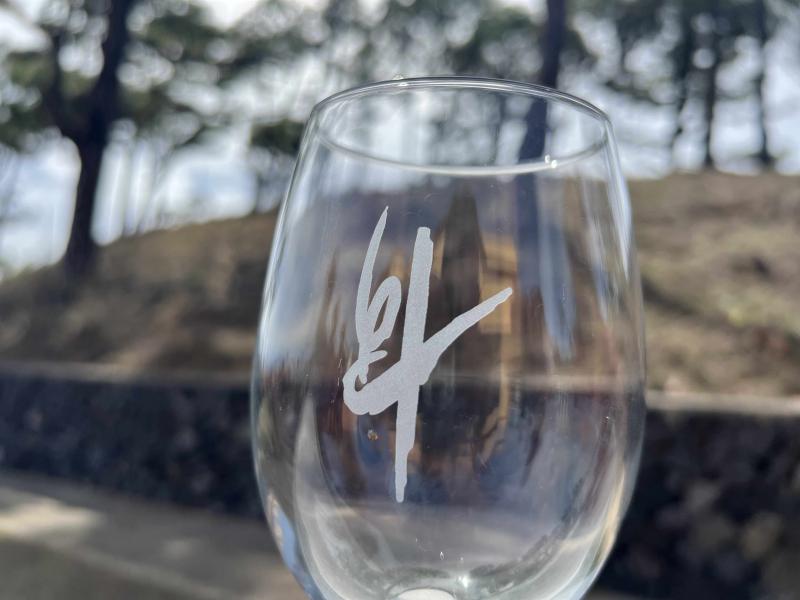
And finally: clouds that taste of salt
As we enjoy the last sip of Malvasía, wisps of mist drift up the slope like weightless scarves. Diego points into the clouds:
“Here it comes, that salty note. It’s on time today.”
We laugh – but somehow, at that moment, the wine really does taste of the sea. Or of magic. Or of Diego.
If, just once in your life, you want to drink a wine that grew on a volcano, was harvested with love and whose roots have never heard an American accent – then go to La Palma. Let Diego guide you through gobelet-trained vines, drink sweet Malvasía and wait until the clouds tell you just how salty life can taste.
Die Weinpost