Wine book
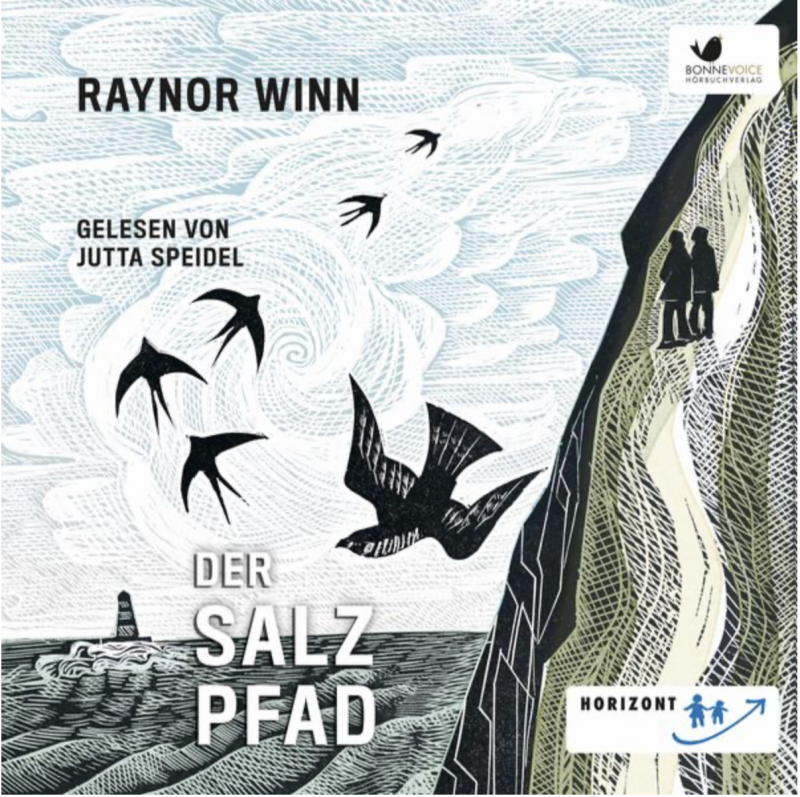
The Salt Path
This book is both a travelogue and a family story. Rayner and Moth are in their early fifties and lose their farm through bad investments and a rigid legal system bound by formalities. At the same time, Moth receives a grim medical diagnosis that foretells his physical decline.
2 min read

From now on, they receive £50 a week from social services. They have to apply for housing, so none is available yet. Their children are studying and cannot support them; friends and relatives do not help either.
It can happen that quickly – one wrong decision, one bad diagnosis, and in a second everything dissolves into nothing.
The two eventually decide to walk the South West Coast Path in England, the country's longest walking trail at over 1,000 km. It is an attempt to escape homelessness for the time being. “I think I now know what it feels like to be homeless, like a balloon that has broken free and is drifting in the wind. I am afraid.”
This book is different from others of its kind, such as Bill Bryson's “A Walk in the Woods”. In Bryson's book, two old men walk the Appalachian Trail in America to prove to themselves that they are not old yet and that funerals and illnesses cannot be all there is to life. That book is very amusing, and the film with Robert Redford and Nick Nolte even more so.
Here, the walk is born of necessity. Moth and Raynor do not set out to find themselves because their old life has become boring and meaningless. On the contrary, they were happy and content before. Now they set off to shield themselves from the bitter truth. When they tell people they meet their real reasons, they encounter rejection. So they devise a story about taking time out and enjoying life again. They immediately receive admiration and acceptance.
They hold up a wonderful mirror to our superficial world, full of denial and fear. But they walk together, and Moth even regains his old strength without the prescribed medication. A future becomes possible again. New possibilities open up, both within and around them. As does surviving numerous sunburns, downpours and weeks of noodles and tea.
The deeply affectionate language carries the whole book with warmth and vulnerability. After all, it is a true story experienced by the author herself.
I am already looking forward to the second part: “The Wild Silence” – apparently, another farm is on the horizon here.
Die Weinpost