Wine knowledge
What's New in the World of Wine?
The wine world is changing rapidly—and not just in traditional markets. Bordeaux is struggling with overproduction, climate change demands new solutions, China is emerging as a player, and even gadgets are seeing exciting innovations.
3 min read
1. The Situation in Bordeaux – Tradition in Crisis
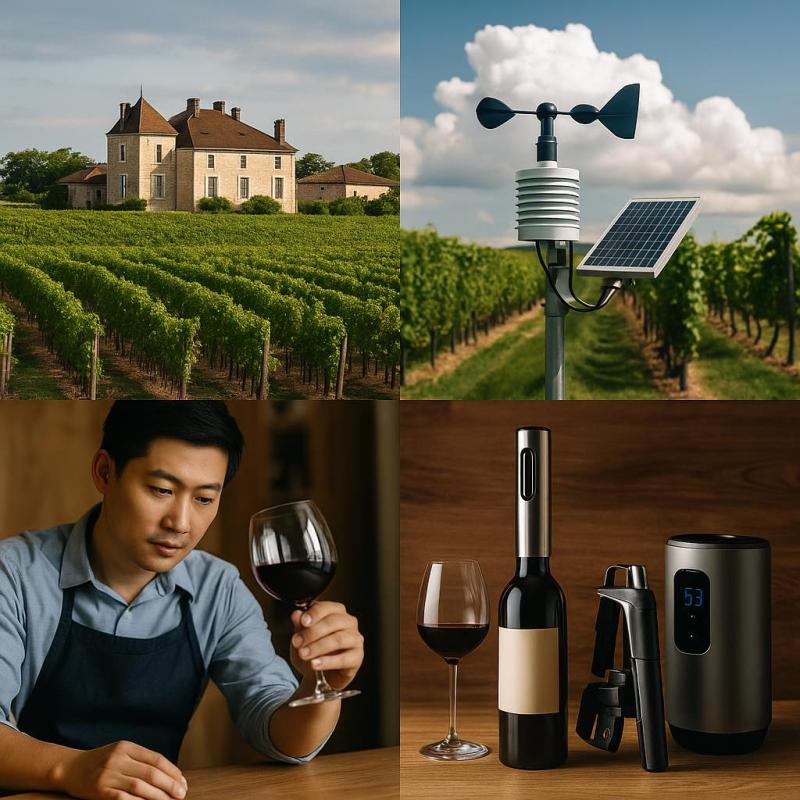
Few wine regions embody prestige and tradition quite like Bordeaux. Yet this proud region is in crisis. Sales of basic Bordeaux wines have been declining for years. In 2023, producers reported overproduction of more than one million hectolitres, and cellars are full. Many winegrowers find themselves forced to take vineyards out of production or sell their wines below production cost.
The EU and the French government are stepping in: millions are being allocated to support the conversion of wine into industrial alcohol to stabilise the market. At the same time, leading estates continue to invest in premium products that remain in demand on the global market. Bordeaux thus finds itself in a paradoxical position: at the top of the world and fighting for survival at the same time.
2. Climate Change – Viticulture in Transition
Climate change has long been a reality in the vineyards. Higher temperatures, more extreme weather, late spring frosts and summer droughts are creating problems for winegrowers worldwide. Regions such as the Mosel and parts of Burgundy benefit in the short term from warmer years, as grapes become riper and more concentrated. Other areas, however, suffer severely from drought.
Experiments with new growing methods are becoming increasingly common: drip irrigation, cover crops between the vines and even attempts to establish vineyards at higher altitudes and in more northerly regions. England, for example, has developed into a serious producer of sparkling wines in recent years—a direct effect of global warming.
3. New Grape Varieties – Adapting to the Future
Traditional varieties such as Cabernet Sauvignon, Pinot Noir and Riesling have their strengths—but many are sensitive to heat or disease. That is why winegrowers are increasingly experimenting with new varieties.
PIWI vines (fungus-resistant varieties) such as Solaris and Regent reduce pesticide use.
New crosses for hot regions, such as Caladoc and Marselan, are gaining ground.
In 2021, six new grape varieties were officially authorised in Bordeaux for the first time, including Touriga Nacional (known from Portugal) and Marselan, to better cope with the heat.
This willingness to embrace change is essential if viticulture is still to exist in 30 years' time.
4. China – From Consumer to Producer
For a long time, China was of interest primarily as a consumer market. Bordeaux, Burgundy and Napa Valley did good business there with status wines. Now, however, China is growing wine grapes on a large scale itself. Regions such as Ningxia, on the edge of the Gobi Desert, are regarded as hotspots of Chinese viticulture.
Major investments are flowing into technology, winery facilities and international consultancy. The first wines are making their way into international rankings and surprising critics with their quality. China no longer wants to be just a buyer, but an exporter too. Whether it can establish a lasting presence on the global market remains to be seen—but the momentum is impressive.
5. New Wine Gadgets – Smart Helpers for Wine Lovers
Beyond the major issues, there are exciting developments in everyday life too. Wine gadgets have seen a surge of innovation in recent years:
Electric corkscrews make opening bottles effortless.
Coravin systems allow wine to be drawn from a bottle without removing the cork—ideal for tastings or when you do not want to drink the entire bottle at once.
Smart wine coolers maintain the perfect drinking temperature via app control.
Even digital decanters are now available, which claim to mature wine in seconds through micro-aeration.
Conclusion – Between Crisis, Innovation and New Beginnings
The world of wine is undergoing a transformation: traditional regions such as Bordeaux are fighting for survival, climate change is forcing adaptations, new grape varieties and regions are emerging, China is stepping up as a serious producer, and technology is delivering gadgets that make drinking wine more convenient.
One thing is clear: wine remains a reflection of its time—rooted in history, yet constantly changing.
Die Weinpost