Wine knowledge
Serving Wine Properly
For a fine wine to reveal all its positive qualities, it needs our help. The temperature should be right, and the right glass is also essential to fully enjoying wine. Wine also needs to rest before we open the bottle and serve it.
4 min read
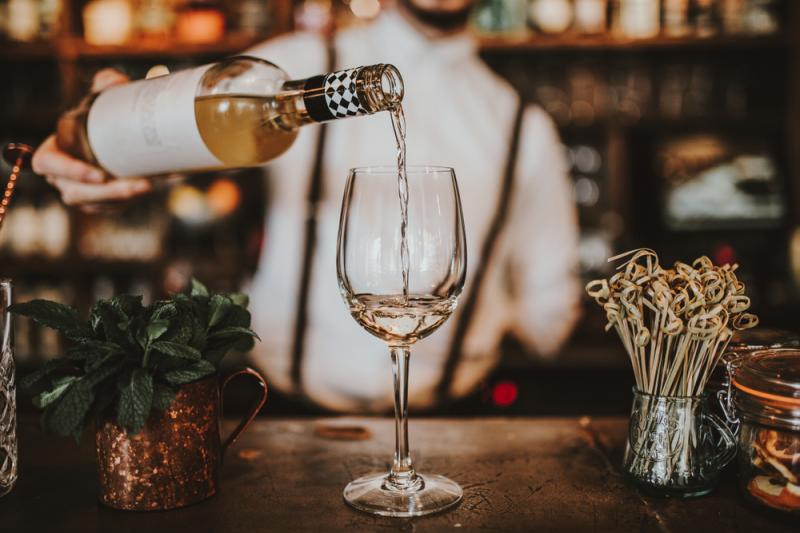
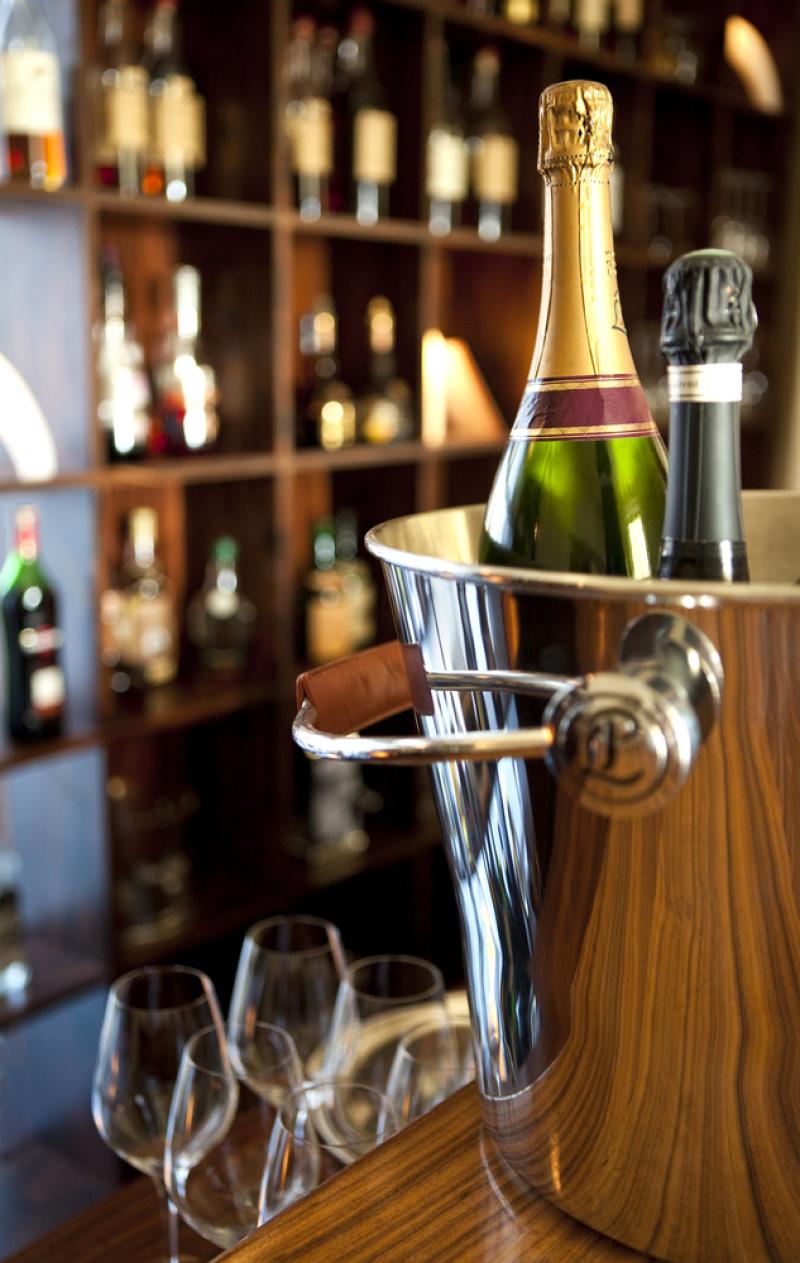
Anyone who pays attention to these small details will be able to enjoy what awaits them in the glass and will be rewarded with compliments from their guests.
The Right Drinking Temperature
The exact drinking temperature is open to debate. Many people habitually prefer their wine colder or warmer. Generally speaking, white and rosé wines are drunk chilled, while red wines are served at a warmer temperature.
There is, however, a trend towards enjoying wine cooler. Just a few years ago, red wines were drunk much warmer.
A fine red wine should have a starting temperature of around 15 degrees Celsius. Temperatures drop considerably for Prosecco and sparkling wine. These wines should be no warmer than six degrees.
Fine sparkling wine and red Sekt can be served a few degrees warmer. Be sure to cool the bottles slowly. A shock in the freezer would destroy the valuable flavour compounds.
Wine coolers are, of course, perfectly acceptable and should be on every table.
Simple white wines can be brought to the table chilled to around eight degrees.
High-quality white wines are best enjoyed at twelve degrees. Light red wines can be one degree warmer.
Fine Bordeaux or Burgundy wines can take the highest temperatures. However, no fine wine should be brought to the table warmer than 18 degrees. Here, too, make sure it warms up slowly over several hours.
A fine bottle from the cellar does not belong on the radiator! Various types of wine thermometer are commercially available to check the wine's temperature.
With a little practice, you will be able to judge the temperature of the wine without any aids.
More on this under - Drinking Temperature
Opening the Wine Bottle Properly
Open chilled white wines just before pouring. Red wine needs a little more time for its components to unfold. It should be opened a few hours before serving.
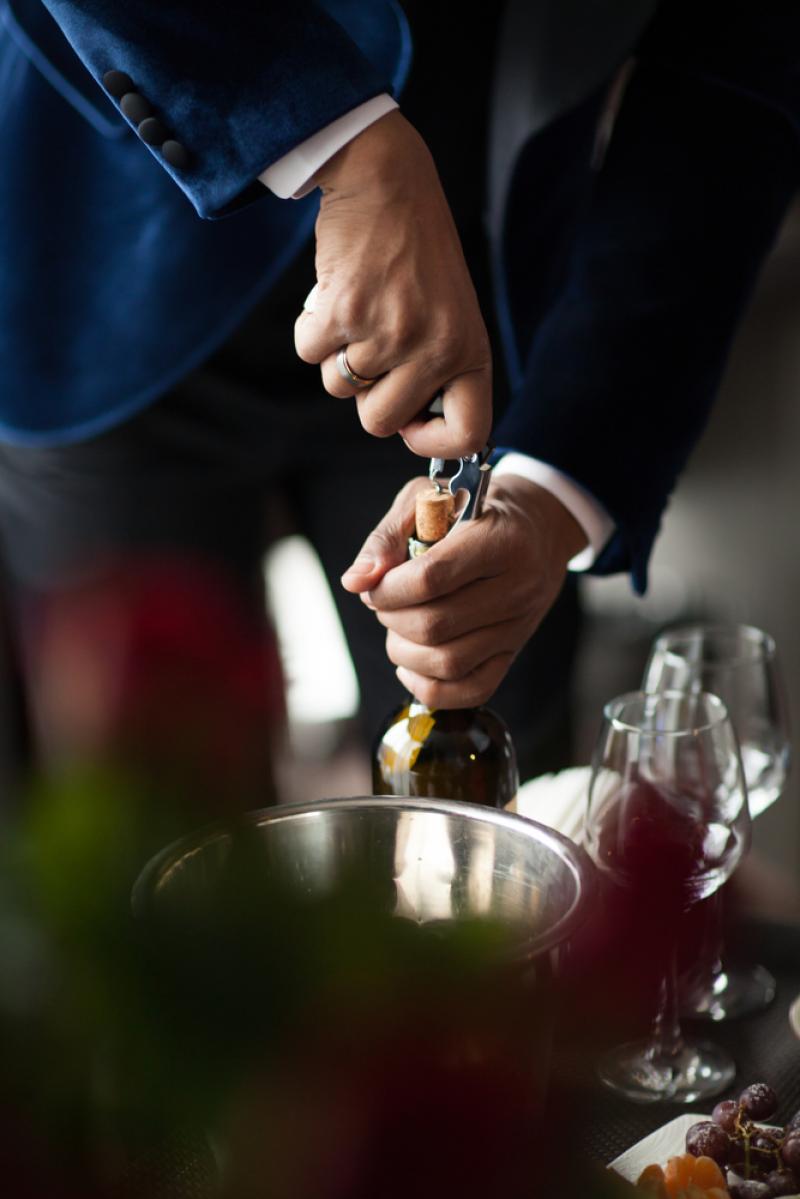
If you have a bottle sealed with a screw cap or crown cap in front of you, it can be opened without difficulty in preparation for serving. Most wines, however, are sealed in the traditional way with a natural cork.
Over the cork is a plastic or metal capsule. This must first be removed with a sharp knife. Metal capsules should always be cut off below the neck of the bottle, as the wine must not come into contact with them when it is poured later.
Plastic capsules in particular often have a tear strip, making them easier to open. At this point, you cannot proceed without a corkscrew. These tools come in countless designs: modern, kitschy, playful or simply practical.
The last of these is preferable. The corkscrew should be easy to operate with one hand, as you will need the other hand to hold the wine bottle. Corkscrews with lever arms are particularly easy to use.
Ideally, the cork will slide out slowly and in one piece.
But what happens if the cork breaks and all you manage to pull out is a small stub?
Broken corks can be pulled out of the bottle neck by trying to grip the cork at an angle.
If the cork is lodged very firmly and deep inside the bottle, you can try to remove it using a strong piece of string knotted at the end. With a high-quality corkscrew, however, this nightmare scenario should largely be avoided.
At last, you have done it: the bottle is open. In convivial company, it is by no means selfish to pour yourself the first sip. This allows you to check the temperature and taste, and any cork crumbs will not end up in your guests' glasses.
A full glass is not necessarily a sign of your generosity. Wine connoisseurs fill glasses only halfway, allowing the aromas to collect in the upper part of the glass.
The Right Wine Glass
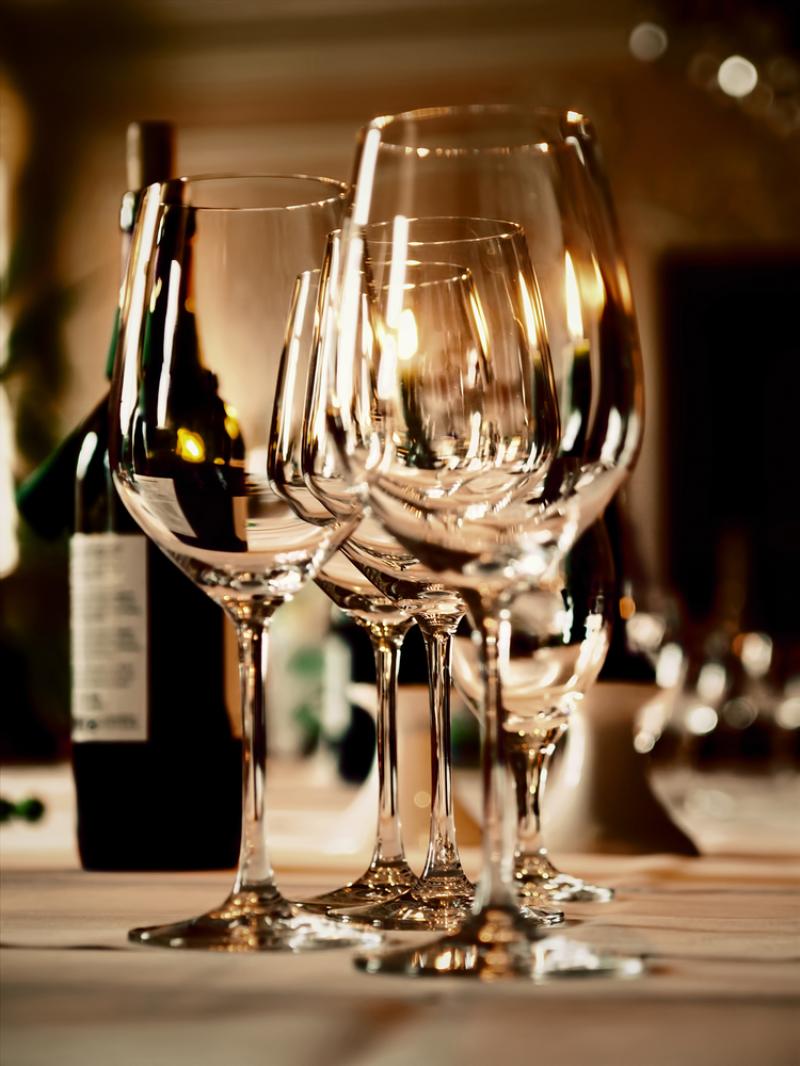
If the wine not only tastes good but is also served in the right glass, the presentation will impress even seasoned wine connoisseurs. So before inviting guests, check your collection of glasses.
Glasses with a sturdy stem are used for white wine. A glass that tapers towards the top allows aromas to escape more slowly. Aperitifs and dessert wines are drunk from small glasses.
Sparkling wine is enjoyed from flutes or coupes. Coupes have the disadvantage that the aroma dissipates quickly here, too. It hardly needs mentioning that the glasses should be spotlessly clean.
It is also important that there is no washing-up liquid residue on the glass, as this could impair the taste and cause sparkling wine to produce fewer bubbles.
If the wine changes during a meal, the glasses should be changed too. At an informal gathering, fresh glasses should be provided at least when switching to a different type of wine. If you are setting a festive table, all the glasses should already be placed on the table.
The arrangement follows the individual courses, from the outside in.
The Right Sequence of Wines
Which wine goes with which food is partly governed by certain rules and partly a matter of experience and taste. A meal usually begins with an aperitif. Prosecco, sherry or a light, refreshing cocktail are suitable choices.
You should choose the wine according to the main course. White wines go well with white poultry meat or light vegetable dishes. Dark meats such as game or steak are served with red wine.
Special dessert wines and sweet sparkling wines go well with dessert. With coffee, you can offer a fruit brandy or grape brandy.
The Right Sequence of Wines Explained by Winemakers
A Few Minor Embarrassments
You have actually done everything right. The bottle is uncorked, and the appropriate glasses are sparkling on the festive table.
The first sip reveals whether the wine lives up to its promise or whether something is amiss… Small crystals that look like sugar in the glass are no cause for panic.
These are tartrate crystals: a harmless sign of cool storage in wines bottled early. If the wine tastes corked, however, it is a different matter. This suggests unclean or even mouldy corks.
In this case, the retailer must take the wine back. Excessive sulphuring is almost unheard of in high-quality wines. It manifests itself through headaches and a scratchy throat.

Die Weinpost