Wine knowledge
When Algorithms Save the Vines
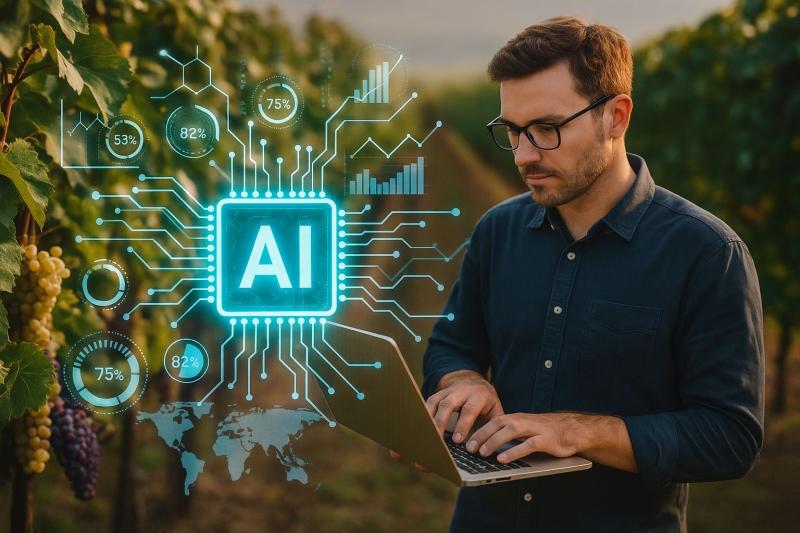
Artificial intelligence is moving into the vineyards. What sounds futuristic has long been a reality – from sensors in the soil to algorithms that determine the optimal harvest date.
1 min read
Precision Viticulture in Figures
Water consumption: AI-assisted irrigation can reduce consumption by up to 30 percent.
Crop protection: Drones that detect vine diseases reduce chemical use by up to 40 percent.
Quality: Algorithms predict the sugar content of grapes and help identify the perfect harvest date.
Research Projects in Germany
Geisenheim University is testing drones that detect powdery mildew at an early stage.
KIT in Karlsruhe is developing models to predict yields.
Start-ups such as VitiBot offer autonomous tractors for viticulture.
Digital Marketing
AI is present not only in cultivation but also in marketing: online shops use algorithms to give wine buyers personalized recommendations. Virtual wine tastings with AI-controlled avatars are no longer science fiction.
Risks and Criticism
Some winegrowers fear a “dehumanization” of viticulture. Others point to high purchase costs. Yet the efficiency gains speak for themselves.
Conclusion
The future of viticulture is data-driven. AI will not replace the winegrower – but it will be a powerful tool that enhances quality, sustainability and competitiveness.
Die Weinpost