Fish & seafood · Oysters, served plain
A Sip of the Sea Needs No Heavy Wine
Muscadet Sèvre et Maine sur lie, Chablis or Champagne Brut pair well with plain oysters. Their freshness and usually restrained oak influence give the delicate, salty flesh room to shine, though lemon and vinegar sauce can change the choice.
- Salty
- Umami
3 min read · Rebe & Traube editorial team
The Shell Takes Centre Stage
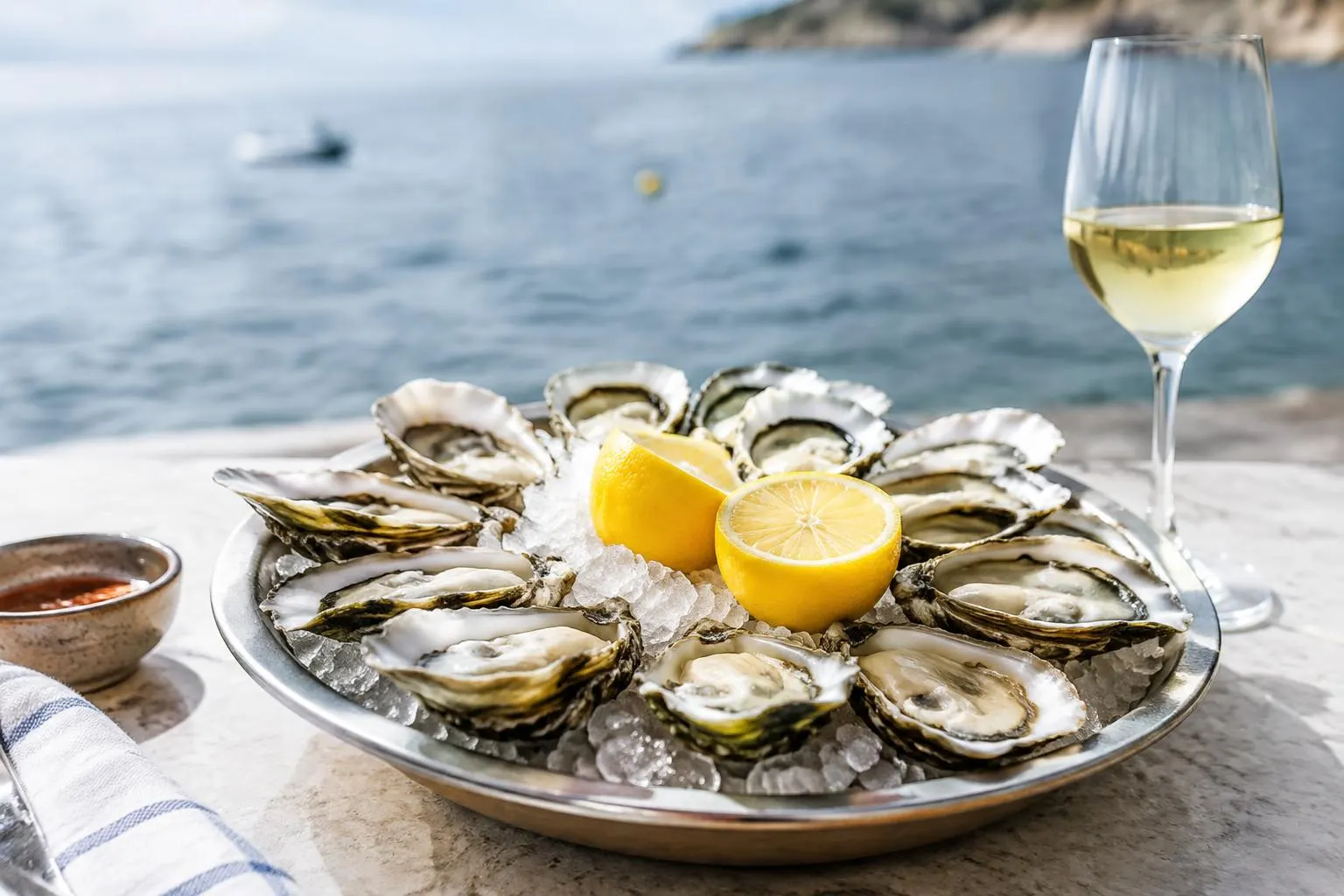
An opened oyster is not a dish to stir absent-mindedly. It rests in its irregular shell, glistening, asking for a brief moment of attention. Its flesh may be firm or soft, its flavour mild or intense, and its salt concentration varies too. That alone makes a single supposedly perfect wine a rather blunt answer to such a delicate matter.
Muscadet Sèvre et Maine sur lie is a good starting point. A fresh Chablis or balanced Champagne Brut are other convincing options. Look for a dry, lively style without powerful fruit, high alcohol or pronounced oak. The wine can make its presence felt, but it should not treat the oyster as a little appetiser before its own grand entrance.
Salt Softens the Wine
Oysters bring salt and umami, often with a delicate natural sweetness too. Salt can make wine seem fuller and smoother, softening bitterness and harsh tannins. Umami works partly in the opposite direction. It can make wine seem more bitter, astringent and acidic, while fruit and sweetness recede. How this balances out in any particular glass depends on the oyster, the wine and individual perception.
That is why fresh white wines low in tannin are usually the straightforward choice. A heavy red wine can overwhelm the oyster with its structure and seem unpleasantly astringent alongside umami. Metallic impressions are perceived in some combinations, but they are not a universal law of nature. The interplay of salt and acidity helps explain why white wine can be the more enjoyable direction, without turning that into a rigid ban.
Descriptions such as mineral or salty are sensory terms when applied to wine, not a guarantee of any particular chemical match with seawater. A wine does not automatically work because its vines grow near the coast. What matters is freshness, body and aroma in the glass. A restrained white wine from another region can also work very well if it has these qualities.
Three Options for the Half Shell
Muscadet Sèvre et Maine sur lie often combines lively acidity with a lean body and a delicate texture from time on the lees. This is particularly appealing with plain oysters. The style should be fresh and balanced, not simply as austere as possible. If you particularly want to notice the delicate sweetness of the flesh, start with a small sip rather than a large, aromatically dominant mouthful of wine.
As a Chardonnay, Chablis often has a taut, clean character. A style with little oak influence is easier to pair here than a lush, vanilla-scented version. With a few drops of lemon on the oyster, the wine needs enough acidity of its own. Acidity in food makes wine seem less acidic, fuller and sweeter. This can leave an already soft wine tasting flat, while a fresh Chablis is more likely to retain its definition.
Champagne Brut is the sparkling option. Its acidity and, depending on how it is made, yeasty notes can work well, though not everyone appreciates bubbles equally alongside salty oysters. Extremely austere sparkling wines are not automatically better. With a punchy shallot-and-vinegar sauce, even a good companion can fade into the background. Less sauce often helps more here than a more elaborate bottle. Accompaniments are similarly important with smoked salmon.
Interactive wine selector
How do you prepare Oysters, served plain?
The default is a typical preparation. Adjust the settings to how your dish actually tastes, and the suggestions update instantly.
Wine styles to suit your dish
Choice 1
Champagne or grower-produced Sekt brut
Why it works: it is low in tannins and handles umami well and salt makes it softer and rounder.
Choice 2
Grüner Veltliner
Why it works: it is low in tannins and handles umami well and salt makes it softer and rounder.
Get to know the Grüner Veltliner grape varietyChoice 3
Sauvignon Blanc
Why it works: it is low in tannins and handles umami well and salt makes it softer and rounder.
Best avoided – Sweet red wine, such as Ruby Port. As a rule here, it is much sweeter than the dish and tastes cloying alongside it. Individual wines may vary.
The suggestions are wine styles, not specific bottles. Taste is personal, so feel free to try something that breaks the rules.
First Plain, Then a Drop
Try an oyster without lemon first, then take a small sip of wine. Add a few drops of lemon juice to the next comparable oyster and repeat the sip. Notice whether the wine seems softer and fuller or loses its tension. If you like vinegar sauce, test it separately and sparingly rather than filling every shell with it straight away.
For an alcohol-free option, still water with a fairly neutral taste is an excellent accompaniment. A fresh dealcoholised white wine that tastes on the dry side is also worth trying, but it may seem sweeter or thinner beside the oysters than expected. Raw oysters also require reliable refrigeration and hygienic handling. Lemon does not render potential pathogens harmless. Raw oysters are not a suitable choice for pregnant people or those with weakened immune systems, and wine does nothing to change that.
Brief and honest
- Muscadet Sèvre et Maine sur lie – Freshness and a delicate lees-derived texture give the plain oyster room to shine.
- Fresh Chablis with little oak influence – Lively acidity holds its own even alongside a little lemon. More about Chablis
- Champagne Brut – Acidity, bubbles and delicate yeasty notes can complement salty oysters.
Wine advisor: find the right grape variety in three questions · All grape varieties at a glance
Probably not – Heavy, strongly oak-influenced red wine. Tannin and intense aromas can overwhelm the oyster. Umami can further accentuate astringency.
Alcohol-free – Still, neutral-tasting water is an excellent choice. A fresh dealcoholised white wine is an option, but taste it with the oyster to check for unexpectedly pronounced sweetness.
How helpful was this article?
No sign-up and no cookies. We only store the stars, the article and a non-traceable identifier that changes daily to prevent repeat ratings. Ratings appear only after editorial review.
Try this at home
Try an oyster plain, followed by a small sip of wine. Repeat the comparison with a similar oyster and a few drops of lemon. Notice whether the wine seems fuller or retains too little freshness.
What this article is based on
- WSET Level 2 Award in Wines, Spezifikation mit dem Kapitel zu Wein und Speisen
- Wine & Spirit Education Trust (WSET), How to pair wine with your favourite takeaway meals
The scenes in this article are illustrative stories, not reporting. The basic rules follow WSET teaching; personal taste may differ.