Taste basics · Fried Calamari with Lemon
When Lemon Wakes Up the Wine
Dry Riesling, a fresh Albariño or a lean Muscadet pair well with salty calamari and lemon. The wine’s acidity refreshes the palate after the crisp coating, while sufficient acidity keeps it from tasting flat alongside the lemon.
- Salty
- Sour
- Rich & creamy
3 min read · Rebe & Traube editorial team
A Little Squeeze with Quite an Impact
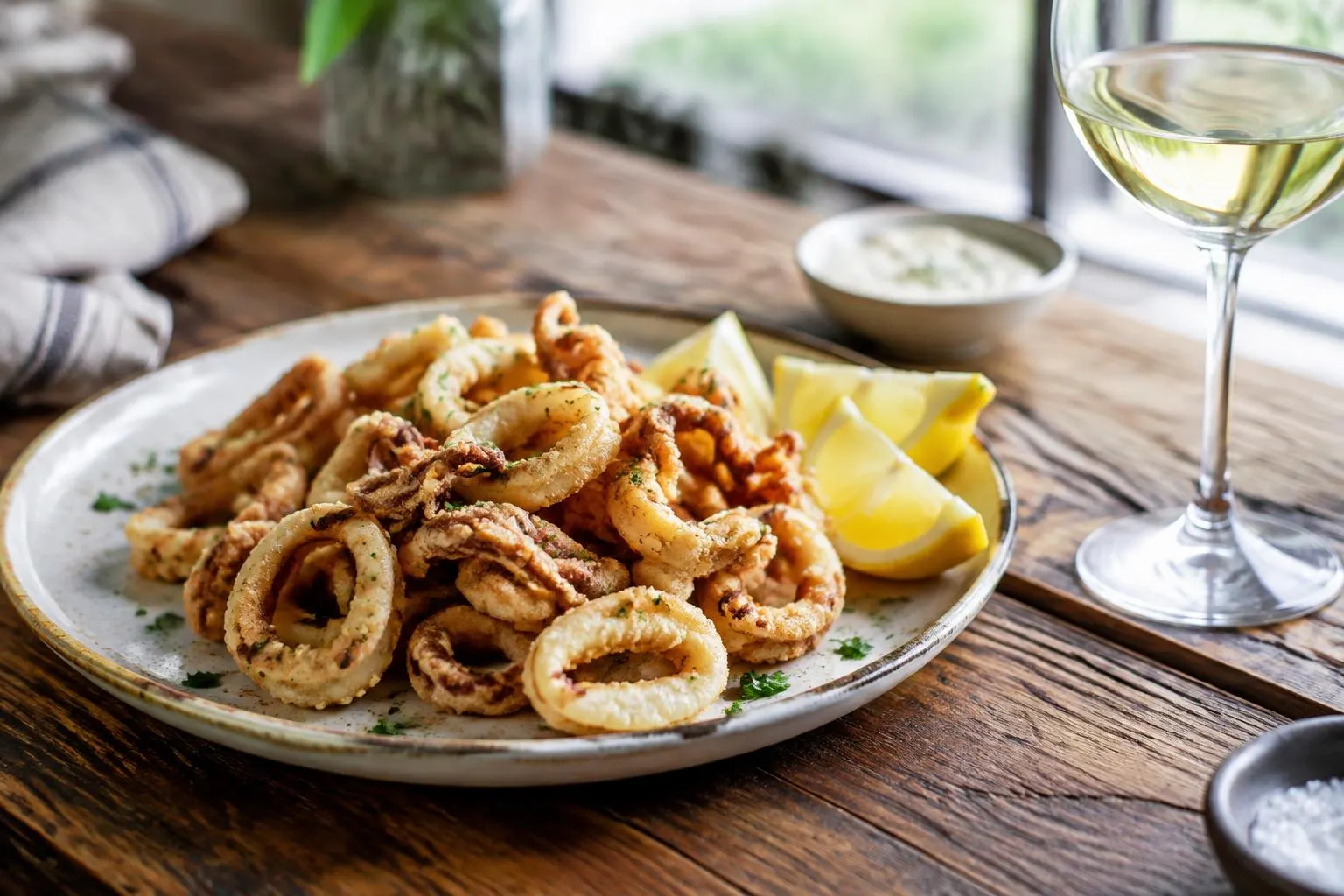
The calamari are still crackling, with a few stray grains of salt scattered across the plate. Beside them, a lemon wedge waits for its moment. This is no occasion for an especially powerful wine. A dry Riesling, a fresh Albariño or a Muscadet with lively acidity will usually bring more pleasure than a broad, oak-driven white. The seafood alone does not determine the pairing. The coating, frying oil, salt and lemon juice all have a say.
Even a small squeeze changes the balance on the palate. A wine that seemed pleasantly taut on its own can suddenly feel softer after a lemony bite. That is neither a fault nor proof of some secret lemon trick. Acidity in food makes wine seem less acidic, but fuller and sweeter. The wine therefore needs enough acidity of its own to stand up to the tangy dish.
Salt Is Not the Adversary
Salt and acidity play different roles. Salt can soften a wine’s perceived bitterness and tannic feel. The wine then often seems smoother and fuller. Acidity in food, by contrast, mainly shifts the perception of the wine’s acidity. With calamari, both arrive on the same fork, but it is useful to think of them separately.
This does not make every powerful red wine an ideal companion. A tannic wine often brings unnecessary resistance to delicate fish and a light coating. Salt can soften that impression, but there are limits to what it can make disappear. Adding extra salt simply to make a sip more agreeable would also be a rather roundabout solution. Better to choose a wine that suits the plate in the first place.
The acidity in wine, in turn, brings freshness after a fatty bite. It does not make the fat disappear chemically; rather, it makes the next bite feel more inviting to the senses. With fried foods in particular, this interplay of crispness, succulence and freshness is appealing. The same idea works with trout with lemon butter, with a softer texture and no coating.
Three Bright Routes to the Plate
Dry Riesling works particularly well when the lemon makes its presence felt. Citrus fruit and lively acidity keep the pairing bright. A lean style without excessive alcohol leaves room for the delicate flesh. With a great deal of lemon juice, though, a cautious first sip is worthwhile: even a wine with pronounced acidity has its limits.
Albariño is a lovely alternative if you want a little more juicy fruit and body. It can also accommodate a small serving of garlic mayonnaise, provided this does not take over the dish entirely. Muscadet often has more restrained fruit and suits a pared-back version with little seasoning. Subtle lees ageing can add texture without necessarily making the wine heavy.
With a creamy sauce, the wine can have a little more substance. Add chilli or a sweet chilli sauce, however, and the task changes. Heat often sits less comfortably with high alcohol, while sweetness makes a dry wine seem more austere. A fruity Riesling with a little residual sweetness is then often a more sensible choice. Prawns with garlic also show how strongly a sauce can steer the pairing.
Interactive wine selector
How do you prepare Fried Calamari with Lemon?
The default is a typical preparation. Adjust the settings to how your dish actually tastes, and the suggestions update instantly.
Wine styles to suit your dish
Choice 1
Champagne or grower-produced Sekt brut
Why it works: acidity and freshness cut through the fat and salt makes it softer and rounder.
Choice 2
Sauvignon Blanc
Why it works: acidity and freshness cut through the fat and it is low in tannins and handles umami well.
Choice 3
Dry Riesling
Why it works: acidity and freshness cut through the fat and salt makes it softer and rounder.
Get to know the Riesling grape variety
Best avoided – Sweet red wine, such as Ruby Port. As a rule here, it is much sweeter than the dish and tastes cloying alongside it. Individual wines may vary.
The suggestions are wine styles, not specific bottles. Taste is personal, so feel free to try something that breaks the rules.
A Small Experiment with a Lemon Wedge
Try this at home with three small pieces of unseasoned cucumber and a glass of dry white wine. Taste the wine on its own first, then after a lightly salted cucumber slice, and finally after one with a few drops of lemon. Notice whether the bitterness, fruit and perceived acidity seem different. This is no laboratory test, but it makes for a surprisingly revealing conversation at the table.
For the meal itself, a heavily oaked, low-acid Chardonnay is a somewhat risky choice. Its soft breadth can seem tired alongside the lemon, while toasty notes overwhelm the delicate dish. Without lemon juice and with a robust sauce, the same style may well fare better. For an alcohol-free pairing, a dry dealcoholised white wine with noticeable acidity works. Check its sweetness, as some versions taste more like fruit juice than a refreshing counterpoint. Sparkling water with a sparing amount of lemon also keeps the palate pleasantly alert.
Brief and honest
- Dry Riesling – Lively acidity keeps pace with the lemon and refreshes the palate after the coating. More about Riesling
- Fresh Albariño – Juicy fruit and a little body also accommodate a small serving of garlic mayonnaise.
- Lean Muscadet – Restrained fruit and fresh acidity leave room for the delicate flavour of the sea.
Wine advisor: find the right grape variety in three questions · All grape varieties at a glance
Probably not – Broad, heavily oaked Chardonnay. With little acidity, it can seem flat alongside lemon. It is a more plausible choice for a creamier preparation without much lemon.
Alcohol-free – A dry dealcoholised white wine with lively acidity is a genuine alternative. Sparkling water with a little lemon works too.
How helpful was this article?
No sign-up and no cookies. We only store the stars, the article and a non-traceable identifier that changes daily to prevent repeat ratings. Ratings appear only after editorial review.
Try this at home
Taste dry white wine on its own first. Then eat a lightly salted cucumber slice, followed by one with a few drops of lemon, tasting the wine again after each. Compare the bitterness, fruit and perceived acidity.
What this article is based on
The scenes in this article are illustrative stories, not reporting. The basic rules follow WSET teaching; personal taste may differ.