Fish & seafood · Smoked salmon
Smoke on the Plate, Freshness in the Glass
Dry Riesling, Champagne Brut and fresh Weißburgunder pair well with smoked salmon. Their acidity offers refreshment alongside the rich fish, while low tannins make it easier to pair them with salt, smoke and umami.
- Salty
- Rich & creamy
- Umami
- Smoky
3 min read · Rebe & Traube editorial team
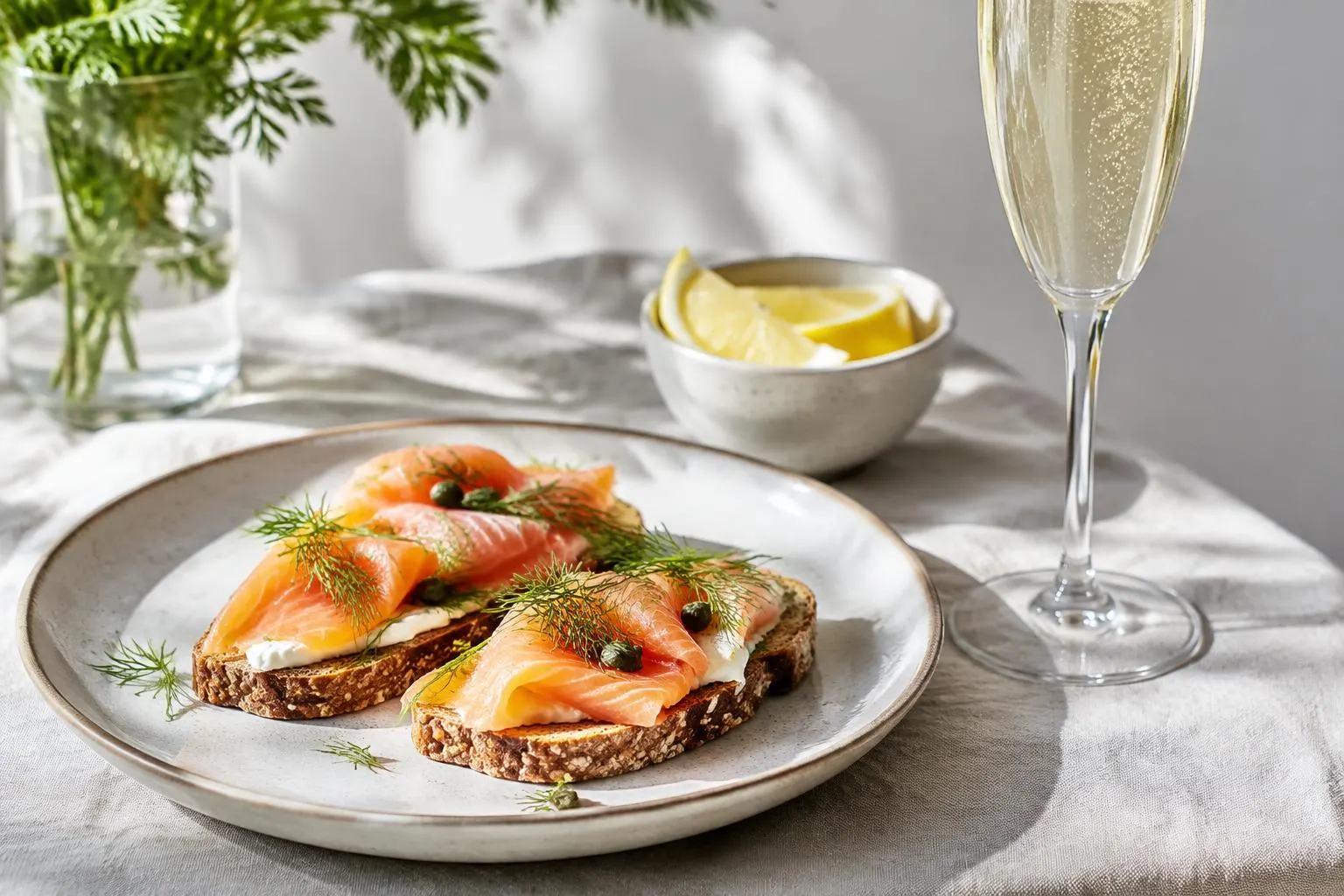
A thin slice with plenty to say
Smoked salmon often sits so innocently on the plate that it seems to need hardly any attention. A few thin slices, bread, perhaps some dill. Then the first bite brings fat, salt, smoke and savoury depth all at once. That is a lot of conversation for an overly timid wine to keep up with. Still, there is no need for a heavy red to take the chair.
Dry Riesling with juicy fruit is a good place to start. Champagne Brut offers a festive alternative that is more than just decorative, while Weißburgunder takes a quieter approach. All three should have enough freshness and no dominant oak notes. With classic cold-smoked salmon, the point is less about power than the balance between an oily texture and a pleasantly bright next sip.
Smoke is not the whole story
Smoke intensity varies considerably from one product to another. Delicately smoked salmon leaves more room for subtle wines than a strongly smoked, very salty version. Hot-smoked salmon also has a different texture and often feels denser. Here, the wine can have a little more body. So the shared label of smoked salmon is no substitute for a small taste before opening the bottle.
The fat in the fish makes acidity particularly welcome. It creates a refreshing contrast without actually removing the fat. Salt often makes wine seem fuller and smoother, and can soften bitterness and tannic harshness. At the same time, fish brings umami. This taste can make wine seem more bitter, more astringent, more acidic and less fruity. These opposing effects explain why simple blanket rules quickly become too crude here.
A fruity, low-tannin wine is therefore often the safer direction. Pronounced tannins can seem unpleasantly astringent alongside fish and umami. A metallic impression is also occasionally perceived, but it is not an inevitable outcome of every pairing of red wine and fish. For a closer look at the background, umami and wine explores the key connections.
Bread brings its friends along
Dry Riesling works particularly well when lemon, dill or a tangy cream is on the table. The acidity of the accompaniment makes the wine seem less acidic, so it needs enough freshness of its own. Very taut, lean Rieslings can, however, feel angular with the fish on its own. A juicy style with moderate alcohol is usually more versatile. For a warm variation, trout with lemon butter offers a useful comparison.
Champagne Brut combines acidity and bubbles with possible yeasty notes that can work with toast or blini. A balanced style is more helpful than simply seeking maximum dryness. Very austere, acid-driven sparkling wines will not strike everyone as harmonious alongside strong smoke. Crémant Brut is a sensible alternative, provided it has enough substance and its fizz does not feel too sharp.
Weißburgunder suits a milder serving with bread and a subtle cream. It should be fresh enough to keep the pairing from feeling heavy. Sweet mustard or honey, on the other hand, changes the task. Sweetness in food makes wine seem drier, more acidic and more bitter. In that case, an off-dry Riesling may work better than the initial dry recommendation. A generous helping of horseradish adds a pungent heat that high alcohol can accentuate unpleasantly.
Interactive wine selector
How do you prepare Smoked salmon?
The default is a typical preparation. Adjust the settings to how your dish actually tastes, and the suggestions update instantly.
Wine styles to suit your dish
Choice 1
Champagne or grower-produced Sekt brut
Why it works: it is low in tannins and handles umami well and acidity and freshness cut through the fat.
Choice 2
Sauvignon Blanc
Why it works: acidity and freshness cut through the fat and it is low in tannins and handles umami well.
Choice 3
Grüner Veltliner
Why it works: it is low in tannins and handles umami well and acidity and freshness cut through the fat.
Get to know the Grüner Veltliner grape variety
Best avoided – Sweet red wine, such as Ruby Port. As a rule here, it is much sweeter than the dish and tastes cloying alongside it. Individual wines may vary.
The suggestions are wine styles, not specific bottles. Taste is personal, so feel free to try something that breaks the rules.
The garnish gets a vote too
Try a small sip of wine first after a piece of smoked salmon on its own. Then take a bite with the same amount of fish and a little of the sauce you plan to serve. Compare the fruit, acidity and bitterness in the wine. Sweet mustard in particular quickly makes it clear why the fish alone does not decide which bottle to open.
A fresh, dealcoholised white wine can be a genuine alternative, as long as its sweetness does not unintentionally take the lead. If you would rather not have a wine substitute, try gently brewed green tea, cooled down. Do not leave it to steep for long, as pronounced bitterness would be unhelpful alongside smoke and umami. After all, the loveliest accompaniment lets the salmon keep its character without giving every bite another round of smoke.
Brief and honest
- Dry, juicy Riesling – Freshness complements the fat in the fish and tangy accompaniments. More about Riesling
- Champagne Brut – Acidity and yeasty notes can complement smoked salmon on toast or blini.
- Fresh Weißburgunder – It suits milder smoke and creamy accompaniments with little sweetness. More about Weißburgunder
Wine advisor: find the right grape variety in three questions · All grape varieties at a glance
Probably not – Powerful, tannin-rich red wine. Umami can accentuate tannic harshness and bitterness. A light, low-tannin red is less problematic.
Alcohol-free – Fresh dealcoholised white wine can work if its sweetness stays restrained. Gently brewed, cooled green tea is an alternative in its own right.
How helpful was this article?
No sign-up and no cookies. We only store the stars, the article and a non-traceable identifier that changes daily to prevent repeat ratings. Ratings appear only after editorial review.
Try this at home
Try the wine after smoked salmon on its own, then after a bite with sauce. Use a similar amount of fish each time. Notice whether sweet mustard or tangy cream makes the wine seem more austere or softer.
What this article is based on
- WSET Level 2 Award in Wines, Spezifikation mit dem Kapitel zu Wein und Speisen
- Wine & Spirit Education Trust (WSET), How to pair wine with your favourite takeaway meals
The scenes in this article are illustrative stories, not reporting. The basic rules follow WSET teaching; personal taste may differ.