Wine encyclopedia
Grüner Veltliner from the Heart of Austria
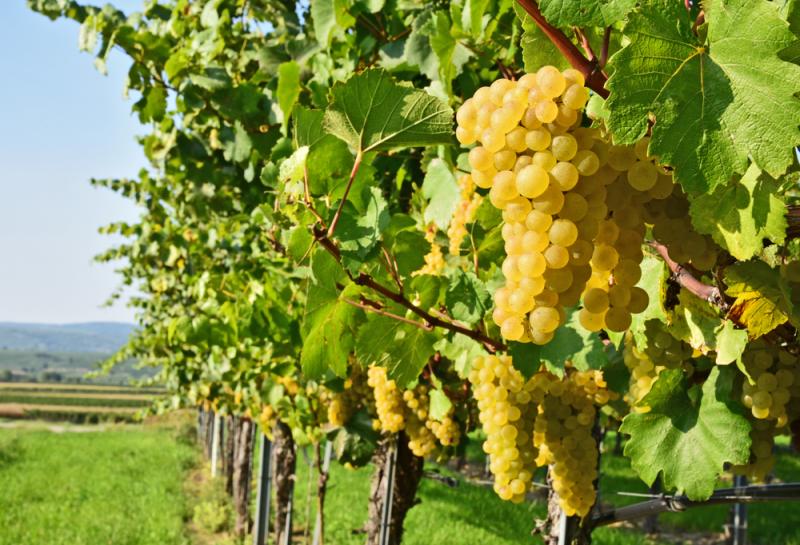
This year, we're not doing things by halves—we're going full Veltliner. This is the Alpine nation's signature discipline. No grape is planted more widely than the "Grüner". A third of Austria and a little of the Czech Republic are filled with one of the freshest white wine grapes ever. Made as a single-varietal wine, it suits every table—delightfully uncomplicated.
4 min read
The History of the White Wine
Grüner Veltliner was already at home in Austria in the 18th century. It simply went by a different name back then: Grüner Muskateller. It is essentially an indigenous variety, a natural crossing of Traminer and St Georgen. Towards the end of the 19th century, the names "Weißgipferl" and "Grüner Veltliner" came into use. And Veltliner established itself among dry white wines. From 1920 onwards, Grüner Veltliner grapes were selectively sorted. Nevertheless, this grape variety remained a wine for the masses. Its quality was improved in the seventies, until the first wine connoisseurs began to show their appreciation in the nineties.
For a Grüner Veltliner to receive this distinction, it must meet certain conditions. It must not develop noble ripeness or any barrique or oak notes, and must have no more than six grams of residual sugar per litre and an alcohol content of at least twelve percent.
The Many Names of Grüner Veltliner
For once, this red grape variety does not actually have an endlessly long history. But it still has plenty of synonyms. Have fun learning them by heart.
Grüner Veltliner is also called:
Bielospicak, Cima Bianca, Cimaverde, Dreimaenner, Feherhegyue, Feldlinger, Green Veltliner, Gruen Muskateller, Gruene Manhardsrebe, Gruener, Gruener Muskateler, Gruener Muskateller, Gruener Velteliner, Gruener Veltliner, Gruener Weissgipfler, Gruenmuskateller, Manhardsrebe, Manhardtraube, Manhartsrebe, Mouhardrebe, Mouhardsrebe, Muskatel, Muskatel Zeleny, Plinia Austriaca, Ranfol Bianco, Ranfol Bijeli, Ranfol Weisser, Rdeci Veltinec, Reifler Weiss, Ryvola Bila, Tarant Bily, Valtelin Blanc, Valtelina Vert, Valteliner, Valteliner Blanc, Valteliner Vert, Velteliner Gruener, Velteliner Gruner, Velteliner Vert, Velteliner Weisser, Veltelini Zoeld, Veltlin Zeleny, Veltlinac Zeleni, Veltlinec, Veltliner, Veltliner Blanc, Veltliner Grun, Veltliner Gruner, Veltliner Verde, Veltlini, Veltlinske Zelene, Veltlinski Zelenii, Veltlinsky Vert, Veltlinsky Zeleny, Vetlinac, Vetlinac Zeleni, Weisser, Weisser Raifler, Weisser Reifler, Weisser Valteliner, Weisser Velteliner, Weisser Veltliner, Weissgipfler, Weissgipfler Gruener, Yesil Veltliner, Zeleni Veltlinec, Zeleni Vetlinac, Zeleny Muskatel, Zleni Veltinac, Zoeld Muskotaly, Zoeld Muskotalynak, Zoeld Veltelini, Zoeld Velteliny, Zoeldveltelini, Zold Veltelini.[16] The variety's name is sometimes also abbreviated to GrüVe, GruVe or GV
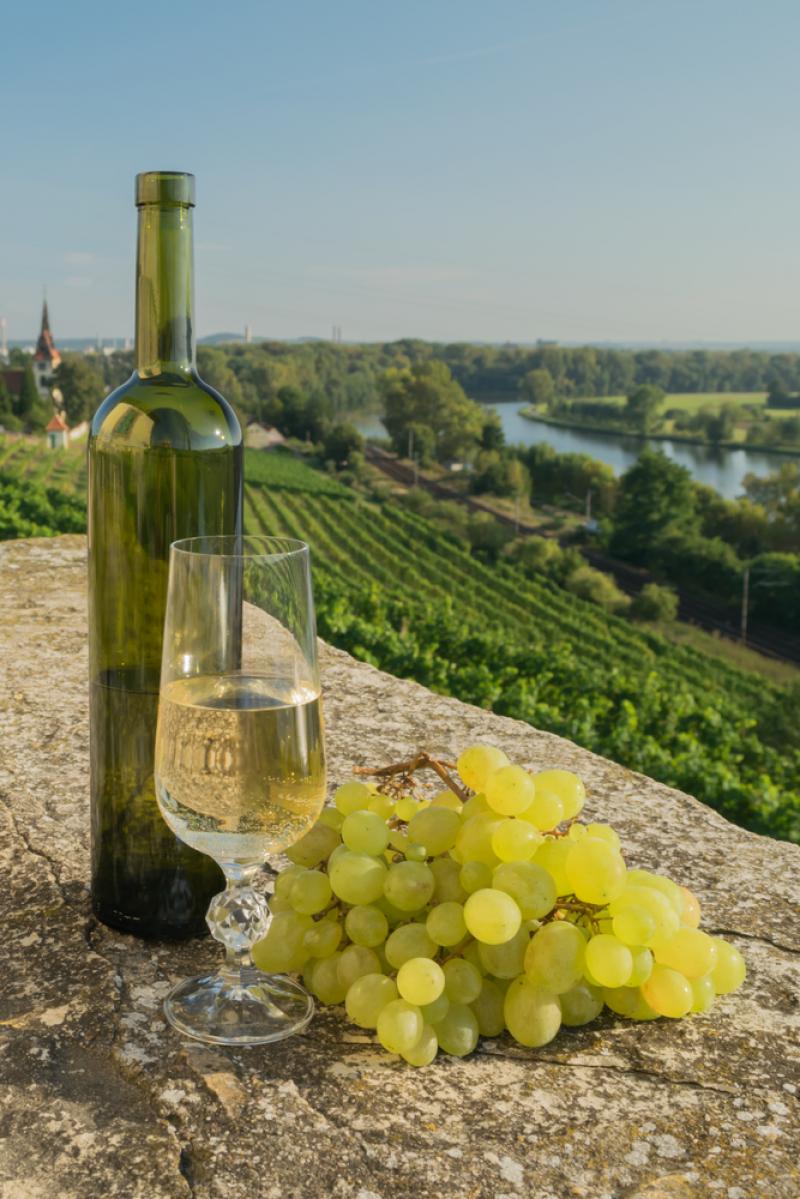
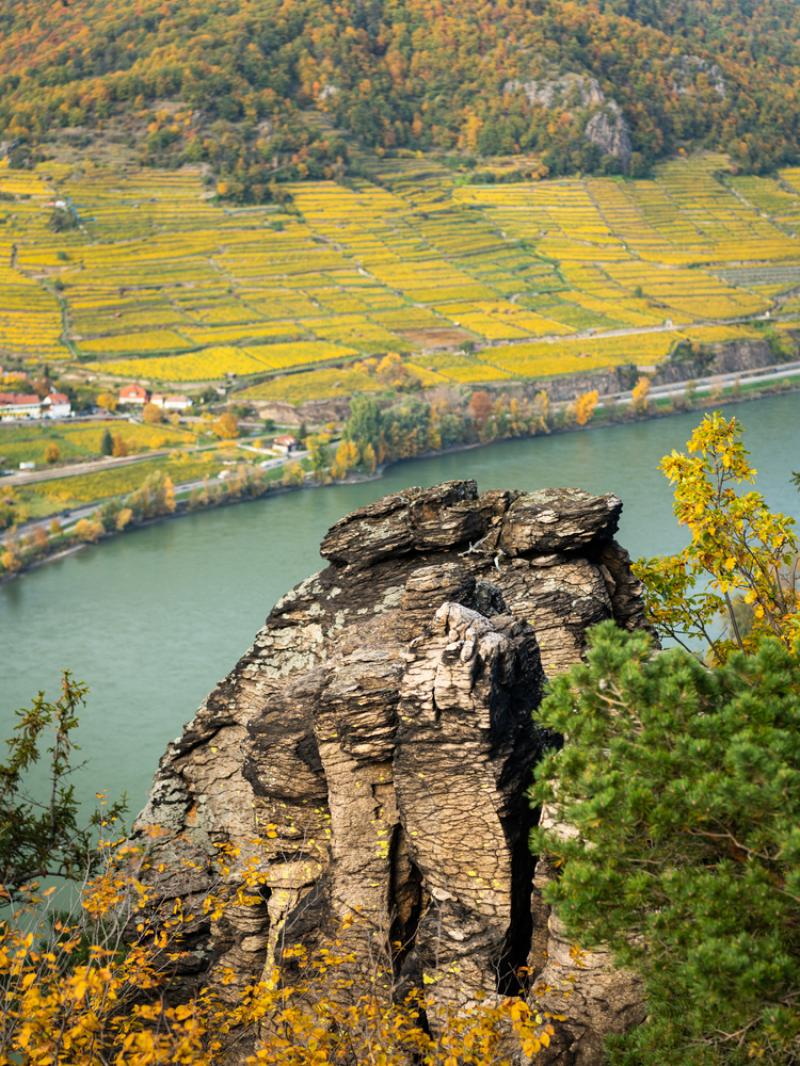
GRÜNER VELTLINER as STEINFEDER, FEDERSPIEL, SMARAGD
In 1983, the Wachau's winegrowers jointly agreed on quality standards and the Wachau Codex.
The overriding principle is to keep the grapes as natural as possible. This means a legally defined growing area, plenty of manual work, and no enrichment or concentration. Instead, the Steinfeder, Federspiel and Smaragd brands were established.
What do they stand for?
Steinfeder: Steinfeder is the name given to a grass in the Wachau. It grows in high, rocky meadows. Steinfeder can be found on the hats worn as part of the Wachau's traditional dress. Steinfeder is the lightest Wachau quality wine, with a maximum alcohol content of 11.5 percent by volume. Steinfeder wines have a fresh, lightly fruity flavour.
Federspiel: Federspiel refers to the round prey lures used in falconry. The alcohol content of Federspiel wines ranges from 11.5 percent to a maximum of 12.5 percent by volume. Federspiel wines are intended to be good companions to many dishes.
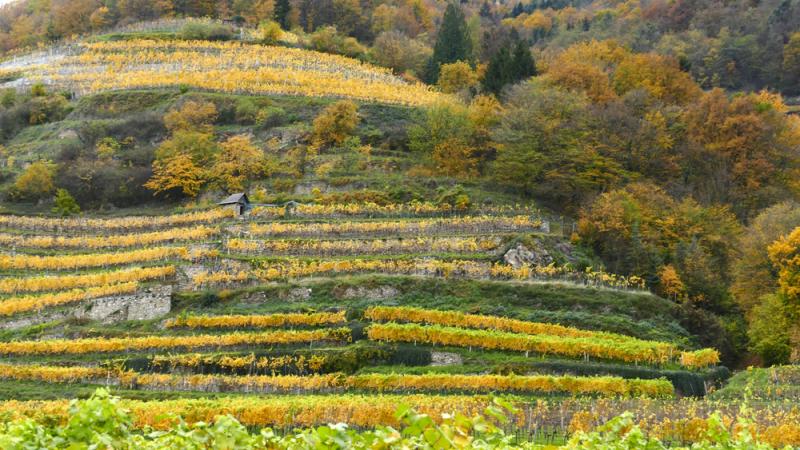
Smaragd: Green lizards are typical of the Wachau's vineyards, appearing on the warm dry-stone walls during the warm summer months. These lizards lend their name to the highest quality tier of Wachau wines. Smaragd wines are made from grapes grown in the best sites and usually come from a late harvest. Their alcohol content is at least 12.5 percent by volume.
The Characteristics of Grüner Veltliner
This variety reaches its medium-late ripeness in moderately early-ripening sites and on light, moist soils. Loess is particularly well suited to it. Although it is not especially vigorous, it has no trouble developing shoots. The shoot tips are densely covered in white hairs, and the vine produces large berries, and plenty of them.
Along the Danube and Elsewhere
Veltliner is a fresh fellow. The first thing you notice is its acidity, supported by a healthy measure of sweetness. Citrus, peach and herbs, sometimes with a little pepper and tobacco: that is what it brings to the world of white wine. A good Grüner Veltliner impresses with its freshness on the palate, which lingers thanks to its acidity. White wines like these are also suitable for ageing for several years, provided they are properly made. Even an older Grüner then influences the flavour of the entire work of art with its lasting freshness.
Incidentally, Austria's first DAC wine, Weinviertel DAC, was dedicated to Grüner Veltliner. There are now 2 more, in the Traisental and in the Kremstal along the Danube. With its freshness, Grüner Veltliner is often compared to Sauvignon Blanc. Sometimes the two white grape varieties are simply blended together, producing the pinnacle of dry white wines for summer.
A Wine Journey Through Austria
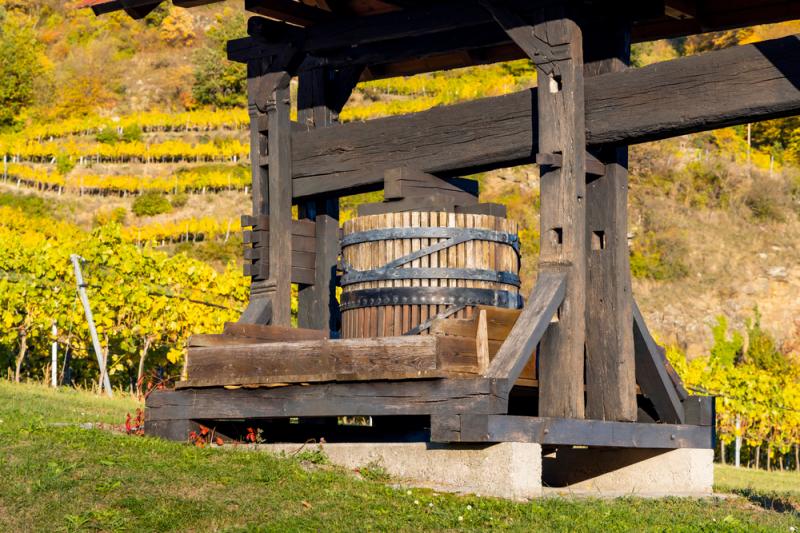
Making Austria's Star Wine
Grüner Veltliner's strength is that it can do practically anything, appearing quite unassuming at first as a still wine. But once unleashed, it shows its true abilities. The grape variety is just as much at home in the bottle as a nobly sweet white wine from the Wachau as it is as an off-dry, medium-sweet or Blanc de Noir wine. It still needs to practise the leap from dry to off-dry, because once you have had a taste of what just a little residual sweetness can do, it will not let go of your nose or palate. By the way, sparkling wine from the Kamptal is also highly recommended.
Die Weinpost