Pasta, pizza & Flammkuchen · Spaghetti alla carbonara
Silky Pasta Calls for a Fresh Sip
Carbonara pairs well with a fresh Frascati, a structured Verdicchio or a dry sparkling wine with lively acidity. They refresh after egg, cheese and Guanciale without bringing much additional tannin to the umami-rich sauce.
- Rich & creamy
- Salty
- Umami
- Spicy
3 min read · Rebe & Traube editorial team
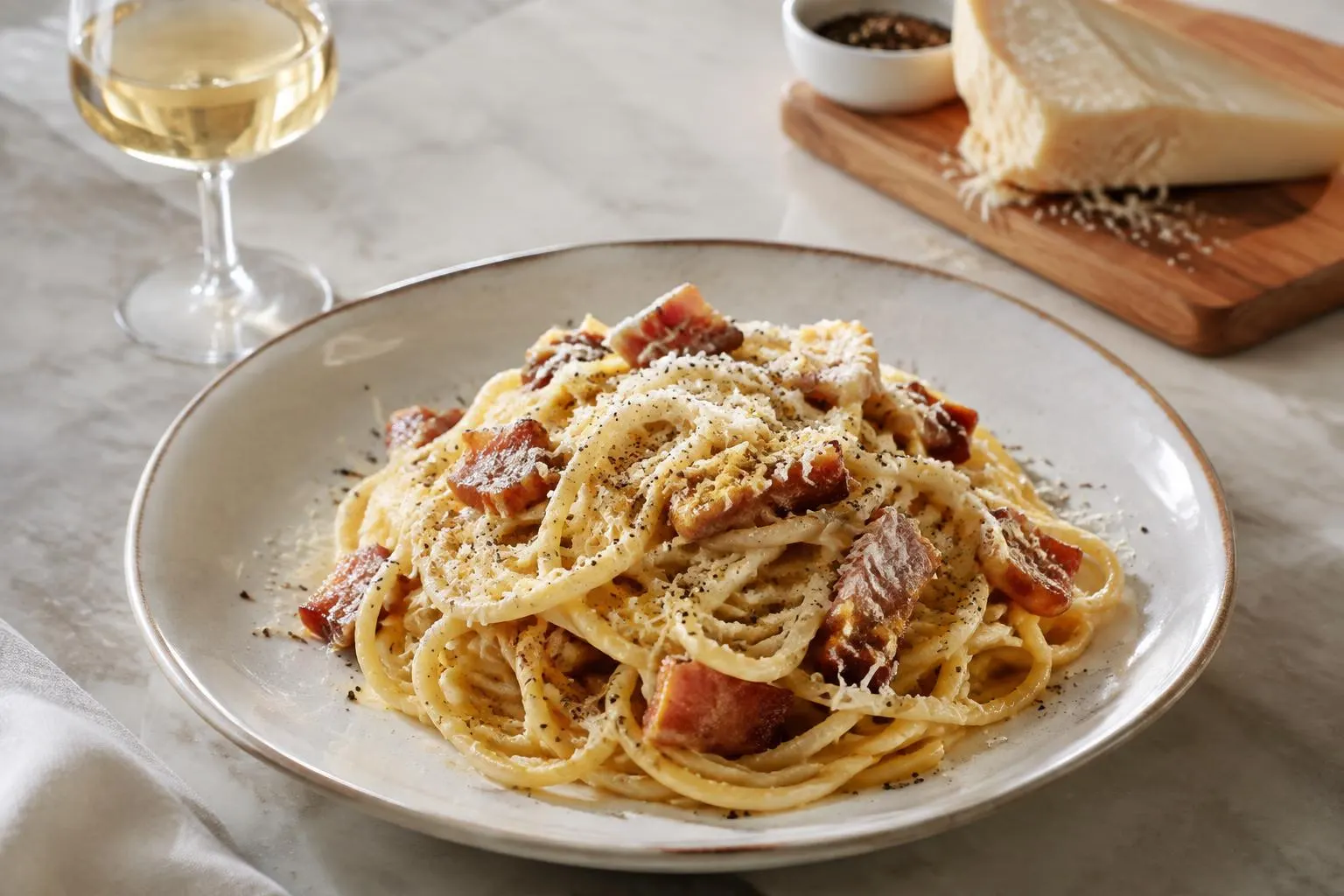
The secret is a sheen, not a pool
The spaghetti glistens on the plate, coated in a silky sauce. Crisp little pieces of Guanciale nestle between the strands, with black pepper scattered over the top. Carbonara is rich, but at its best it never feels heavy. The wine can strike that same balance. Fresh Frascati, structured Verdicchio or dry sparkling wine make room for the next bite rather than adding another layer of weight to the dish.
The classic Roman approach uses egg, Pecorino, Guanciale, pepper and pasta, not cream. The finer points inspire passionate debate, as apparently befits such a beloved dish. When choosing wine, what matters most is how the dish is actually made. A home-cooked version with Pancetta, another hard cheese or cream deserves a well-matched glass too; it simply shifts what the wine needs to offer.
Freshness to counter that feeling of heaviness
Egg yolk and rendered fat combine with cheese and starchy pasta water to create the creamy texture. A wine with lively acidity feels refreshing afterwards. It does not simply dissolve the fat; instead, it provides a sensory counterpoint. Plenty of body in the dish alone is therefore not enough reason to choose a particularly powerful wine. The sauce already brings ample richness of its own.
Salt from Guanciale and Pecorino can soften perceived bitterness and tannin and make the wine seem fuller. At the same time, the aged cheese supplies umami. This can make wine seem more bitter, more astringent and more acidic, while fruit and sweetness recede. Both effects meet in the same bite. That is why it makes sense to try the wine with the fully seasoned pasta, rather than choosing by the label alone.
With a generous proportion of cheese and heavily reduced pasta water, the sauce becomes more intense and possibly saltier. A more powerful wine is not necessarily the answer. A fresh, fruity style with enough substance and little tannin often helps. The article on Umami, Miso, Mushrooms and Parmesan also explains what savoury flavours do to the wine in your glass.
Three glasses that leave room to breathe
A fresh Frascati is a lovely starting point for a more delicate Carbonara. It usually offers enough lightness without overpowering the aromas on the plate. The important thing is not to choose one that is too thin. Alongside plenty of Pecorino, even an easy-drinking white needs some substance. A very soft, low-acid style, on the other hand, can disappear behind the creamy texture.
Verdicchio is the alternative when you want a little more structure. Its freshness and body can also accompany a richer serving. A subtly bitter finish need not be a problem, but noticeable oak or pronounced bitterness can make the pairing unnecessarily austere. With plenty of pepper, it is also best to avoid an excessively high-alcohol wine. Pepper's heat is not identical to chilli heat, but extra alcoholic warmth is rarely needed here.
A dry sparkling wine, such as a fresh Crémant Brut, brings both acidity and bubbles. The bubbles create a lively textural contrast that some people love and others find too restless. It is worth trying. If you prefer red wine, a juicy, low-tannin Gamay is an alternative to explore. The three white-wine options remain the more straightforward starting point, though. With Spaghetti al pomodoro, acidity in the food itself plays a much larger role.
Interactive wine selector
How do you prepare Spaghetti alla carbonara?
The default is a typical preparation. Adjust the settings to how your dish actually tastes, and the suggestions update instantly.
Wine styles to suit your dish
Choice 1
Champagne or grower-produced Sekt brut
Why it works: it is low in tannins and handles umami well and acidity and freshness cut through the fat.
Choice 2
Sauvignon Blanc
Why it works: acidity and freshness cut through the fat and it is low in tannins and handles umami well.
Choice 3
Grüner Veltliner
Why it works: it is low in tannins and handles umami well and acidity and freshness cut through the fat.
Get to know the Grüner Veltliner grape variety
Best avoided – Sweet red wine, such as Ruby Port. As a rule here, it is much sweeter than the dish and tastes cloying alongside it. Individual wines may vary.
The suggestions are wine styles, not specific bottles. Taste is personal, so feel free to try something that breaks the rules.
A forkful is the better guide
Try this at home with a fresh white wine and a dry sparkling wine. Taste both on their own first, then each after a small forkful of Carbonara. Add a little more Pecorino to a second portion and compare again. Pay attention to salt, fruit and whether the bubbles feel pleasantly refreshing or too energetic alongside the pepper.
A young, heavily tannic red is a rather risky choice for the classic version. Salt may make it seem gentler, but plenty of umami can bring its rough side back out. Heavily smoked bacon also changes the aromatic profile compared with Guanciale. If smoke takes centre stage, it is worth comparing the considerations for Smoked Salmon, without treating the two dishes as equivalent.
For an alcohol-free pairing, a dry dealcoholised sparkling wine with fresh acidity and restrained sweetness fits the bill. Some products taste distinctly fruity, so it is best to try a small sip first. Sparkling water is the no-nonsense alternative, and needs no apology. With its creamy sauce, salty bite and fragrant pepper, the dish has enough character to make for a very good evening even without wine.
Brief and honest
- Fresh Frascati – Freshness and moderate body give the silky sauce room without weighing it down.
- Structured Verdicchio – Acidity and substance accompany a richer serving with plenty of Pecorino.
- Dry Crémant Brut – Acidity and bubbles create a lively contrast to fat and creamy texture.
Wine advisor: find the right grape variety in three questions · All grape varieties at a glance
Probably not – Young, heavily tannic red wine. Umami can amplify its rough, bitter side. Salt may soften that impression, but does not make the pairing reliably balanced.
Alcohol-free – A dry dealcoholised sparkling wine with fresh acidity can work well. Look for restrained sweetness so it does not taste juicily sweet alongside the savoury sauce.
How helpful was this article?
No sign-up and no cookies. We only store the stars, the article and a non-traceable identifier that changes daily to prevent repeat ratings. Ratings appear only after editorial review.
Try this at home
Taste a fresh white wine and a dry sparkling wine on their own first, then each after a small forkful of Carbonara. Add a little more Pecorino to a second portion and repeat the comparison. Pay attention to salt, fruit and how the bubbles feel.
What this article is based on
The scenes in this article are illustrative stories, not reporting. The basic rules follow WSET teaching; personal taste may differ.