Pasta, pizza & Flammkuchen · Spaghetti al pomodoro
Tomato Red and a Glass with Verve
A fresh Sangiovese, a juicy Barbera or a dry Rosato with lively acidity pairs well with spaghetti al pomodoro. The tomatoes’ acidity calls for freshness in the wine, while restrained tannins keep the savory sauce from tasting unnecessarily harsh.
- Sour
- Umami
- Salty
- Rich & creamy
3 min read · Rebe & Traube editorial team
The Red Splash Is Part of It
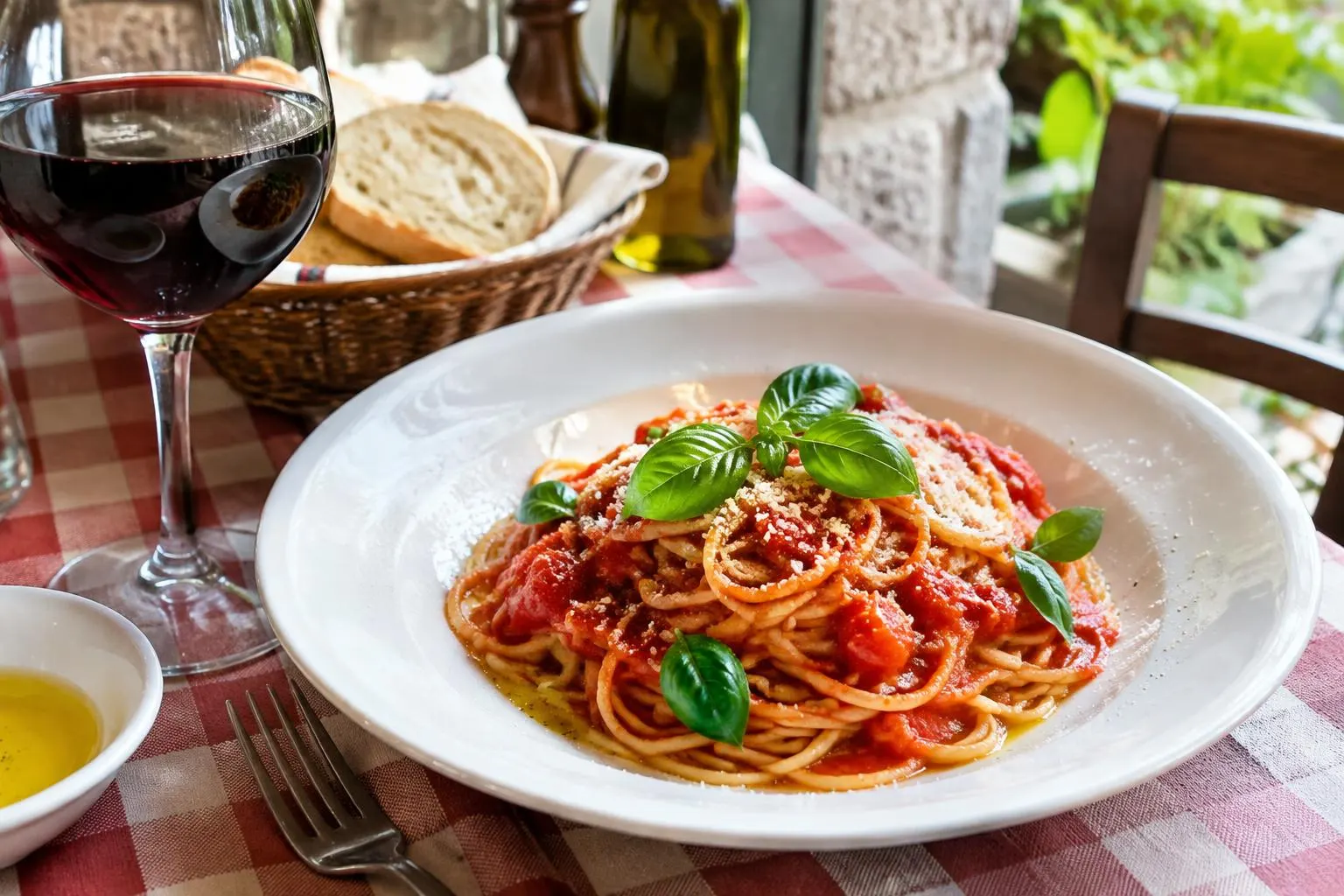
A fork twirls, a strand of spaghetti escapes, and a red splash lands somewhere on the plate. Spaghetti al pomodoro is no meal for excessive formality. It does, however, deserve some thought about what goes in the glass. A fresh Sangiovese, a juicy Barbera or a dry Rosato usually works better than a heavy, sweet-seeming red with lots of oak.
The reason lies in the sauce. Tomatoes bring acidity, savory flavor and varying degrees of sweetness, depending on the variety and how they are prepared. Add olive oil, salt, perhaps garlic and a few basil leaves. The pasta gives the dish body, but it is chiefly the character of the tomatoes that guides the wine choice. A bright, freshly cooked sugo makes different demands from a dark, concentrated sauce.
Tomatoes Take the Edge off the Wine
Acidity in food makes a wine seem less acidic, fuller and sweeter. That is why a wine served with tomato sauce needs enough acidity of its own. What tastes a little taut on its own can fall beautifully into place at the table. A wine that is already soft and low in acidity, by contrast, can easily lose its definition alongside the sugo. A label promising plenty of power is little help.
Sangiovese is a natural partner, perhaps in the form of a young Chianti without too much oak influence. Its acidity and red fruit suit the character of the sauce. Look for an approachable style with moderate tannins. A very austere, concentrated wine can overwhelm this simple pasta, even if the grape variety makes sense in principle. An appellation name is no substitute for looking at how the wine was aged.
Barbera is a good alternative if you want juicy fruit and lively acidity with often more moderate tannins. Here, too, there are powerful, oak-driven versions that are not automatically the best choice. For a simple sugo, the wine can stay uncomplicated. That does not mean bland, but fresh and clear enough, without unnecessary weight.
That Little Mound of Cheese Shifts the Balance
Tomatoes also contain umami. This savory quality can make wine seem more bitter, rougher and more acidic, while muting its fruit. Salt in the sauce partly counteracts this, because it can soften bitterness and tannins. The actual seasoning therefore has a say in the pairing. The introductory article on Miso, Mushrooms and Parmesan explains these seemingly contradictory effects in more detail.
A generous grating of Parmesan adds salt, fat and umami. It does not simply make the pairing more powerful. A fruity wine with moderate structure remains a sensible choice. More olive oil calls for a refreshing counterpart, while plenty of garlic or pronounced roasted flavors can handle more aromatic presence. Burnt pieces of garlic, however, bring bitterness that no wine can reliably fix.
A dry Rosato with real acidity is particularly enjoyable with a lighter sauce and fresh basil. It should have enough fruit and body not to seem thin and disappear beside the pasta. If there is a noticeable amount of chili, it is worth taking another look at alcohol and residual sweetness. With Penne all'arrabbiata, heat plays a much bigger role. A ready-made sauce with a sweet flavor profile, meanwhile, can make a dry wine seem harsher.
Interactive wine selector
How do you prepare Spaghetti al pomodoro?
The default is a typical preparation. Adjust the settings to how your dish actually tastes, and the suggestions update instantly.
Wine styles to suit your dish
Choice 1
Off-dry or fruity-sweet Riesling Kabinett
Why it works: it is at least as sweet as the dish and acidity and freshness cut through the fat.
Get to know the Riesling grape varietyChoice 2
Champagne or grower-produced Sekt brut
Why it works: it is low in tannins and handles umami well and acidity and freshness cut through the fat.
Choice 3
Sauvignon Blanc
Why it works: acidity and freshness cut through the fat and it is low in tannins and handles umami well.
Best avoided – Syrah or Shiraz. As a rule here, sweetness in the food makes it taste sour and bitter. Individual wines may vary.
The suggestions are wine styles, not specific bottles. Taste is personal, so feel free to try something that breaks the rules.
A Spoonful of Sauce Before You Decide
Try this at home with a fresh, high-acid red wine and a softer red with lower acidity. Taste both first without food, then each with a small spoonful of the same tomato sauce. Next, add a little Parmesan to a small portion and repeat the comparison. Notice which wine keeps its fruit and which suddenly seems broad or austere.
A high-alcohol, low-acid red with strong oak influence would not be my first choice for this plate. Without pronounced tomato acidity and with a meaty sauce, it might work better. In Lasagne bolognese, meat, béchamel and the oven-browned crust shift the balance considerably. That also explains why a favorite wine is not equally convincing with every pasta dish.
For an alcohol-free option, a dry dealcoholized Rosé with discernible acidity works well. It is worth tasting it first, since some versions taste noticeably sweet. Alternatively, sparkling water is an honest, neutral companion that does not need to imitate anything. And if the sauce has turned out too sharp, start by adjusting the seasoning in the pot. The wine does not have to do all the kitchen work after the fact.
Brief and honest
- Young Sangiovese, such as Chianti – Lively acidity and red fruit suit the sugo, provided oak and tannins remain restrained.
- Juicy Barbera – Fresh acidity and often moderate tannins accompany the tomatoes without unnecessary harshness. More about Barbera
- Dry, fresh Rosato – Enough acidity and a little body suit a light sauce and basil.
Wine advisor: find the right grape variety in three questions · All grape varieties at a glance
Probably not – Low-acid, high-alcohol red with lots of oak. Alongside a tangy sugo, it can seem broad and tired. A meatier, less acidic sauce might suit it better.
Alcohol-free – A dry dealcoholized Rosé with discernible acidity is a sensible choice, but it should not taste noticeably sweet. Sparkling water is the neutral alternative.
How helpful was this article?
No sign-up and no cookies. We only store the stars, the article and a non-traceable identifier that changes daily to prevent repeat ratings. Ratings appear only after editorial review.
Try this at home
Taste a high-acid red and a softer red first without food. Then try each after a small spoonful of the same tomato sauce. Repeat the comparison with a little Parmesan, paying attention to fruit, breadth and any harshness.
What this article is based on
The scenes in this article are illustrative stories, not reporting. The basic rules follow WSET teaching; personal taste may differ.