Fish & seafood · Gambas al ajillo
When Garlic Sizzles and the Glass Stays Cool
Gambas al ajillo pairs well with a fresh Albariño, a slightly bitter-edged Verdejo or, when the chili is mild, a Fino Sherry. Lively acidity refreshes the palate after the olive oil, while restrained alcohol avoids needlessly amplifying the heat.
- Salty
- Umami
- Rich & creamy
- Spicy
3 min read · Rebe & Traube editorial team
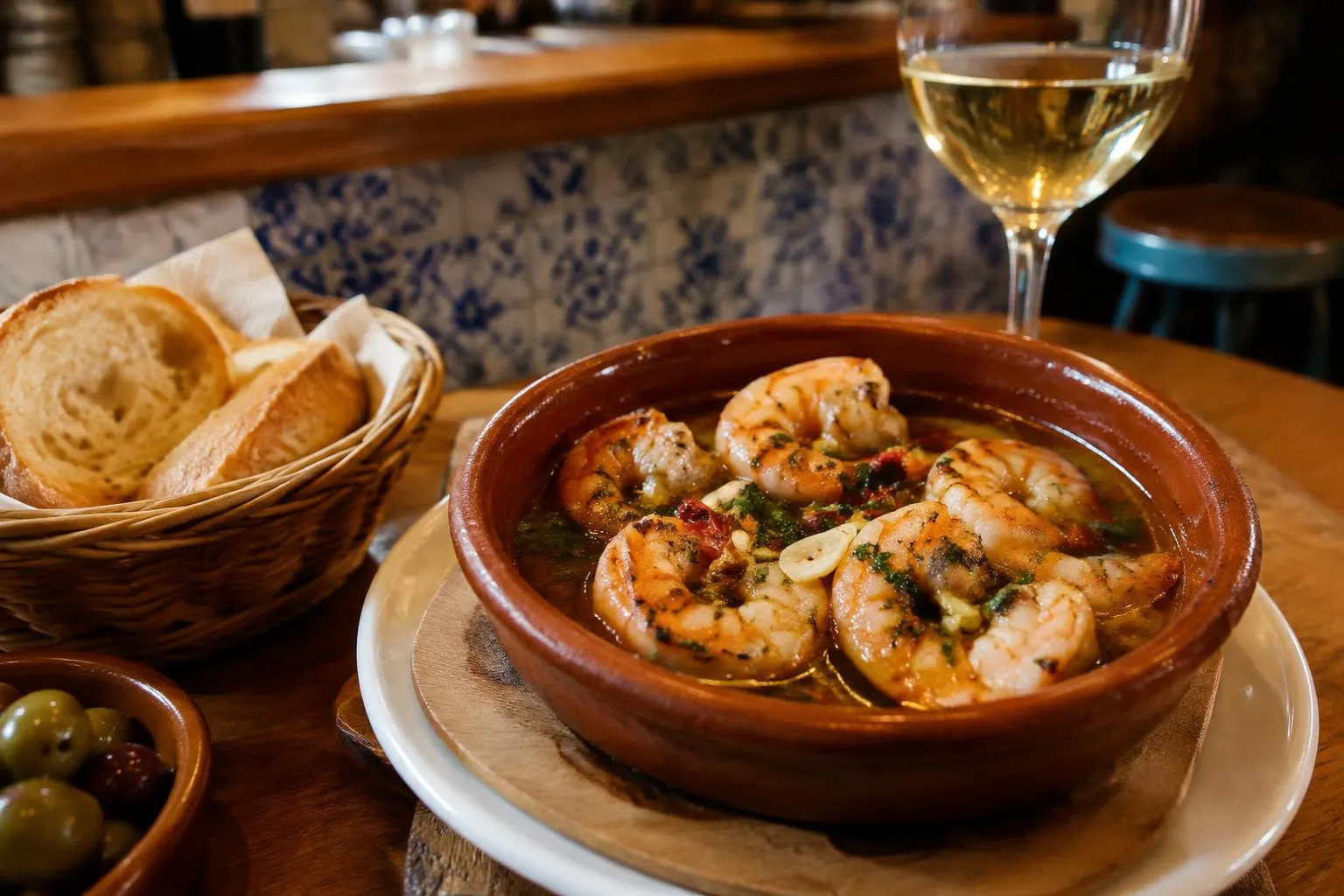
The bread already knows where to go
Even before the first shrimp reaches the plate, the bread is heading for the little dish. Warm olive oil glistens, garlic smells wonderful, and a chili pepper has left its mark. Gambas al ajillo needs no heavyweight companion. A fresh, dry Albariño is a good place to start: its acidity refreshes after the oil, and its fruit does not immediately disappear beside the garlic. With little chili, a dry Fino can also be a lovely match. If things turn fiery, though, a light white wine with a little residual sweetness is worth considering.
The shrimp themselves are tender, slightly sweet and savory. The dish only turns up the volume in the pan. Golden garlic tastes different from deeply browned garlic; one whole chili pepper tastes different from several broken open. So the most important question before opening the bottle is not how fine the shrimp were, but how the oil tastes. A small spoonful tells you more about the right wine than a glance at the menu.
Acidity freshens the palate
Olive oil gives the dish its silky texture and carries its aromas. The acidity in wine provides a refreshing counterpoint. It does not simply dissolve the fat, but it makes the next bite feel less heavy. A lean white wine with juicy fruit and little oak influence is therefore usually more helpful than a broad, high-alcohol Chardonnay. Strongly vanilla-scented oak notes can also feel quite intrusive among the garlic and flavors of the sea.
Adding lemon shifts the balance. Acidity in food makes wine seem less acidic, fuller and sweeter. The wine therefore needs at least enough acidity to stay lively alongside the lemon juice. The combination of salt, lemon and seafood also shows how well this can work. A tired white wine does not automatically perk up with a wedge of lemon. On the contrary, it can seem surprisingly flat afterward.
Salt helps in a different way. It can soften perceived bitterness and tannic harshness, making wine seem smoother. That is not a license to add more salt. Shrimp simply need balanced seasoning. Their umami can make wine seem less fruity and more bitter, which makes fruit, low tannins and balanced seasoning especially welcome here.
Three glasses, three temperaments
Albariño often offers citrus fruit, fresh acidity and enough substance to stand up to the oil. Choose a dry version without a strong oak influence. It works particularly well when the shrimp are gently pan-fried and served with a little parsley or lemon. A dry Riesling with moderate alcohol is a good alternative, provided its acidity suits the dish rather than dominating the entire conversation.
Verdejo often brings herbal notes, citrus fruit and a slightly bitter finish. That can chime beautifully with the garlic. If the garlic turns dark and bitter, however, those bitter-edged impressions may build up unpleasantly. What helps then is not a particularly punchy wine, but a little more care with the heat of the pan. Similar questions about seasoning and freshness arise with trout in lemon butter, although its flavors are much quieter.
Fino Sherry is the more distinctive choice. Its dry, yeast-driven and often almond-like character can be very appealing with garlic and shrimp. Well chilled and served in small glasses, it feels precise rather than comfortably broad. Its higher alcohol makes it a less suitable choice, however, once there is plenty of chili involved. A lower-alcohol, off-dry Riesling can take over then. A little residual sweetness can soften the perception of heat. The same logic applies to Penne all’arrabbiata, except that here there is no pronounced tomato acidity.
Interactive wine selector
How do you prepare Gambas al ajillo?
The default is a typical preparation. Adjust the settings to how your dish actually tastes, and the suggestions update instantly.
Wine styles to suit your dish
Choice 1
Champagne or grower-produced Sekt brut
Why it works: acidity and freshness cut through the fat and it is low in tannins and handles umami well.
Choice 2
Sauvignon Blanc
Why it works: acidity and freshness cut through the fat and it is low in tannins and handles umami well.
Choice 3
Dry Riesling
Why it works: acidity and freshness cut through the fat and it is low in tannins and handles umami well.
Get to know the Riesling grape variety
Best avoided – Sweet red wine, such as Ruby Port. As a rule here, it is much sweeter than the dish and tastes cloying alongside it. Individual wines may vary.
The suggestions are wine styles, not specific bottles. Taste is personal, so feel free to try something that breaks the rules.
A piece of bread as a testing tool
You do not need a second bottle for a little comparison. Try your wine first with a shrimp carrying just a little oil, then with bread dipped in garlic oil, and finally with a bite containing chili. This will tell you whether you mainly miss freshness or whether the alcohol suddenly feels warmer. An extra drop of lemon shows whether the wine has enough acidity.
For an alcohol-free option, chilled sparkling water with a little lemon juice and a thin strip of lemon peel works in an honest, uncomplicated way. It replaces neither the fruit nor the texture of wine, but it refreshes after the oil. With plenty of chili heat, still water is often more pleasant, as carbonation can add irritation. And the bread can carry on with its most important job for as long as there is garlic oil left in the little dish.
Brief and honest
- Dry Albariño – Fresh acidity and juicy fruit complement the shrimp and refresh the palate after the olive oil. Little oak influence keeps the pairing clean.
- Dry Verdejo – Herbal aromas suit garlic and parsley. If the garlic has been fried until bitter, however, a distinctly bitter-edged version can be too much.
- Fino Sherry – The dry, yeast-driven style suits mildly seasoned garlic shrimp. With plenty of chili, its higher alcohol is more of a disadvantage.
Wine advisor: find the right grape variety in three questions · All grape varieties at a glance
Probably not – High-alcohol, heavily oaked white wine. High alcohol can amplify the chili heat, while strong oak notes overwhelm the shrimp. With mild seasoning, a subtle use of oak is less problematic.
Alcohol-free – Chilled sparkling water with a little lemon refreshes after the oil without imitating wine. With plenty of chili heat, still water may be more pleasant.
How helpful was this article?
No sign-up and no cookies. We only store the stars, the article and a non-traceable identifier that changes daily to prevent repeat ratings. Ratings appear only after editorial review.
Try this at home
Try the same wine with a shrimp carrying just a little oil, then with bread dipped in garlic oil, and finally with a bite containing chili. Notice when freshness is missing or the alcohol feels warmer. Add a drop of lemon and compare again.
What this article is based on
- WSET Level 2 Award in Wines, Spezifikation mit dem Kapitel zu Wein und Speisen
- Wine & Spirit Education Trust (WSET), How to pair wine with your favourite takeaway meals
The scenes in this article are illustrative stories, not reporting. The basic rules follow WSET teaching; personal taste may differ.