Pasta, pizza & Flammkuchen · Penne all’arrabbiata
When the Pasta Turns Fiery, the Wine Can Stay Quiet
Penne all’arrabbiata pairs well with an off-dry Riesling or a fruity Rosé low in alcohol and tannins. With mild chili heat, a light red wine is also an option, while high alcohol levels and firm tannins can intensify the heat unpleasantly.
- Spicy
- Sour
- Umami
3 min read · Rebe & Traube editorial team
The Anger Is in the Sauce
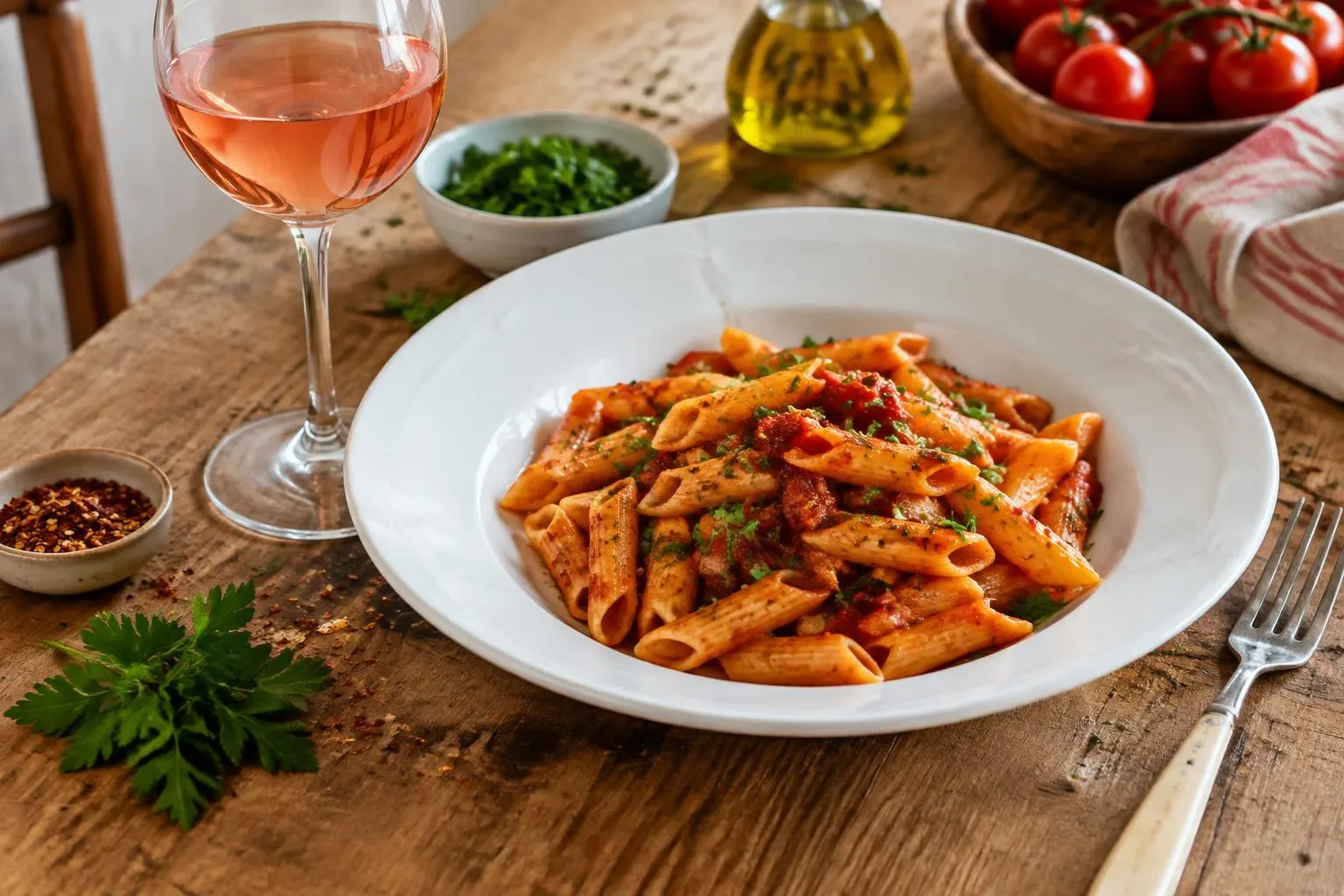
The name promises trouble, but at first everything on the plate looks friendly. Red tomato sauce, a little parsley, Penne with glossy ridges. Only on the second bite does the chili make itself known, and suddenly the robust red wine beside it feels surprisingly warm. That is not because Italian pasta and red wine are fundamentally a bad match. Here, another ingredient has simply claimed the last word.
For distinctly hot Arrabbiata, an off-dry Riesling with low alcohol is a good first choice. A little residual sweetness can soften the perception of heat, while fruit makes the pairing more approachable. With restrained chili, fruity Rosé or a light, low-tannin red also works. What matters is less the color than the balance of acidity, alcohol, sweetness and tannin.
Chili Plays by Its Own Rules
Chili heat is not one of the five basic tastes. It is a chemically triggered stimulus that we perceive as burning. High alcohol can intensify that sensation, while firm tannins can make the pairing more astringent and unpleasant. That is why a concentrated, high-alcohol red is often not a particularly gentle companion for this sauce. Not even when the label names a seemingly suitable Italian region.
Some sugar and less alcohol can cushion the impression of heat, but they do not reliably extinguish it. How much chili feels pleasant remains a matter of individual preference. A slightly sweet wine can work beautifully with moderate heat and still reach its limits with a very hot serving. Water is important for thirst, but it does not reliably remove the burning sensation from chili. Often, the better adjustment is to use a more restrained hand with the chili in the pot.
Meanwhile, the acidity of the tomatoes still matters. Acidity in food makes wine seem less acidic and fuller. The wine therefore needs enough freshness of its own, or it will seem flat beside the sauce. To explore this without chili, Spaghetti al pomodoro offers a calmer testing ground. A sweet, low-acid wine is therefore no automatic solution here, even if it softens the heat a little.
Fruit Rather Than Grand Gestures
Off-dry Riesling is especially convincing when the chili is clearly noticeable. It should taste juicy, have a backbone of acidity and not be unnecessarily high in alcohol. The term feinherb, however, does not guarantee a particular level of sweetness. What matters is the actual information provided and how the wine tastes. A light Riesling with some residual sweetness is often more helpful than a dry, very powerful example of the same grape.
Fruity Rosé works when the sauce is more piquant than fiery. A little residual sweetness can be welcome; pronounced tannins, rather less so. A pale Rosé is not automatically gentle or low in alcohol, nor is a darker one automatically heavy. Look at the style described, rather than just the color. A light Rosé with a gentle sparkle is also worth trying, although carbonation makes the heat feel more pronounced for some people.
For a red option, consider a light Valpolicella with very little oak influence. It brings juicy fruit and usually less tannic grip than a powerful, concentrated red. With a very hot sauce, though, I would still lean toward a white with some residual sweetness. Garlic and olive oil change the picture less dramatically than chili. Plenty of Parmesan adds umami and salt, whose opposing effects on bitterness and tannin are explained in more detail in Umami and Parmesan.
Interactive wine selector
How do you prepare Penne all’arrabbiata?
The default is a typical preparation. Adjust the settings to how your dish actually tastes, and the suggestions update instantly.
Wine styles to suit your dish
Choice 1
Champagne or grower-produced Sekt brut
Why it works: it is low in tannins and handles umami well and acidity and freshness cut through the fat.
Choice 2
Off-dry or fruity-sweet Riesling Kabinett
Why it works: fruitiness and a little sweetness soften the heat and acidity and freshness cut through the fat.
Get to know the Riesling grape varietyChoice 3
Sauvignon Blanc
Why it works: acidity and freshness cut through the fat and it is low in tannins and handles umami well.
Best avoided – Sweet red wine, such as Ruby Port. As a rule here, it is much sweeter than the dish and tastes cloying alongside it. Individual wines may vary.
The suggestions are wine styles, not specific bottles. Taste is personal, so feel free to try something that breaks the rules.
Season First, Then Top Up
Before the final seasoning, set aside two small portions of sauce. Leave one mild and add extra chili only to the other. Compare both with a dry Rosé and a Riesling with some residual sweetness, taking small sips of each. Pay particular attention to how long the burning lasts and whether you can still recognize the wine’s fruit.
For an alcohol-free option, a slightly sweet wine based on dealcoholized Riesling is worth considering, provided its acidity suits the tomato. Lightly diluted white grape juice is another possibility, though it tastes distinctly different from wine. With intense heat, the accompanying drink can stay very simple. For more ideas on handling heat, see the wine selection for spicy Thai dishes, even if their seasoning tells a different story.
Brief and honest
- Light Riesling with Some Residual Sweetness – A little residual sweetness softens the perception of heat, while acidity complements the tomato. More about Riesling
- Fruity Rosé with Low Alcohol – It suits moderate chili heat, especially with low tannins and, where appropriate, a little residual sweetness.
- Light Valpolicella – Juicy fruit and restrained tannins can accompany a mild Arrabbiata.
Wine advisor: find the right grape variety in three questions · All grape varieties at a glance
Probably not – High-Alcohol, Tannin-Driven Red Wine. Alcohol and firm tannins can intensify the burning sensation. With very mild chili, the pairing is less of a concern.
Alcohol-free – A slightly sweet dealcoholized Riesling can accompany the sauce. Check that it has enough acidity and does not simply taste sweet.
How helpful was this article?
No sign-up and no cookies. We only store the stars, the article and a non-traceable identifier that changes daily to prevent repeat ratings. Ratings appear only after editorial review.
Try this at home
Divide the sauce into a mild portion and one seasoned with more chili. Try both with dry Rosé and Riesling with some residual sweetness. Pay attention to the burning sensation, fruit and impression of alcohol.
What this article is based on
- WSET Level 2 Award in Wines, Spezifikation mit dem Kapitel zu Wein und Speisen
- Wine & Spirit Education Trust (WSET), How to pair wine with your favourite takeaway meals
The scenes in this article are illustrative stories, not reporting. The basic rules follow WSET teaching; personal taste may differ.