Meat & poultry · Grilled Lamb Chops with Rosemary
Rosemary in the Smoke and a Red Wine with Poise
Grilled lamb chops with rosemary pair well with a spicy Syrah, a balanced Rioja or a fresh Chianti Classico. Fruit and acidity complement the fat and chargrilled flavours, while ripe, restrained tannins provide a structural counterpoint to the meat.
- Salty
- Umami
- Rich & creamy
- Smoky
4 min read · Rebe & Traube editorial team
The Aroma Reaches the Table First
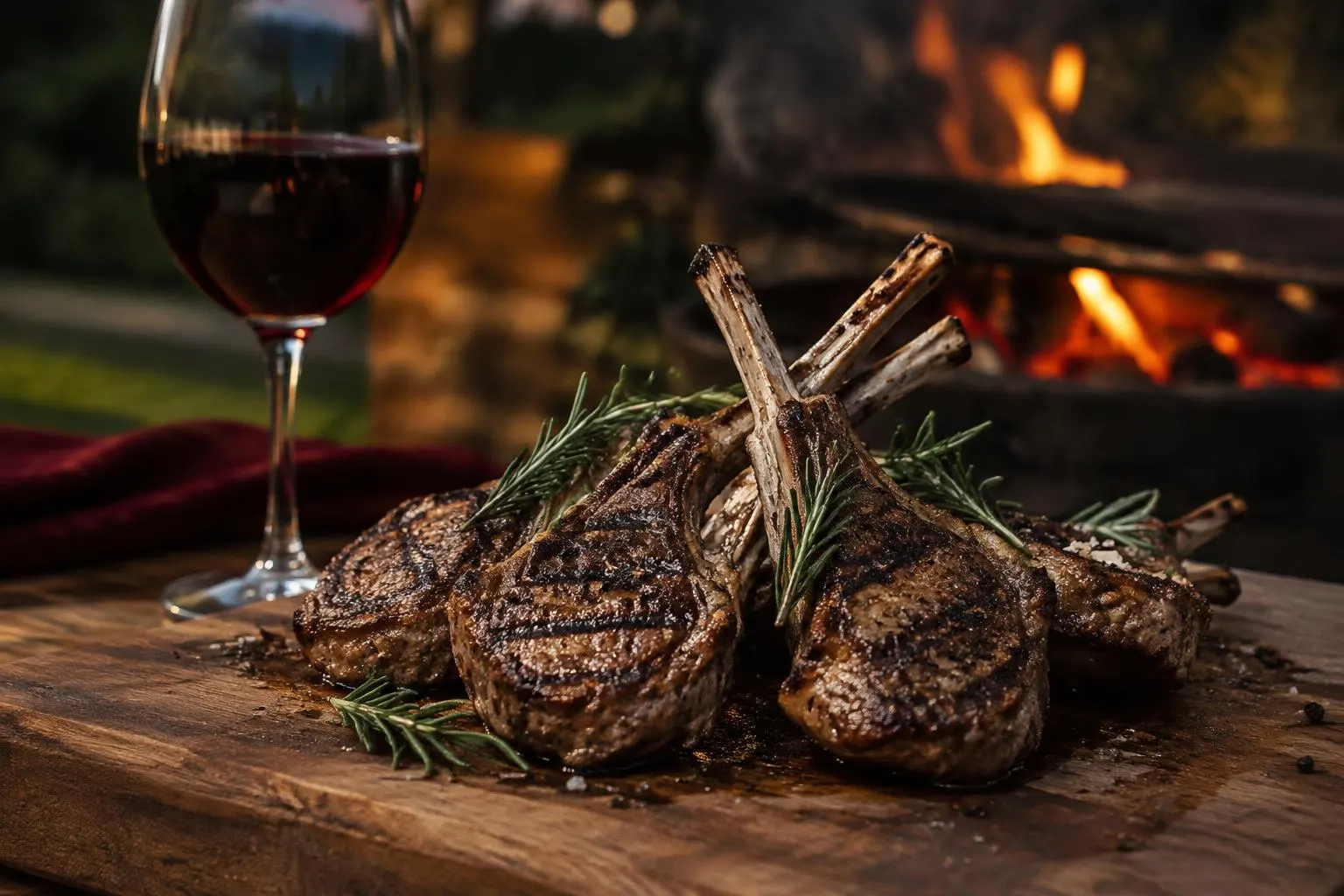
Rosemary needs no grand entrance on the grill. A little heat is enough to send its resinous scent drifting over the chops. Then come the browned edges of the meat, a glistening rim of fat and that brief hiss as a drop falls onto the embers. Now is the time for red wine. Spicy Syrah, balanced Rioja and fresh Chianti Classico are reliable directions to take, as long as they do not demand centre stage with excessive alcohol or harsh tannins.
Lamb has a distinctive flavour, but a small chop is not a joint that has been braising for hours. Beneath its browned surface, the meat can remain tender and juicy. A huge, heavily oaked red can sometimes feel like a winter coat on a summer evening alongside it. What you want is enough substance for the fat and chargrilled flavours, not as much weight as possible. How powerful the wine should be also depends on what sits beside the meat.
A Crust Is Not the Same as Char
A brown crust contributes savoury, roasted flavours. Black, burnt patches, by contrast, bring pronounced bitterness. When that meets a heavily tannic wine, the bitter impressions can add up. More tannin is therefore no remedy for a chop left on the grill too long. Better to avoid heavy charring and choose a wine with ripe, well-integrated tannins.
Salt can soften perceived bitterness and tannic harshness, making a red wine seem smoother and fuller. At the same time, meat provides umami, which can make wine seem more bitter, more drying and more acidic, while diminishing its fruit. Appropriate seasoning and enough fruit in the wine help restore balance. That does not mean the salt bowl has to become the most important ingredient at the grill. This is about balance, not a frantic round of corrective measures.
Acidity in wine refreshes the palate after fat and keeps the pairing lively. The familiar shorthand that tannin simply washes fat away, on the other hand, does not adequately explain the experience. What matters most when choosing is perceived freshness, tannin quality and the intensity of the food. For a comparison with more substantial cuts of meat, ribeye and Nebbiolo offer a useful reference. A lamb chop, however, does not automatically call for as much tannin as a large steak.
Three Reds, Each with Its Own Stride
Syrah is a lovely choice when rosemary, pepper and pronounced grilled notes set the tone. Its dark fruit and often peppery spice can complement those aromas, without making aromatic echoes a requirement. A fresher style with moderate alcohol, from the northern Rhône, for example, retains tension. Very opulent, high-alcohol versions can quickly feel heavy in hot weather and alongside bold seasoning.
Tempranillo-based Rioja offers a different kind of ease. Ripe fruit, supple tannins and restrained ageing notes work particularly well with simply grilled lamb and potatoes. The oak influence should not bury the meat under vanilla and toast. A fruity Garnacha that is not too hefty can fill this role too. Ripeness is not synonymous with power here; a balanced wine can speak softly.
With Sangiovese, Chianti Classico usually brings lively acidity and cherry fruit. That is especially useful when tomatoes have been on the grill or a tomato salad accompanies the lamb. Acidity in food makes wine seem less acidic, fuller and sweeter, so the wine needs sufficient acidity of its own. What holds true for spaghetti al pomodoro remains relevant beside the grill. A very young, angular Chianti can, however, seem austere with lean, lightly salted meat.
Interactive wine selector
How do you prepare Grilled Lamb Chops with Rosemary?
The default is a typical preparation. Adjust the settings to how your dish actually tastes, and the suggestions update instantly.
Wine styles to suit your dish
Choice 1
Nebbiolo, such as Barolo
Why it works: tannins and structure stand up to fat and protein and the tannins find a match in the meat.
Choice 2
Syrah or Shiraz
Why it works: tannins and structure stand up to fat and protein and the tannins find a match in the meat.
Get to know the Syrah / Shiraz grape varietyChoice 3
Champagne or grower-produced Sekt brut
Why it works: it is low in tannins and handles umami well and acidity and freshness cut through the fat.
Best avoided – Sweet red wine, such as Ruby Port. As a rule here, it is much sweeter than the dish and tastes cloying alongside it. Individual wines may vary.
The suggestions are wine styles, not specific bottles. Taste is personal, so feel free to try something that breaks the rules.
The Side Dish Gets a Say
A dollop of lemon yoghurt freshens the meal and introduces extra acidity alongside the wine. Sweet barbecue sauces change the picture more markedly. Their sweetness makes dry wine seem drier, more acidic and more bitter. For these chops, it is often easier to choose a sauce with little sweetness than to keep choosing an ever more powerful red. With strong chilli heat, high alcohol and pronounced tannins are also less favourable. Slow-braised meat, meanwhile, has a different texture, as with braised beef.
To try this out, divide a chop into three bites. Taste the wine first with the meat on its own, then with a little salt, and finally with lemon yoghurt or your side dish. Notice whether the tannins soften and the fruit holds its own. For an alcohol-free option, lightly brewed black tea, cooled and mixed with a little unsweetened sour cherry juice, is one possible astringent accompaniment. It is not a substitute for red wine. If it remains bitter or too acidic, water goes better with the meal than an ambitious experiment.
Brief and honest
- Spicy Syrah with Moderate Alcohol – Dark fruit and peppery spice suit rosemary and grilled notes. A fresh version that is not over-extracted leaves room for the meat. More about Syrah
- Balanced Tempranillo-Based Rioja – Ripe fruit and supple tannins complement lamb and potatoes. Restrained oak influence avoids competition between toasty notes and the grilled crust. More about Tempranillo
- Chianti Classico – Sangiovese brings acidity and cherry fruit for fattier bites and tomato-based sides. In young wines, the tannins should not be too angular.
Wine advisor: find the right grape variety in three questions · All grape varieties at a glance
Probably not – A Very Tannic, Heavily Oaked Red. Abundant tannins can taste bitter alongside burnt patches from the grill. A structured wine can nevertheless work with boldly seasoned, juicy meat if its tannins are ripe.
Alcohol-free – Lightly brewed black tea, cooled and mixed with a little unsweetened sour cherry juice, offers an astringent alternative, but is not a substitute for red wine. If bitterness or acidity dominates, water is the better choice.
How helpful was this article?
No sign-up and no cookies. We only store the stars, the article and a non-traceable identifier that changes daily to prevent repeat ratings. Ratings appear only after editorial review.
Try this at home
Divide a chop into three bites and try the wine first with the meat on its own. Then compare it with a little salt, and finally with lemon yoghurt or your side dish. Notice how soft the tannins seem and whether the fruit holds its own.
What this article is based on
- WSET Level 2 Award in Wines, Spezifikation mit dem Kapitel zu Wein und Speisen
- Wine & Spirit Education Trust (WSET), How to pair wine with your favourite takeaway meals
The scenes in this article are illustrative stories, not reporting. The basic rules follow WSET teaching; personal taste may differ.