Meat & poultry · Braised beef
When the Beef Has Time and the Wine Has Room to Breathe
Braised beef pairs well with a juicy Spätburgunder, a supple Merlot or a mature red Côtes du Rhône. The sauce and its seasoning are key: plenty of umami can make firm tannins seem harsher, while salt and well-balanced acidity in the food make the pairing easier.
- Salty
- Umami
- Rich & creamy
4 min read · Rebe & Traube editorial team
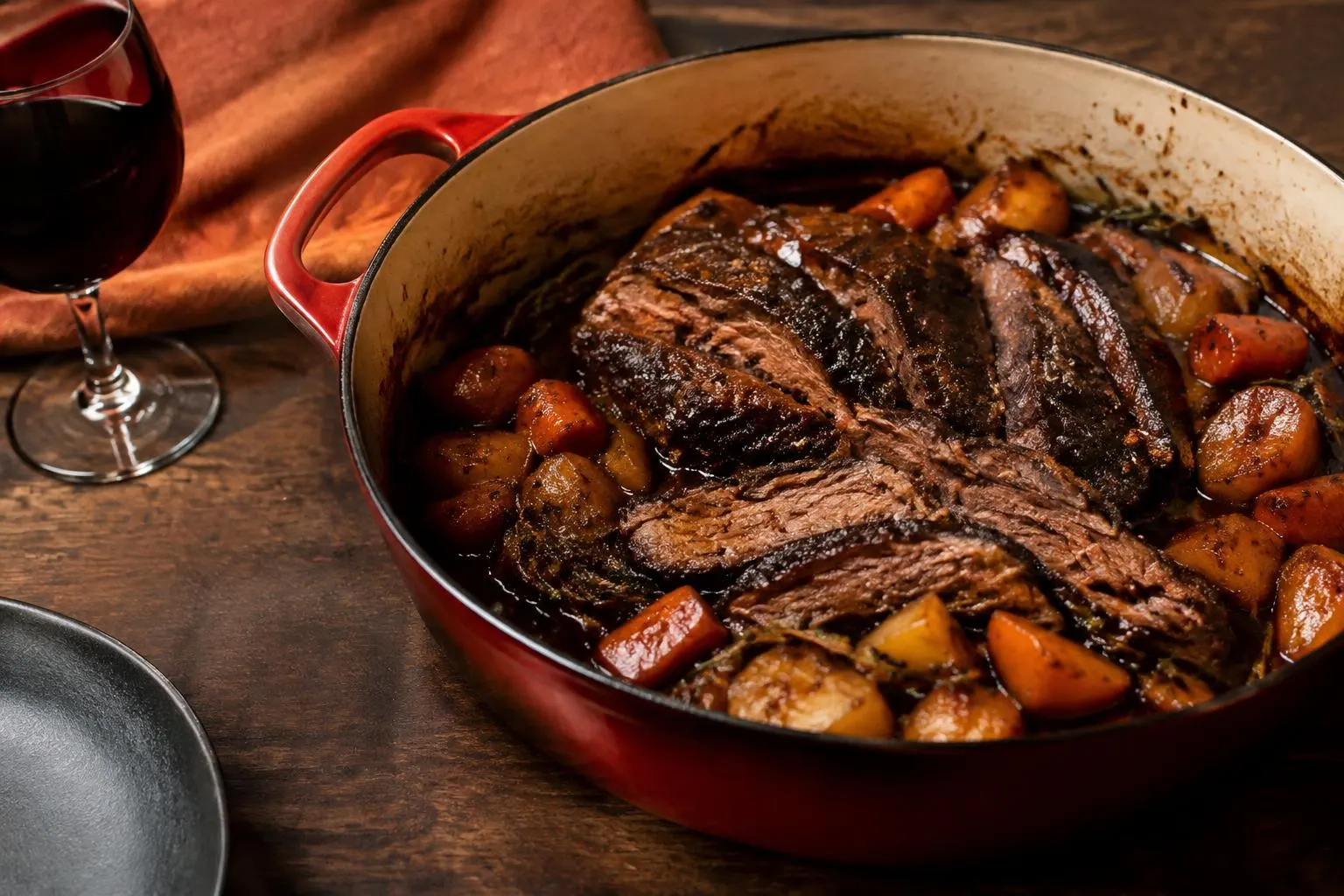
The lid lifts, steam briefly fogs your glasses, and somewhere beneath the dark sauce lies meat that yields to the lightest touch. Braised beef does not call for a wine that spends hours flexing its muscles too. A juicy Spätburgunder, a supple Merlot or a mature red Côtes du Rhône often makes a better companion at the table. They bring fruit and enough substance without turning every bite into a test of tannin tolerance.
It pays to look inside the pot rather than focus on the name of the cut. Boeuf bourguignon with mushrooms, bacon and wine tastes different from a German pot roast with root vegetables. And Sauerbraten, with its marinade, needs separate consideration. The meat lays the groundwork; the sauce leads the conversation.
Tender Meat Needs No Sharp Elbows
During long braising, collagen-rich connective tissue gradually turns into gelatin. This explains part of that soft, juicy mouthfeel. When choosing wine, though, it does not automatically mean you need as much tannin as possible. After all, we are not eating the deeply browned edge of a quickly seared steak, but often tender meat in a concentrated sauce.
Meat juices, mushrooms and stocks reduced for a long time can bring plenty of umami. Umami tends to make wine seem more bitter, more astringent and more acidic, while also less fruity and less sweet. A young, angular Cabernet can suddenly seem rather stern. Enough salt and suitable acidity in the dish help make the match friendlier. The interplay of umami, mushrooms and Parmesan explains more.
Salt softens the perception of bitterness and tannin and can make wine seem fuller. Even so, adding salt is not a fix for every bottle. The sauce should first taste right on its own. A small splash of mild wine vinegar can freshen a heavy sauce, but it needs a careful hand so that depth does not suddenly turn into marinade.
Three Red Routes to a Tender Bite
Spätburgunder works particularly well when mushrooms and a red wine sauce that has not been reduced too thickly set the tone. Look for a juicy, fairly medium-bodied style with restrained oak. Its acidity keeps the next bite lively, while its comparatively fine tannins give the tender meat room. A light Beaujolais made from Gamay is a good alternative when the braised beef is less rich.
Merlot takes over when the sauce becomes darker and fuller-bodied. Plummy fruit and supple tannins can be lovely with braised root vegetables and beef. This means a balanced, dry wine, not a sweet-seeming powerhouse with lots of new oak. An approachable, Merlot-led Bordeaux is another option.
A mature red Côtes du Rhône often brings spicy notes that echo herbs and pronounced browned flavours. Look for moderate alcohol and a style that is already approachable. Very high-alcohol, heavily extracted wines can quickly weigh down an already rich plate. Meat with pronounced grilled flavours calls for a different emphasis, as with grilled lamb chops.
The Sauce Has the Final Say
Red wine in the braising pot does not oblige you to pour the same bottle at the table. Heat, reduction and the other ingredients change its character considerably. For the pot, a clean, dry wine without intrusive oak dominance is enough. What goes into the glass later should suit the finished sauce.
Lingonberries, sweet cooked onions or glazed carrots change the equation. Sweetness in food makes dry wine seem more acidic, more bitter and drier. Keep these sides fairly restrained rather than looking for the answer in ever more powerful red wines. A distinctly sweet sauce needs corresponding sweetness in the wine, not simply fruit that smells ripe. If the braised beef is distinctly tangy, on the other hand, sufficient acidity in the wine matters. Mashed potatoes usually make the pairing calmer; a salad with a tangy dressing makes it livelier.
Interactive wine selector
How do you prepare Braised beef?
The default is a typical preparation. Adjust the settings to how your dish actually tastes, and the suggestions update instantly.
Wine styles to suit your dish
Choice 1
Nebbiolo, such as Barolo
Why it works: tannins and structure stand up to fat and protein and the tannins find a match in the meat.
Choice 2
Syrah or Shiraz
Why it works: tannins and structure stand up to fat and protein and the tannins find a match in the meat.
Get to know the Syrah / Shiraz grape varietyChoice 3
Champagne or grower-produced Sekt brut
Why it works: it is low in tannins and handles umami well and acidity and freshness cut through the fat.
Best avoided – Sweet red wine, such as Ruby Port. As a rule here, it is much sweeter than the dish and tastes cloying alongside it. Individual wines may vary.
The suggestions are wine styles, not specific bottles. Taste is personal, so feel free to try something that breaks the rules.
A Spoonful of Sauce to Guide You
At home, first taste a sip of wine on its own, then a bite of meat with sauce, followed by the same wine again. Next, set aside a spoonful of sauce and add a few grains of salt to that sample only. Repeat the comparison and notice whether the wine seems less astringent and its fruit more distinct. That keeps the whole pot safe from well-intentioned experimentation.
For an alcohol-free option, try unsweetened rooibos tea, brewed not too strongly, with a small splash of sour cherry juice. It offers spice and a little fresh fruit, but replaces neither the body nor the length of a red wine. A very tannic black tea would be a trickier shortcut alongside an umami-rich sauce. And if you reheat leftovers the next day, feel free to choose the wine afresh: a sauce that has reduced further can taste noticeably more intense.
Brief and honest
- Juicy Spätburgunder with little oak – Fine tannins and lively acidity suit tender meat and a mushroom-led sauce that is not too heavy. More about Spätburgunder
- Supple dry Merlot – Its fruit and medium to full body complement dark braising sauces. A balanced style is more helpful than lots of alcohol and new oak.
- Mature red Côtes du Rhône – Spice and approachable tannins suit a rich sauce and herbs. Choose one that is not too high in alcohol.
Wine advisor: find the right grape variety in three questions · All grape varieties at a glance
Probably not – Very young, heavily tannic Cabernet Sauvignon. Plenty of umami in the meat and sauce can intensify its bitterness and astringency. With maturity, suitable salting and a less concentrated sauce, the same type of wine can work better.
Alcohol-free – Unsweetened, gently brewed rooibos tea with a little sour cherry juice offers spice and freshness. It remains lighter and shorter on the palate than red wine.
How helpful was this article?
No sign-up and no cookies. We only store the stars, the article and a non-traceable identifier that changes daily to prevent repeat ratings. Ratings appear only after editorial review.
Try this at home
Taste the wine first on its own, then after a bite of meat with sauce. Add a few grains of salt to a spoonful of sauce set aside separately, and repeat the comparison. Notice whether bitterness and astringency decrease and the fruit becomes more distinct.
What this article is based on
The scenes in this article are illustrative stories, not reporting. The basic rules follow WSET teaching; personal taste may differ.