Pasta, pizza & Flammkuchen · Lasagne Bolognese
The Right Wine Awaits Beneath the Golden Crust
Lasagne Bolognese pairs well with a juicy Sangiovese, a fresh Barbera or an approachable Montepulciano d’Abruzzo. Their acidity offers freshness alongside the béchamel, while fruit and moderate tannins complement the hearty ragù.
- Sour
- Rich & creamy
- Umami
- Salty
3 min read · Rebe & Traube editorial team
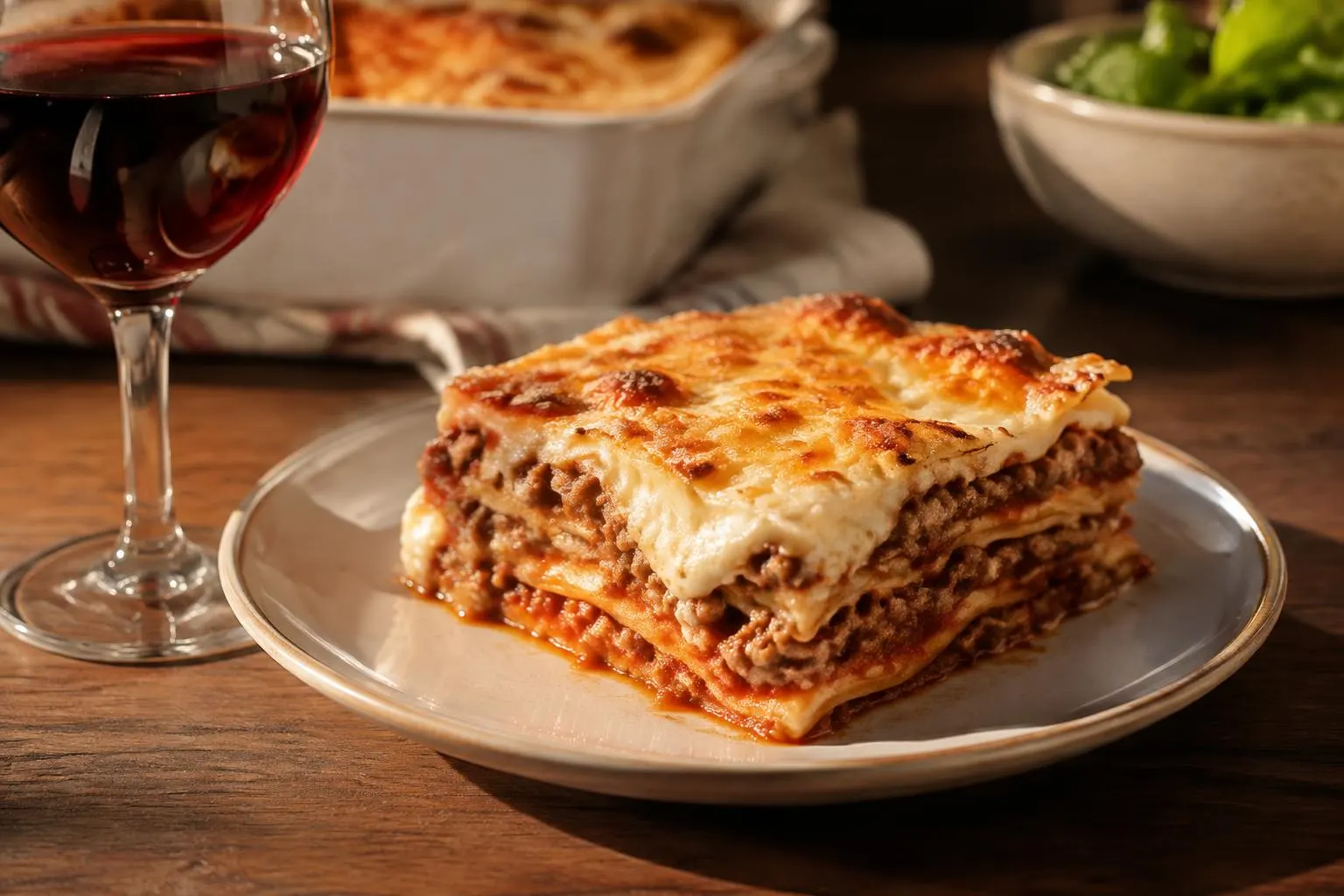
The Gentle Crackle of the Cheese Crust
The first serving of lasagne is rarely a geometric masterpiece. A sheet of pasta slips, béchamel spills into the gap, and a particularly coveted piece of crust dangles from the edge. This little jumble explains the question of wine better than the label “meat dish”. Tomato, milk, fat, meat juices and aged cheese all come together here. A wine need not be as full-bodied as possible; it needs to move nimbly between these impressions.
A juicy Sangiovese, such as a Chianti without too much oak influence, is a good starting point. It brings red fruit and lively acidity. That keeps the next bite interesting without drowning out the creamy layers. If you automatically associate lasagne with the most powerful red on the shelf, it is easy to overlook just how much freshness is needed beneath that golden blanket.
Tomato Sets the Terms
The sauce determines how much acidic backbone the wine can have. Acidity in food makes wine seem less acidic, fuller and slightly sweeter. A tomato-led lasagne therefore needs a wine with enough acidity of its own; otherwise, it can quickly seem flabby and tired alongside it. The same basic principle applies to Spaghetti al pomodoro, though lasagne has an additional soft cushion of béchamel.
The acidity in wine does not chemically remove the fat in béchamel. Rather, the impression of freshness creates a pleasant sensory counterpoint. With plenty of béchamel, the wine can have a little more body. Plenty of body does not necessarily mean plenty of alcohol. A balanced, medium-bodied red can be a better companion to the baked dish than a concentrated powerhouse whose warmth lingers after every bite.
Meat, tomatoes and Parmesan also contribute umami. This taste can make wine seem more bitter, more astringent and less fruity. Salt in the dish, in turn, softens the perception of bitterness and tannin. That is why a mature red that is not dominated by tannins is often the more easygoing choice. The interplay of umami, mushrooms and Parmesan offers more background.
Three Red Routes to the Baking Dish
Sangiovese works especially well when tomato and herbs define the ragù. Its tart cherry fruit does not seem sweetish alongside the meat, but its tannins should be supple. A young, approachable Chianti makes more sense than a bottle that impresses mainly through new oak and still-angular tannins. The name alone, however, does not guarantee this style.
Barbera is the alternative for anyone who likes freshness but wants fewer tannins. Its often lively acidity and juicy fruit can also carry a generous helping of béchamel. Versions with very high alcohol and pronounced oak influence lose some of this advantage. Look for a fresh, fairly uncomplicated style rather than the greatest possible concentration.
Montepulciano d’Abruzzo comes into play when the ragù tastes dark and meaty and the crust is deeply browned. It can be rounded and spicy, but should not be jammy or mouth-drying. A light Valpolicella would be another option for a more delicate lasagne. With a very creamy version, even a full-bodied, dry Weißburgunder is worth trying, although red remains the more obvious direction here.
Interactive wine selector
How do you prepare Lasagne Bolognese?
The default is a typical preparation. Adjust the settings to how your dish actually tastes, and the suggestions update instantly.
Wine styles to suit your dish
Choice 1
Nebbiolo, such as Barolo
Why it works: tannins and structure stand up to fat and protein and the tannins find a match in the meat.
Choice 2
Syrah or Shiraz
Why it works: tannins and structure stand up to fat and protein and the tannins find a match in the meat.
Get to know the Syrah / Shiraz grape varietyChoice 3
Champagne or grower-produced Sekt brut
Why it works: it is low in tannins and handles umami well and acidity and freshness cut through the fat.
Best avoided – Sweet red wine, such as Ruby Port. As a rule here, it is much sweeter than the dish and tastes cloying alongside it. Individual wines may vary.
The suggestions are wine styles, not specific bottles. Taste is personal, so feel free to try something that breaks the rules.
Save a Corner for a Comparison
Set out two small glasses, one with Barbera and one with a noticeably more tannic red. Taste both on their own first, then after a bite of ragù and cheese. Notice which wine keeps its fruit and which suddenly seems more astringent. A second bite with an especially generous amount of béchamel will show whether there is enough freshness.
Serve the reds slightly cool rather than at living-room temperature. This keeps fruit and acidity more distinct, while alcohol is less prominent. An alcohol-free, lightly sparkling red grape drink with little sweetness can also work, but it needs enough acidity and should not taste like grape juice. If the products available are distinctly sweet, unsweetened rosehip tea, cooled and carefully diluted with water, is often the quieter companion. It need not pretend to be red wine either.
Brief and honest
- Juicy Sangiovese, such as Chianti – Acidity and red fruit complement the tomato. Moderate tannins leave room for the hearty ragù.
- Fresh Barbera – Lively acidity offers freshness alongside béchamel, usually without pronounced tannic harshness. More about Barbera
- Approachable Montepulciano d’Abruzzo – Rounded fruit and spice suit meaty ragù and a browned crust.
Wine advisor: find the right grape variety in three questions · All grape varieties at a glance
Probably not – Very tannic red with pronounced oak influence. Umami can make its bitterness and astringency more prominent. With well-matured tannins, the pairing can be more harmonious.
Alcohol-free – An alcohol-free, lightly sparkling red grape drink with little sweetness and fresh acidity is worth trying. Unsweetened, cooled rosehip tea is a less wine-like alternative.
How helpful was this article?
No sign-up and no cookies. We only store the stars, the article and a non-traceable identifier that changes daily to prevent repeat ratings. Ratings appear only after editorial review.
Try this at home
Compare Barbera with a more tannic red, tasting them on their own first. Then try both after a bite of ragù and Parmesan. Notice which wine stays fruity and which seems more astringent.
What this article is based on
- WSET Level 2 Award in Wines, Spezifikation mit dem Kapitel zu Wein und Speisen
- Wine & Spirit Education Trust (WSET), How to pair wine with your favourite takeaway meals
The scenes in this article are illustrative stories, not reporting. The basic rules follow WSET teaching; personal taste may differ.