Spicy & international · Pad Kra Pao with Chili and Holy Basil
Basil, Chili and a Glass That Keeps Its Cool
For spicy Pad Kra Pao, the first choice is a Riesling with residual sweetness, low alcohol and clearly defined fruit. A light, off-dry Gewürztraminer or a fruity, not-quite-dry rosé are alternatives, as long as alcohol and tannin stay restrained.
- Spicy
- Salty
- Umami
- Rich & creamy
4 min read · Rebe & Traube editorial team
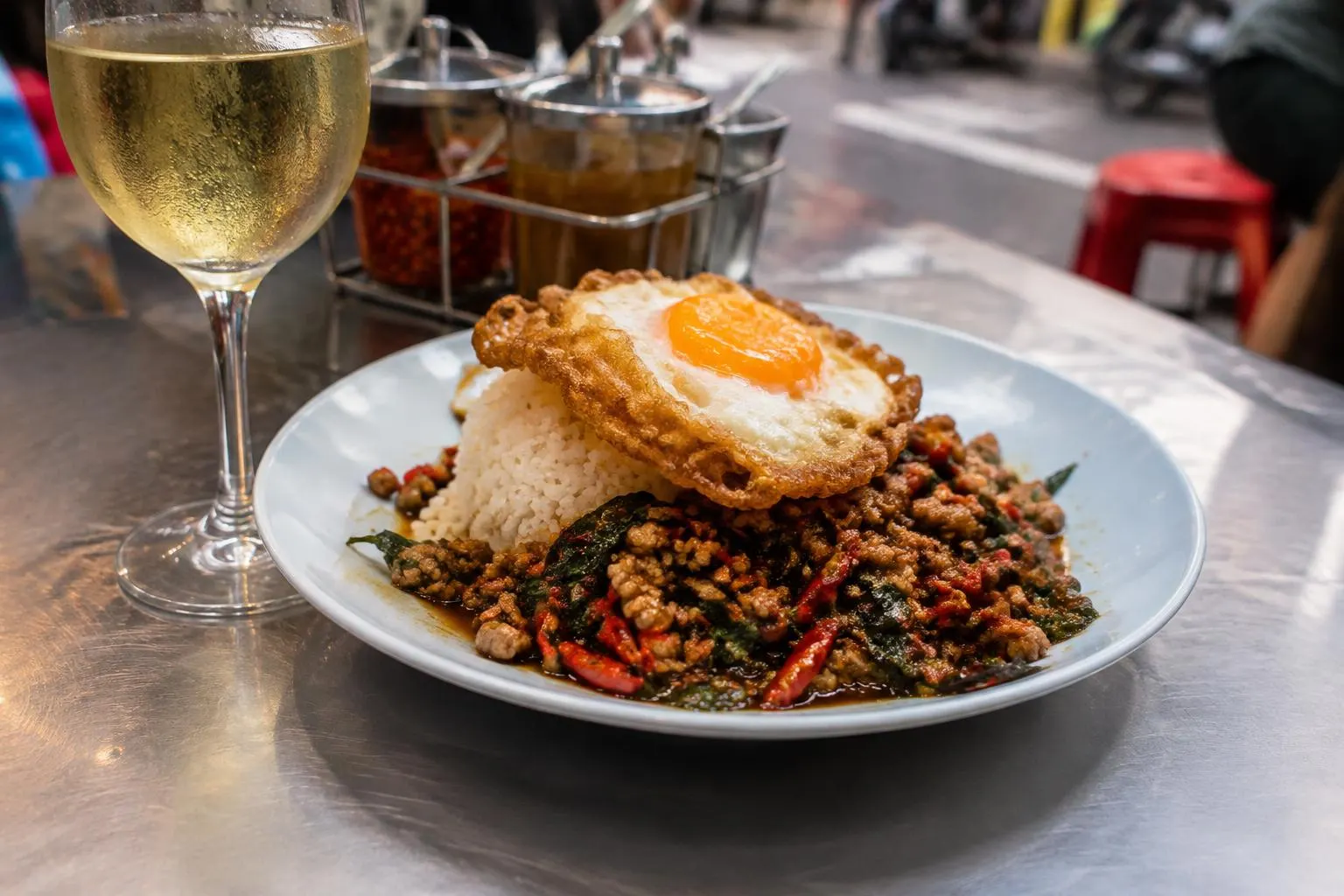
The first bite is fragrant, salty and savory. By the second, the chili makes itself known, and suddenly the glass beside your plate gets an unusual amount of attention. Pad Kra Pao doesn't need a wine that wins a contest for the loudest voice. It needs one with enough fruit, and an alcohol level that won't add fuel to the fire.
A Riesling with residual sweetness and low alcohol is a good starting point. Its fruit remains distinct alongside the bold seasoning, and a little sugar can soften the perception of heat. A light, off-dry Gewürztraminer or a fruity rosé with some residual sweetness are also possibilities. How well they work depends above all on the actual amount of chili, not the name on the menu.
Not a Coconut Curry in Disguise
Pad Kra Pao is a quickly stir-fried dish with chili, garlic and holy basil. Depending on the preparation, the pan might hold minced meat, chicken or plant-based ingredients. Rice and a fried egg often accompany it. Aromatic, spicy holy basil is not the same as Thai basil, which often has an anise-like scent, though home cooks sometimes substitute one for the other.
The sauce may contain fish sauce, soy sauce and oyster sauce in various combinations. A plant-based version calls for plant-based seasoning sauces accordingly. Coconut milk, by contrast, is not typical of Pad Kra Pao. If that creamy mildness is what you're after, you're more likely to find it in a coconut and vegetable curry. The distinction matters when choosing wine, because here the chili often arrives on the plate with very little to hide behind.
Rice softens the overall impression of a bite by diluting the heavily seasoned ingredients. It doesn't undo the heat, though. A crisp-fried egg adds fat and browned flavors. Both can make a slightly fuller-bodied wine welcome, but neither is reason enough to reach for a high-alcohol red.
Chili Reads the Fine Print
Heat is not one of the five basic tastes, but a sensation of irritation. Alcohol can intensify the burning, while pronounced tannin can make the combination even more unpleasant. That's why high alcohol is often a more important warning sign here than whether the wine is white or pink. Checking the label is more worthwhile than reading a particularly flowery description.
Some residual sweetness and clear fruit can help cushion the heat. Sugar doesn't reliably put out chili's fire, however, and even a well-matched wine can reach its limits with very spicy food. If the sauce is also noticeably sweetened, the wine should taste at least as sweet. Otherwise, it will seem drier, more acidic and more bitter. With a predominantly savory Pad Kra Pao, by contrast, residual sweetness serves mainly as a counterweight to the heat.
A Riesling Kabinett with noticeable residual sweetness is therefore often a sensible choice. But Kabinett doesn't automatically mean sweet: dry versions exist too. What matters is the wine's actual sweetness level and a low alcohol content. A related principle can be seen with Penne all'arrabbiata, although the tomato adds another element of acidity there.
Savory Sauces Call for Juicy Fruit
Fish sauce, soy sauce and some mushroom sauces bring plenty of umami as well as salt. Umami can make wine seem more bitter, more astringent and more acidic, while pushing its fruit into the background. Salt can partly soften this effect. Even so, a fruity, low-tannin style is usually a more comfortable choice than a young, heavily extracted red. Similar pitfalls arise with sushi with soy sauce and wasabi, although wasabi produces a different kind of heat sensation.
With its intense perfume, Gewürztraminer suits this aromatic stir-fry well, provided it isn't high in alcohol and heavy. Its often moderate acidity is less of a problem here than with a strongly acidic dish. Fruity rosé with some residual sweetness works particularly well with medium heat and restrained tannin. All three styles taste good well chilled, but not so icy that hardly any aroma remains.
Interactive wine selector
How do you prepare Pad Kra Pao with Chili and Holy Basil?
The default is a typical preparation. Adjust the settings to how your dish actually tastes, and the suggestions update instantly.
Wine styles to suit your dish
Choice 1
Champagne or grower-produced Sekt brut
Why it works: it is low in tannins and handles umami well and salt makes it softer and rounder.
Choice 2
Off-dry or fruity-sweet Riesling Kabinett
Why it works: fruitiness and a little sweetness soften the heat and it is low in tannins and handles umami well.
Get to know the Riesling grape varietyChoice 3
Sauvignon Blanc
Why it works: it is low in tannins and handles umami well and acidity and freshness cut through the fat.
Best avoided – Sweet red wine, such as Ruby Port. As a rule here, it is much sweeter than the dish and tastes cloying alongside it. Individual wines may vary.
The suggestions are wine styles, not specific bottles. Taste is personal, so feel free to try something that breaks the rules.
Two Bites, Two Glasses, No Heroics
Prepare a portion that's mild to begin with, then divide it. Add a little extra chili to just one half. Try the same Riesling with residual sweetness alongside both, with still water beside it. Pay attention to burning, fruit and bitterness rather than bravely piling on more chili. If needed, a few bites of unseasoned rice make the break more comfortable.
For an alcohol-free pairing, try cool, lightly brewed jasmine tea with a small splash of white grape juice. It brings fragrance and a little sweetness, but shouldn't be brewed to the point of bitterness. With very intense heat, a gentle drink is often more sensible than trying to make sense of a complicated wine at that very moment.
Brief and honest
- Low-Alcohol Riesling Kabinett with Residual Sweetness – Fruit and residual sweetness cushion the chili, while low alcohol avoids adding to the heat. Kabinett alone doesn't guarantee sweetness, so check the stated sweetness level. More about Riesling
- Light, Off-Dry Gewürztraminer – Its intense perfume accompanies the basil and garlic. The key is a style with some residual sweetness that isn't too high in alcohol. More about Gewürztraminer
- Fruity Rosé with Some Residual Sweetness – Can work well with medium chili heat when alcohol and tannin are restrained. Very spicy versions often call for more sweetness and less alcohol.
Wine advisor: find the right grape variety in three questions · All grape varieties at a glance
Probably not – High-Alcohol Red Wine with Pronounced Tannin. Alcohol can intensify chili's burn, while tannin can seem bitter and drying alongside umami. With a very mild preparation, a light, low-tannin red is more conceivable.
Alcohol-free – Cool, lightly brewed jasmine tea with a little white grape juice offers fragrance and gentle sweetness. Tea brewed to the point of bitterness is unhelpful, and this drink can't simply cancel out extreme heat either.
How helpful was this article?
No sign-up and no cookies. We only store the stars, the article and a non-traceable identifier that changes daily to prevent repeat ratings. Ratings appear only after editorial review.
Try this at home
Divide a portion of Pad Kra Pao that's mild to begin with, and add a little extra chili to just one half. Try the same Riesling with residual sweetness alongside both, with still water beside it. Compare burning, fruit and bitterness, and take a break with unseasoned rice if needed.
What this article is based on
- WSET Level 2 Award in Wines, Spezifikation mit dem Kapitel zu Wein und Speisen
- Wine & Spirit Education Trust (WSET), How to pair wine with your favourite takeaway meals
The scenes in this article are illustrative stories, not reporting. The basic rules follow WSET teaching; personal taste may differ.