Wine encyclopedia
Gutedel and Chasselas
The qualities of goodness and nobility embodied in its name have allowed this grape variety to survive for 5 millennia. From Egypt to France and then, 400 years ago, to Germany's wine-growing regions, Gutedel never had to fear extinction. For it simply adapts, absorbing all the distinctive characteristics of the soil and climate and developing into a wine for every occasion.
6 min read
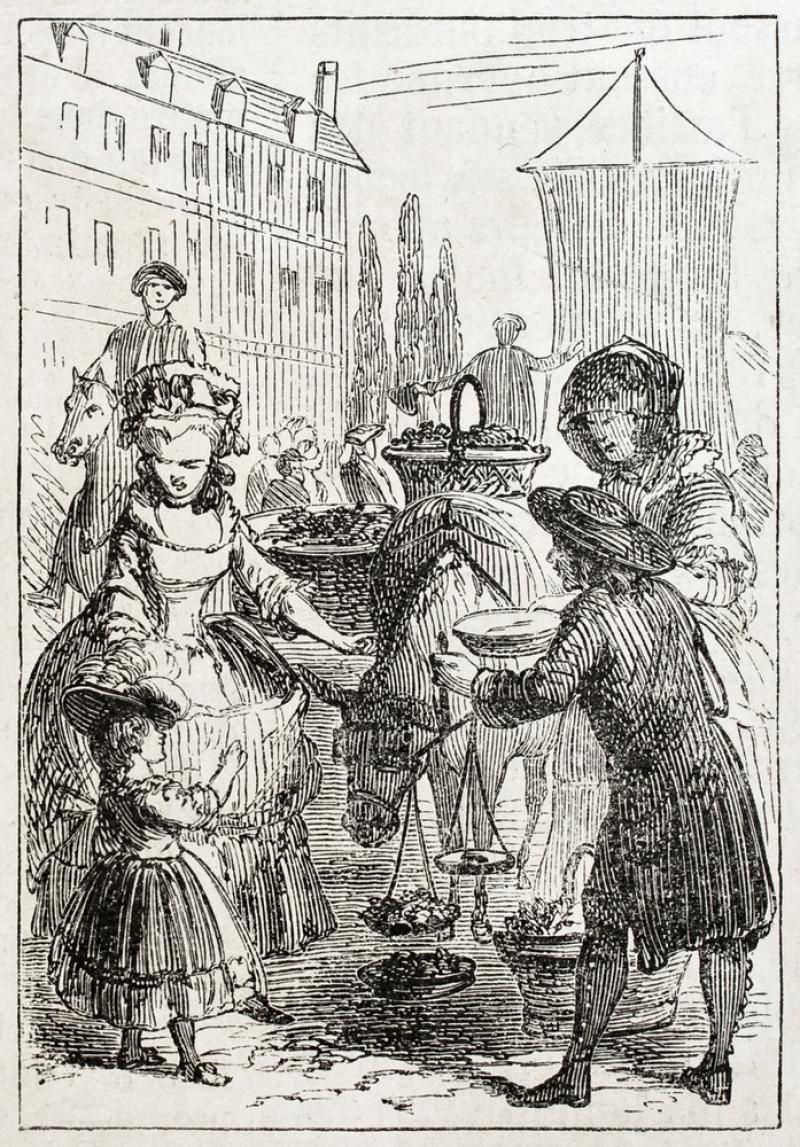
The characteristics of a very special white wine
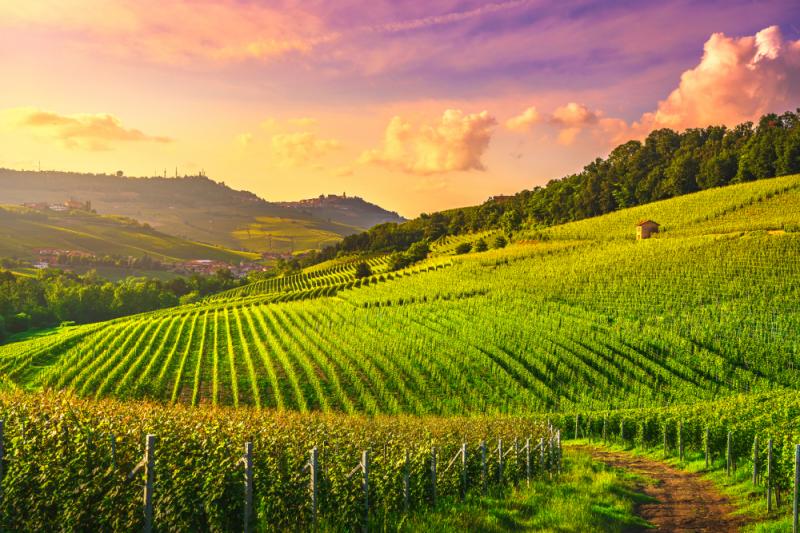
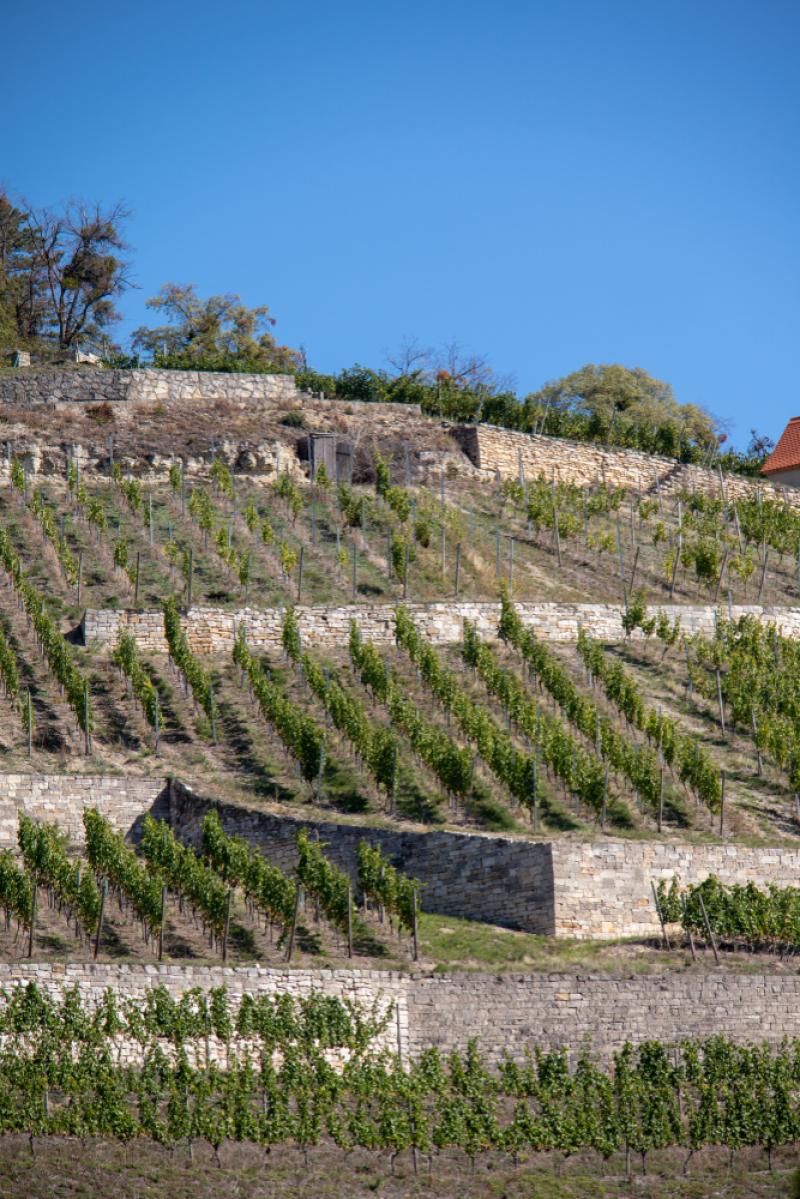
Like wine, like people, they say here, referring to the people of Markgräflerland and Gutedel. But what is that supposed to mean? Surely it cannot mean that everyone here is sour, mineral or tannic. Markgräflerland is a region situated between Freiburg and Basel. Here there are endless expanses of fruit trees and vineyards, with fir trees swaying in the background on the edge of the Black Forest. The Rhine flows its final metres out of Switzerland and from here becomes a mighty river. On the vineyard slopes in between grows Gutedel. It is a wine for every situation. It goes well with food and is just as suitable for a glass in between. But you have to know how to appreciate it, because the ancient Gutedel grape variety reveals its aromas only sparingly. A little fruit, a little blossom, and sometimes a hint of almond comes through—that is all. It is simply reserved, like the local people, they say here.
The history of Gutedel
This wine is truly ancient. And unfortunately, with a history stretching back 5,000 years, we also have to rely on assumptions and accounts handed down through the ages. The grape variety's spread over millennia through numerous peoples and their wars is a principal explanation for the dissemination of culture, and of Gutedel too. The Egyptians, Phoenicians and Greeks, as well as the Romans and Crusaders, probably carried just about everything from East to West and back again in those days. Some suspect the wine originated in Jordan, others in Egypt. Yet modern research now claims a different answer. The distant ancestors of Gutedel may perhaps have come from Egypt or the Jordan Valley. Certain characteristics point in that direction. However, the results of a DNA analysis support the hypothesis that the Gutedel known today was selected by winegrowers in Central Europe, in the Western Alps. As with many of today's varieties, its distant ancestors are thought to have come from the southeast. But even genetic technology cannot provide a definitive answer.
When it comes to its name, this grape variety occupies a rather interesting position. Almost simultaneously, it acquired three names in the three growing regions in France, Switzerland and Germany. While in France it was called Chasselas, after the village where it was grown, in Switzerland it was given the name Fendant and in the Württemberg growing region Gutedel.
Gutedel is said to have become more widely established within Germany only through the efforts of Margrave Karl Friedrich of Baden. In 1780, he brought planting material from Vevey, a well-known wine-growing community on Lake Geneva, to the area south of Freiburg.
The many names of Gutedel
This grape variety certainly has an extraordinarily long history. And that is precisely why the now-famous Markgräfler wines have repeatedly been given different names in almost every region over those 5,000 years. Have fun learning them by heart.
Gutedel or Chasseles is also known as:
Abelione, Abelone, Ag Shasla, Albillo, Albilloidea, Alsacia Blanca, Amber Chasselas, Amber Muscadine, Auslender, Bar Sur Aube, Bar Sur Auhe, Bassiraube, Bela Glera, Bela Sasla, Bela Zlahtnina, Berezka, Berezka Prostaja, Berezka Prostaya, Berioska Casla, Beyaz Gutedel, Biela Plemenika Praskava, Biela Plemenka, Biela Plemincka Chrapka, Biela Plemincka Pruskava, Biela Plemincka Pruskawa, Blanchette, Blanquette, Bois Rouge, Bon Blanc, Bordo, Bournet, Bournot, Buaki, Burda, Caslador, Charapka, Chasselas, Chasselas 1, Chasselas A Bois Rouge, Chasselas Angevin, Chasselas Bianco, Chasselas Blanc Royal, Chasselas Blanchette, Chasselas Cioutat, Chasselas Crognant, Chasselas Krokant, Chasselas De Bar-Sur-Aube, Chasselas De Bordeaux, Chasselas De Florence, Chasselas De Fontainebleau, Chasselas De Fontainebleau, Chasselas De Jalabert, Chasselas De La Contrie, Chasselas De La Nåby, Chasselas De Moissac, Chasselas Montauban, Chasselas De Mornain, Chasselas De Pondichery, Chasselas De Pontchartrain, Chasselas De Pouilly, Chasselas De Quercy, Chasselas De Rappelo, Chasselas De Tenerife, Chasselas De Tenerisa, Chasselas De Thomeri, Chasselas De Thomery, Chasselas De Toulaud, Chasselas De Vaud, Chasselas Di Fountanbleau, Chasselas Di Thomery, Chasselas Dorada, Chasselas Dorato, Chasselas Dore, Chasselas Dore Hatif, Chasselas Dore Salomon, Chasselas Dorée, Chasselas Du Doubs, Chasselas Du Portugal, Chasselas Du Roi, Chasselas Du Serail, Chasselas Du Thor, Chasselas Dugommier, Chasselas Dur, Chasselas Fendant, Chasselas Fendant Roux, Chasselas Giclet,
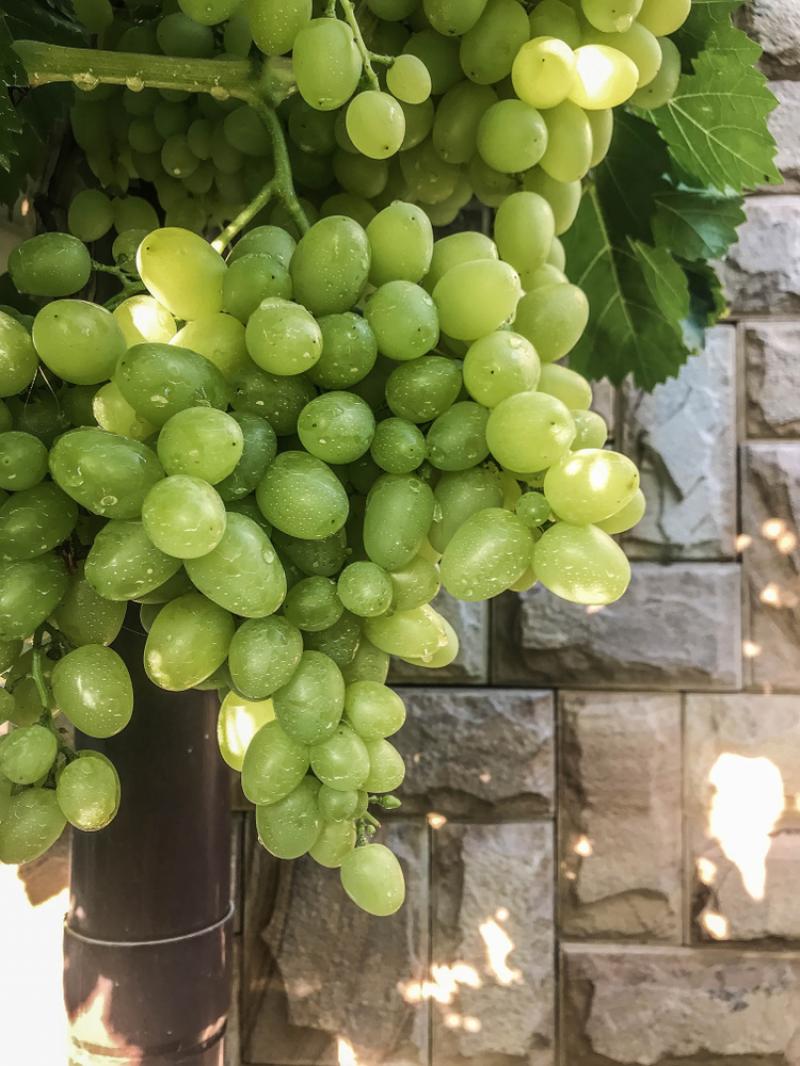
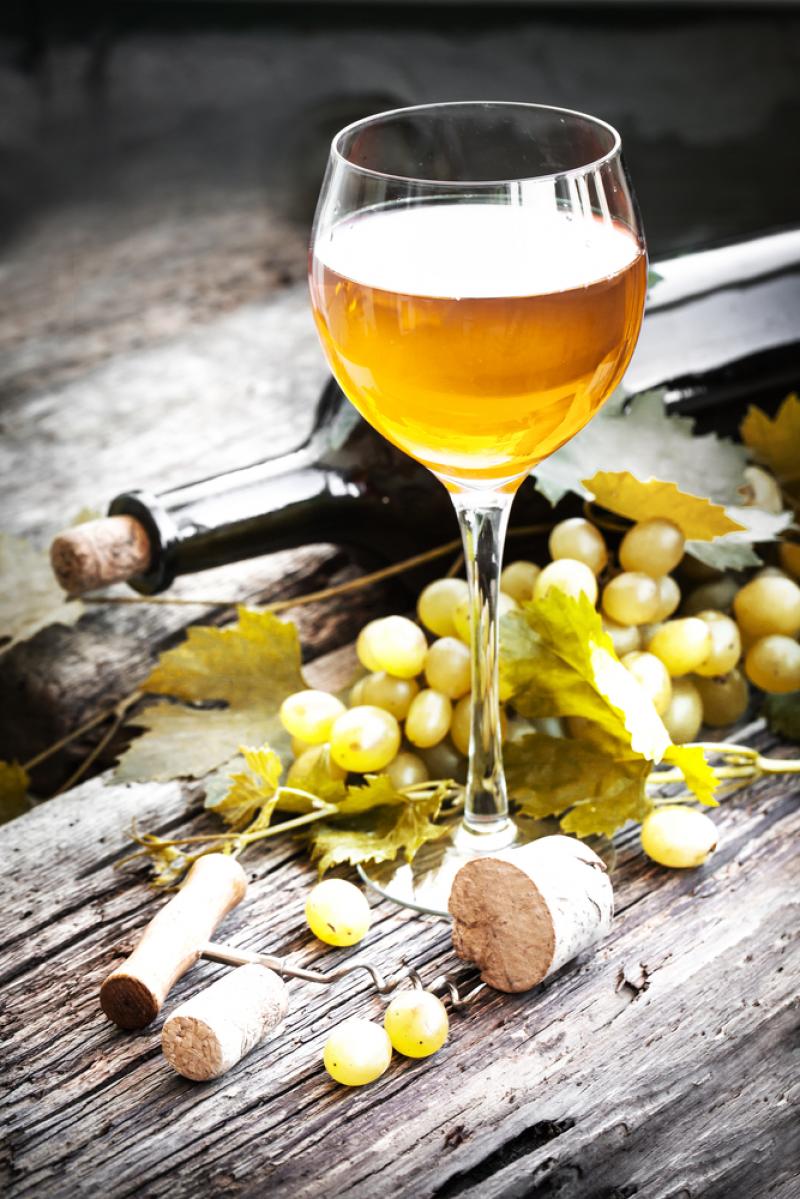
A Gutedel holds many surprises
...more names
Chasselas Hatif De Tenerife, Chasselas Haute Selection, Chasselas Jalabert, Chasselas Jaune Cire, Chasselas Musque, Chasselas Piros, Chasselas Plant Droit, Chasselas Queen Victoria, Chasselas Reine Victoria, Chasselas Salsa, Chasselas Tokay Angevine, Chasselas Vert De La Cote, Chasselas Weiss, Chasselat, Chrapka, Chrapka Bila, Chrupka, Chrupka Biela, Chrupka Bila, Chrupka Uslachtila, Common Muscadine, Cote Rouge, Danka Belaya, Debrorozne, Diamant, Diamanttraube, Dinka Belaja, Dinka Belaya, Dinka Blanche, Dobrohrozen, Dobrorozne, Doppelte Spanische, Dorianer, Dorin, Doucet, Dreixle, Eau Douce Blanche, Edelschoen, Edelwayn, Edelwein, Edelweiss, Edelxeiss, Elba Toro, Elsaesser, Elsasser Weiss, Fabian, Fabian Szoeloe, Fabianszoeloe, Fabiantraube, Fabianzoeloe, Feder Ropoos, Feher Chasselas, Feher Fabianszoeloe, Feher Gyoengyszoeloe, Feher Repoos, Feher Repoos Fabian, Feher Ropogos, Feher Ropvos Fabian, Feher Rpoos Fabian, Fendant, Fendant Blanc, Fendant Roux, Fendant Vert, Florenci Jouana, Fondan Belyi, Franceset, Franceseta, Frantraube, Frauentraube, Gamet, Ganzwaelsche, Gelber Gutedel, Gemeiner Gutedel, Gentil Blanc, Gentil Vert, Gerezka, Giclet, Golden Bordeaux, Golden Chasselas, Goldgutedel, Gotadel Weisser, Grossblaettrige,
...still more names
Grossblaettrige Spanische, Grosse Spanische, Grosser Spaniger, Gruener Gutedel, Gutedel, Gutedel Pariser, Gutedel Weiss, Gutedel Weisser, Gutedler, Gyoengyszoeloe, Gyoengyzoeloe, Junker, Kapucínské, Koenigs Gutedel, Kracher, Krachgutedel, Krachlampe, Krachmost, Krachmoster, Lardeau, Lardot, Lausannois, Lendant Blanc, Lourdot, Maisa, Malvasia De El Bierzo, Markgraefler, Marnan Blanc, Marzemina, Marzemina Bianca, Marzemina Niduca, Meutger, Moren, Morlenche, Mornan Blanc, Mornant, Mornant Blanc, Mornen, Mornen Blanc, Die Meisten, Most Rebe, Moster, Moster Suessling, Mostmatt, Muealicevi Sasla, Pariser Gutedel, Perlan, Perltraube, Pinzutella, Plamenka, Plamenka Bijela, Plant De Toulard, Plant De Toulaud, Plant Droit, Plemenika Praskava, Plemenka, Plemenka crvena, Plemenka Bela, Plemenka Bijela, Plemenka Rana, Pleminka Biela, Praskava, Pruscava Biela, Pruskawa, Königin Victoria, Queen Victoria Weiss, Raisin D’Officier, Raisin De Champagne, Ranka, Rdeca Zlahtina, Rebe Herrn Fuchses, Reben Herm Fuchs, Reben Herrn, Rheinrebe, Rosmarinentraube, Rosmarintraube,

...these are the last possible names for Gutedel.
Rostroter Gutedel, Rougeasse, Royal Muscadine, Rozmarintraube, Sasla, Sasla Aurul, Sasla Bela, Sasla Belaja, Sasla Bjala, Sasla Dore, Sasla Lecegnaja, Sasla Zlatista, Sasla Zolotistaja, Sazsla, Schoenedel, Shashla, Shasla, Shasla Belaya, Shasla Dore, Shasla Lechebnaya, Shasla Heil, Shasla Viktoria, Shasla Weiss, Shasla Zolotistaya, Silberlings, Silberweiß, Silberweissling, Silberwisli, Silberwissling, Spanielske, Strapak, Suesling Kraechelnder, Suessling, Suesstraube, Susstraube, Süsswasser, Sweetwater Weiss, Tafeltraube Rolf, Temprana Agostena, Temprana Media, Temprana Tardia, Tempranillo De Nav, Temprano, Temprano Blanco, Terravin, Tibiano Tedesco, Traslador, Treixle, Tribi Vognoble, Tribianco Tedesco, Tribiano Tedesco, Ugne, Uslachtile Biele, Uva Salsa, Valais, Valais Blanc, Viala, Viviser, Waelsche, Waelscher, Walischer, Weiser Gutedel, Weißer Burgunder, Weisser Gutedel, Weisser Junker, Weisser Krachgutedel, Weisser Muskateller, Weisser Tokayer, Welsche, White Chasselas, White Muscadine, White Sweetwater, White Van Der Laan, Zlahtnina, Zlahtnina Bigela, Zlahtnina Bijela, Zupljanka
The vine and its natural growing conditions
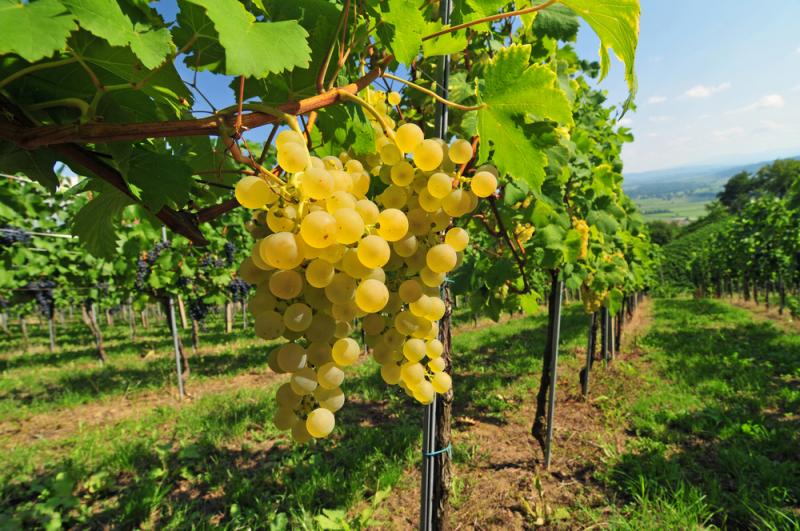
Gutedel needs a sound foundation in the soil in which it wants and is able to put down roots. This should offer a good mixture of moist loam, marl, loess and limestone. The wine's delicate aromatic nature is also reflected in its cultivation. For Goldgebe Gutedel, Rote Gutedel, Krachgutedel, Königsgutedel and Geschlitzblättrige Gutedel face various problems against which they need protection. Whether leafhoppers, drought, coulure, grape berry moth larvae or winter frost—it is simply a sensitive soul. But when everything goes well, good yields make their way into bottles, sometimes with substantial extract and a pale-yellow, fruit-led character. Incidentally, the grapes also work wonderfully without first being pressed, crushed or made into wine. For in Markgräflerland, in the Saale-Unstrut region, in the Swiss canton of Valais or in Chaselass—in other words, wherever the slopes are planted with Gutedel—it is also sold as a table grape.
Die Weinpost