Wine encyclopedia
Sankt Laurent from Alsace
Well, the oldest examples of this wine probably come from Alsace. In the 19th century, Johann Philipp Bronner took the plunge and planted the vine in Germany. Its triumphant advance began, particularly in the Palatinate, as the wine is ideally suited to barrique ageing. Together with Blaufränkisch, this Alsatian variety has also produced famous offspring—namely Zweigelt.
3 min read
The History of Saint Laurent
This wine, too, has a journey behind it. What can be said with considerable certainty is that it is a seedling from the Pinot Noir branch of the Burgundy family. Whether it comes from France or Austria, no one knows for sure. After all, borders have shifted often enough, and travel within Europe has always been common. But one thing is certain. The vine propagator, German pharmacist and viticultural pioneer Carl Bronner helped spread it by bringing the plant from France to Germany in the mid-19th century. The red grape variety may have been named after Saint Lawrence, as the grapes reach what is known as eating ripeness around his feast day. Incidentally, the saint is also regarded as the patron saint of cooks. For a long time, St Laurent was considered a subspecies of Pinot Noir from the Alsace Wine Route. Today, however, it is recognised as a grape variety in its own right in Rhineland-Palatinate, Baden-Württemberg, Austria, Czechia, Slovakia, Hungary and in all the other small rows of vines in France, Italy and southern Switzerland. Incidentally, whether you say or write Saint Laurent, Sankt Laurent or St Laurent wine does not bother the wine at all. All versions are correct and mean the same thing.
Characteristics of the Saint Laurent Grape Variety
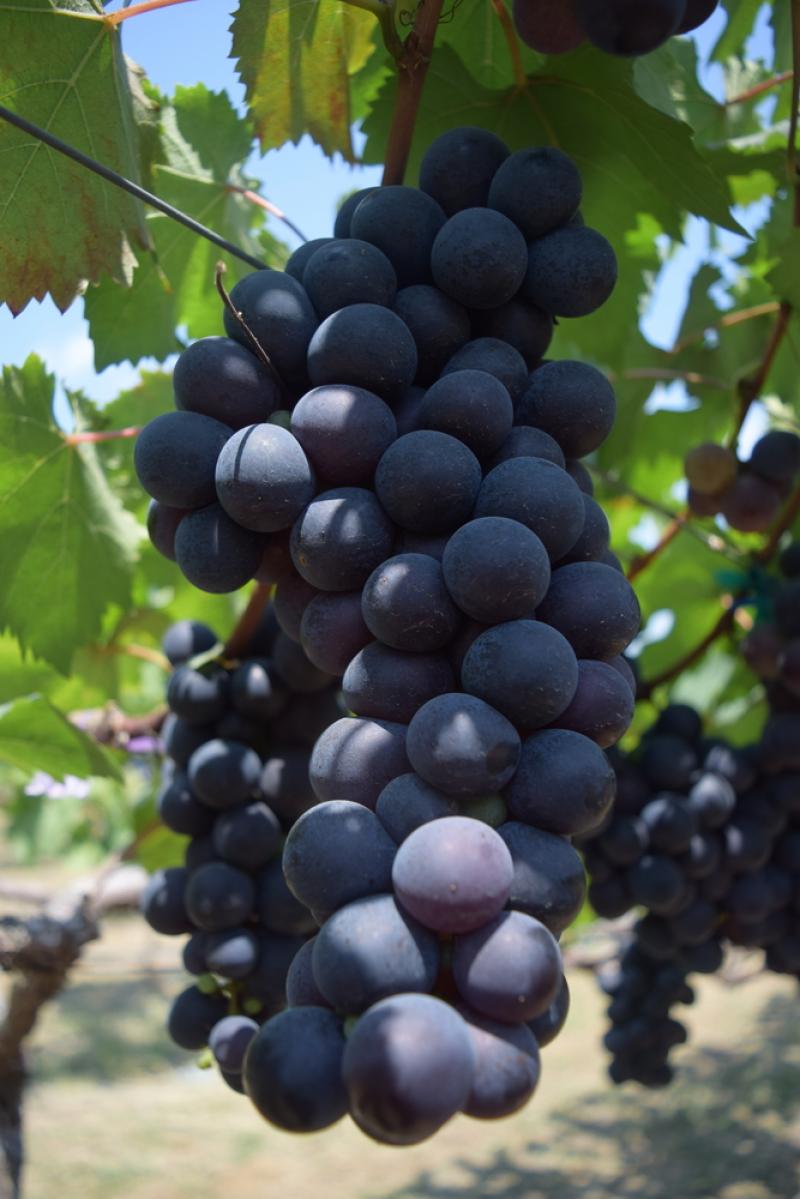
The shoot tip of this grape variety is yellowish green, with almost white woolly hairs growing on it. Its growth habit is upright. The vine's leaves shine in the sun, are not particularly large and are wavy. Once ripe, elongated, medium-sized bunches hang from the plant, bearing oval, blue-black berries.
The St Laurent vine is relatively unreliable in its yields. It needs deep, calcareous soil, which must not be too fertile.
The Many Names of Sankt Laurent
Since this grape variety also has a history stretching back centuries, countless winegrowers around the world have given it a name of their own. Here is a whole mountain of other names for one and the same wine. Have fun memorising them.
Sankt Laurent is also known as:
Blauer Saint Laurent, Chvartser, Laourentstraoube, Laurentzitraube, Laurenzitraube, Laurenztraube, Lorentstraube, Lorenztraube, Lovrecanka Crna, Lovrenac Crni, Lovricanka, Lovrijenac, Lovrijenac Crni, Magdalena Nera, Pinot St. Laurent, Saint Laurent Noir, Saint Lorentz, Sankt Laurent, Sankt Lorenztraube, Sant Lorentz, Schwarzer, Schwarzer Lorenztraube, Sent Lovrenka, Sentlovrenka, Shentlovrenka, Shvartser, St. Laurent, Svaetovavrinecke, Svaety Lorinc, Svati Vavrinetz, Svatovavrinecke, Svatovavrinetske, Svatovavrinetzke, Svaty Vavrinec, Szent Loerinc, Szent Loerinczi, Szent Loerine, Szentloerinc, Vavrinak, Vavrinecke
Growing the Saint Laurent Grape Variety
Only moderately favourable sites can be used for Sankt Laurent, as this grape variety buds early and is not protected from the frequent May frosts. Cool sites also cause acidity levels to drop too slowly, which would not benefit the red wine. The vine needs space and plenty of air to prevent rot, and if harvesting is delayed long enough, acidity drops to 8 grams per litre. Yields reach a moderate 70 to 80 hl/ha. The average must weight reaches 80 degrees Oechsle.
The Significance of Saint Laurent
Today, Saint Laurent is grown primarily in Austria rather than in the regions of France. Preserving the vine is said to have mattered so much to a winegrower from the southern Palatinate that he prevented its complete destruction in the 1960s. What was probably the last remaining vine in Germany was almost grubbed up at the Rhodt vine nursery in the 1960s. It took several years after that for conservation breeding efforts to succeed. The vine nurseries thus once again had planting material for a fresh start with Saint Laurent, not just in the Palatinate uplands. Since then, the area planted with these vines has risen steadily across the states. Winegrowers in Rheinhessen and the Palatinate each account for almost half of Germany's total vineyard area of 610 hectares (2019), with just under 267 and 280 hectares respectively.
Enjoying Alsatian Wine with Food
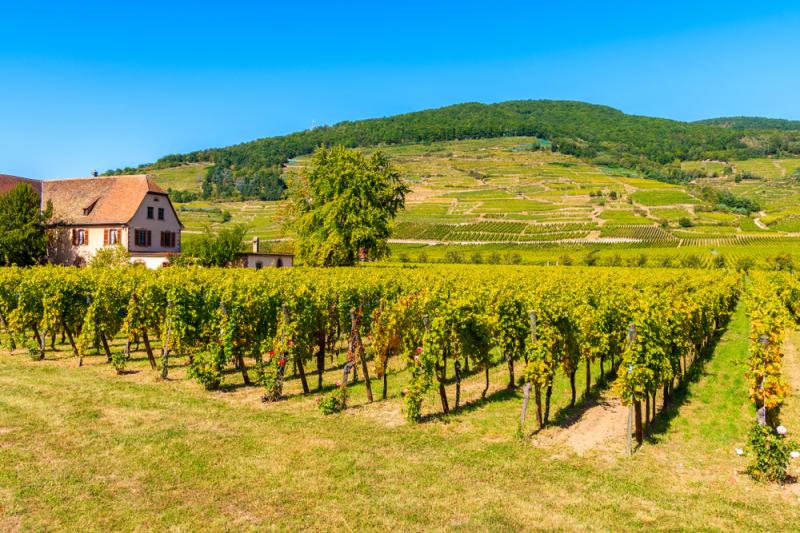
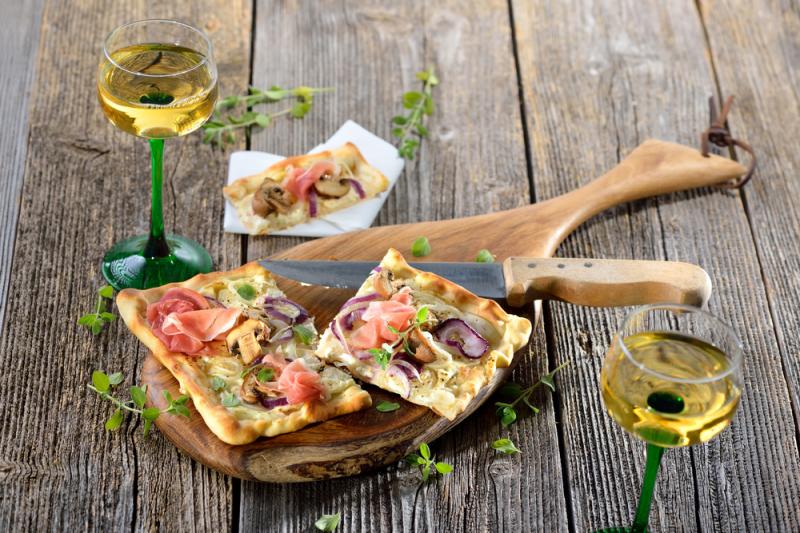
St Laurent is a special wine. Its small vineyard area, long history and tradition put it on a par with a decent Cabernet Sauvignon in German wine taverns. The winegrowers themselves can, of course, score extra points with a red saint in their range. So this wine, originating in the French departments of Bas Rhin and Haut Rhin, only comes to the table on very special occasions and must be honoured accordingly. Depending on how long it has been allowed to mature, a wine like this finds its perfect place between cheese and a dark-meat dish.
Ageing and Flavour of Saint Laurent
Musts with good extract levels and relatively low acidity make Saint Laurent wine both fresh and powerful in the glass. The deep red colour from the berry skins and flesh carries aromas such as elderberry and wild cherry. Some winegrowers also age it in barriques, adding a few smoky oak notes to the finish.
Die Weinpost