Wine encyclopedia
Trollinger from South Tyrol and Württemberg
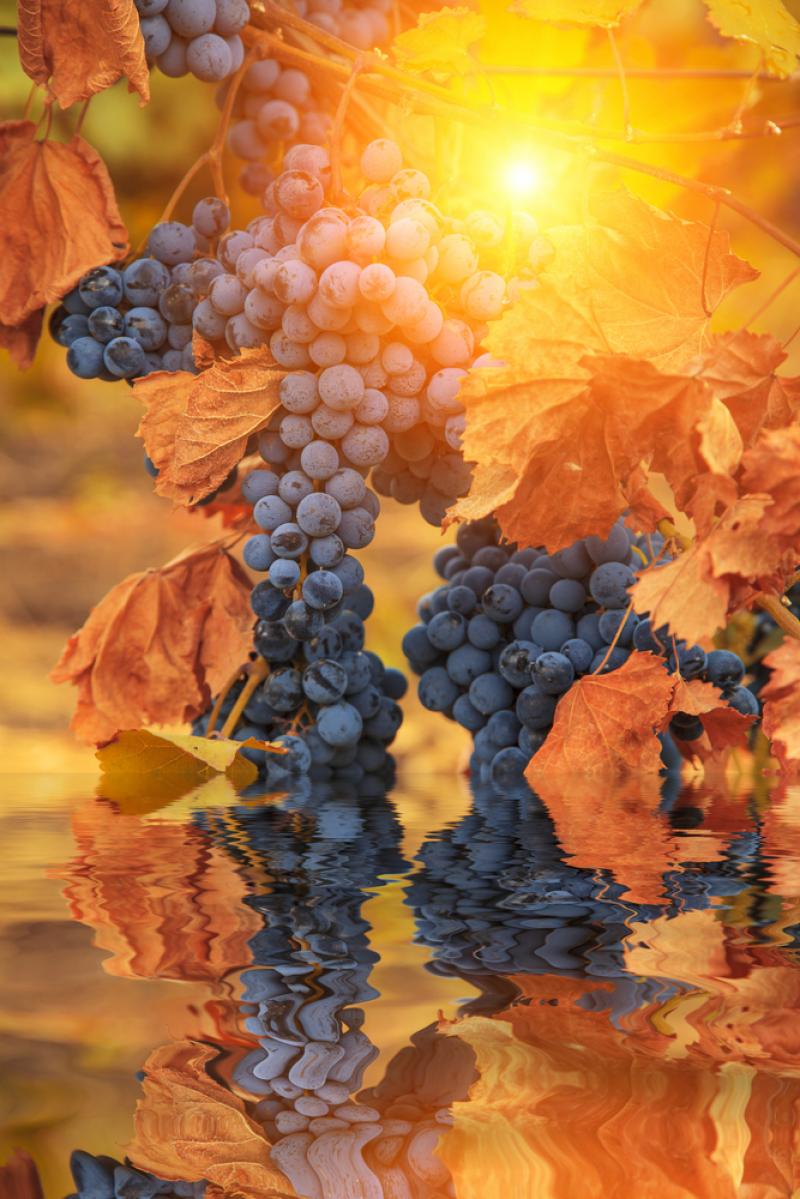
Anyone popping a Black Hamburg grape into their mouth is enjoying the original Trollinger. World-famous as a table grape, it is made into wine only in South Tyrol and Württemberg.
4 min read
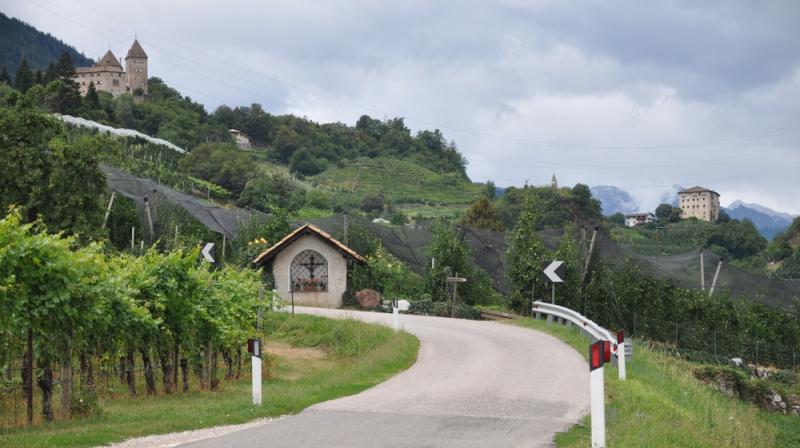
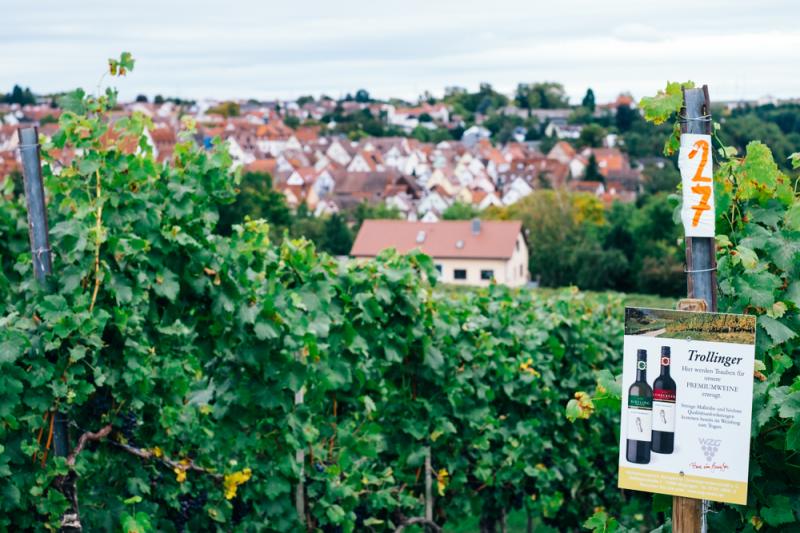
This ancient grape variety is more appealing than ever. But in South Tyrol, you should watch what you say. The most common red grape variety is Vernatsch. The Vernatsch grape is also used for Württemberg's Trollinger. Comparing it with that wine is not such a good idea, however, because the South Tyroleans around Alta Badia, the Tauferer Ahrntal valley and the Rosengarten are more than proud of their own grape variety.
Growing the Trollinger Grape Variety
Trollinger likes to keep its feet warm. That is why a snug soil temperature on shell limestone or similar ground is highly recommended for growing it. This red grape is harvested late and needs a long, frost-free ripening period. Trollinger is a wine that delivers by the litre, producing genuinely high yields. A hundred hectolitres per hectare is by no means unusual. The must weight averages around 70 degrees Oechsle. This red wine has high acidity.
The Importance of Trollinger
The area under vine in Germany grew steadily in the decades leading up to 2000. More than 1,000 hectares were added, giving the grape a significance similar to that once enjoyed by Müller-Thurgau among white varieties. In the years after the turn of the millennium, other red wines made their way back into German wine glasses. Pinot Noir and Cabernet Sauvignon reclaimed their former prestige. And as of December 2020, that remains the case. This is another reason why the area under vine has shrunk a little again over the past decade. Nevertheless, in the state governed by Minister-President Winfried Kretschmann, Trollinger remains the most widely planted red grape variety, ahead of Lemberger and Schwarzriesling.
Swabia's National Drink
Outside Germany's southwesternmost federal state, there are only around 30 hectares under vine. And there is, of course, a logical reason for this. The plant's long ripening period also requires a long spell of warm weather and rain. The region provides all of this. And so a distinctive tradition developed quite naturally for the “citizens” of Baden-Württemberg. Here, and only here, you will find the so-called Swabian national drink named Trollinger. A grape variety with such a clearly defined homeland is called an indigenous variety, of which there are actually very few left as a result of globalisation.
Winemaking and Flavour
Trollinger has a peculiarity that few other wines probably share. Although it wants to hang on the vine for a very long time to ripen, it is very keen to be drunk quickly. It is a classic, lighter German drinking wine with a certain residual sweetness. This makes it uncomplicated, but not exactly a wine of great distinction. No medals are awarded here. This red wine, with aromas of wild cherry and nutmeg, simply wants to be drunk up, usually within the first year after harvest. Some winegrowers also add a little of Württemberg's second red wine, Lemberger, to their Trollinger. Another feature common to ordinary grape varieties is that the grapes themselves are often simply eaten as table grapes. It is just a fresh sort of fellow.
The History of Trollinger
The precise birthplace of Trollinger, whose name derives from Tirolinger, remains unknown. It probably originated in southeastern Europe, however, and then gradually migrated north. Its spread stopped at precisely the point where the weather and soils could no longer keep up. Between the 14th and 16th centuries, Trollinger reached Württemberg, and later South Tyrol.
Schwarzurban, an offspring of Trollinger, also arrived in what is now Germany during the Middle Ages from Hohenstaufen-ruled Lombardy. Its actual origin can be inferred from its name. “Urban” and “Vernatsch” sound just like the two neighbouring Croatian villages of Vrban and Vernaz. These names offer clues to peoples and their migrations. If you investigate this a little more thoroughly, you end up in the wine region of Shirvan. And that lies in present-day Azerbaijan and northwestern Iran.
Only when the grape variety developed into a red-wine superstar in South Tyrol in the 18th century as “Schiava” and “Vernatsch” was it christened "Trollinger”. Today it is grown primarily in Württemberg and Baden, but also in small quantities in other winegrowing regions, as Blauer Trollinger (Trollinger), which is genetically identical to the Schiava Grossa (Großvernatsch) grape variety.
An Insider's Kitchen Tip for Trollinger Wines
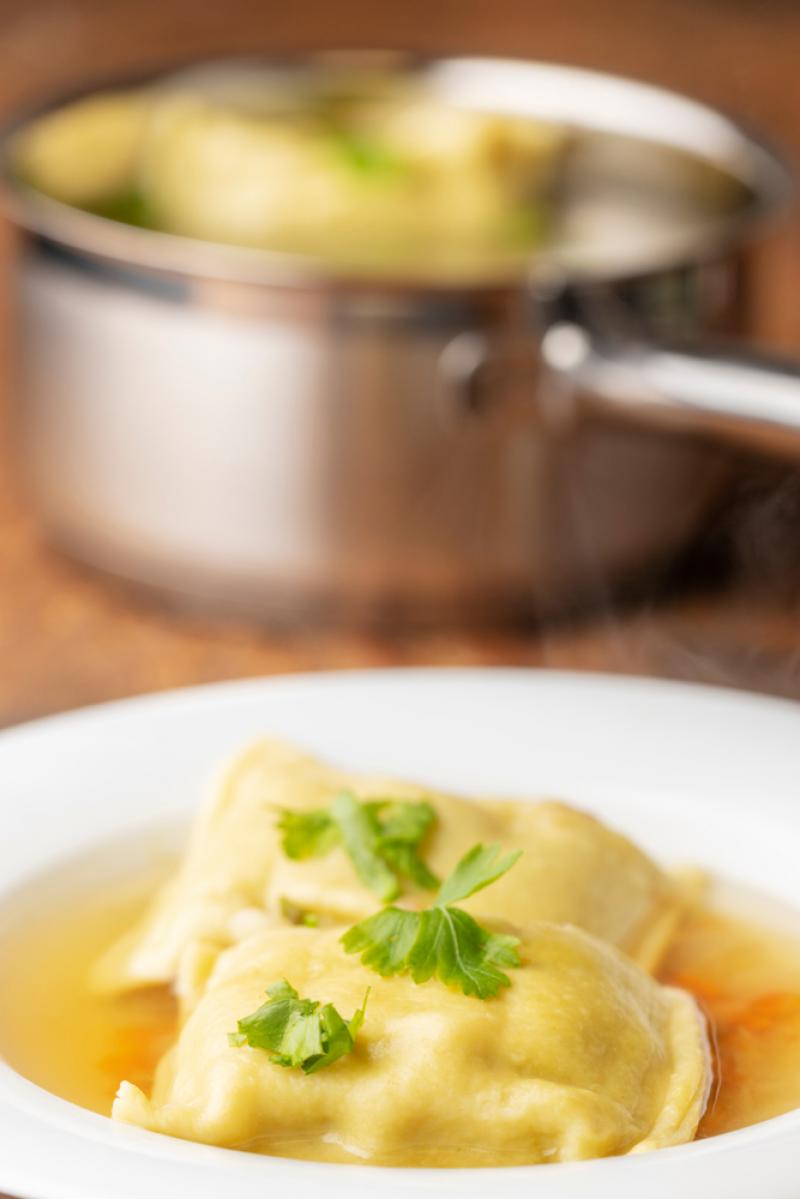
It is the wine soul of Württemberg, and naturally that must also be reflected in the cooking. So a glass of Trollinger is, of course, served alongside the national dishes of Maultaschen and Spätzle. But German dishes are not the only ones that accompany this pale-red celebratory drink, which southwestern Germans would rather drink than get vaccinated. Thanks to its gentle sweetness and rustic character, it also pairs well with a hearty cold supper, pasta with tomato sauce, polenta with mushrooms or radicchio risotto. Speaking of the coronavirus pandemic: during the warmer months of the coronavirus crisis, millions of euros probably flowed into the coffers of Baden-Württemberg's winegrowers, because this Trollinger is an utterly quaffable everyday wine, even without food.
Die Weinpost