Wine encyclopedia
Pinot Blanc as a Zesty Wine
As a mutation within the Pinot family, specifically of its "grey" ancestors, Pinot Blanc is the zesty variant with welcome acidity and a delicate aroma. There is a touch of early summer and summer spirit at play here.
3 min read
The History of Pinot Blanc
Pinot Blanc, as the wine is actually called in its region of origin, comes from the area between Lake Geneva in Switzerland and the Rhône Valley in France. The white wine arose through a mutation of Pinot Noir, also known as Spätburgunder. This quintessentially French grape variety has probably existed for more than 2,000 years. The monks of the Cistercian order brought the new vine to the Rheingau and later to much of Europe. Burgundy naturally plays an immense role, as the variety was described here in 1895. Interestingly, it took a while for the Burgundians to take Pinot Blanc to their hearts. The early-ripening Chardonnay variety also grew alongside it and was simply less susceptible to noble rot. Chardonnay was therefore considered superior for many years. Today, it has more or less completely disappeared from Pinot Blanc's traditional region.
What Does Pinot Mean?
“Pinot” most likely refers to the shape of the grape bunches. The elongated bunches of Pinot, whether white or red, resemble a pine cone. And the French word for pine is pin.
The Characteristics of the Grape Variety
There are 3 very similar grape varieties that were not really distinguished from one another for many years. These are Auxerrois, Chardonnay and Pinot Blanc. There are, however, very clear characteristics by which they can be told apart.
The shoot tip is open and covered in whitish to light green hairs.
At first, the young leaves look as though they are caught in a spider's web. Over time, the leaf becomes almost completely smooth. The hairs gradually disappear.
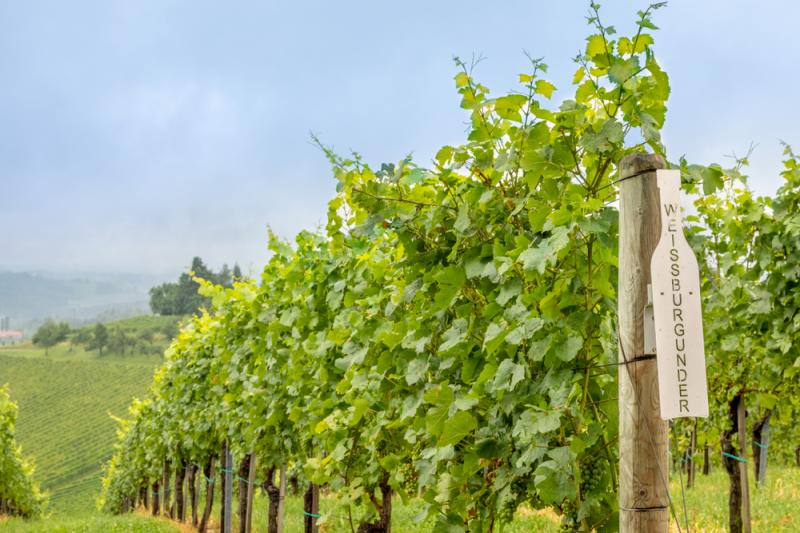
The medium-sized, dark green leaves are approximately the shape of an equilateral pentagon, usually entire or slightly three-lobed, and rarely with five faintly defined lobes. The petiolar sinus is open and V-shaped, and the vein along the petiolar sinus is lobed. The leaf has blunt teeth. The teeth are medium-sized compared with those of other grape varieties. The leaf surface is blistered and coarse.
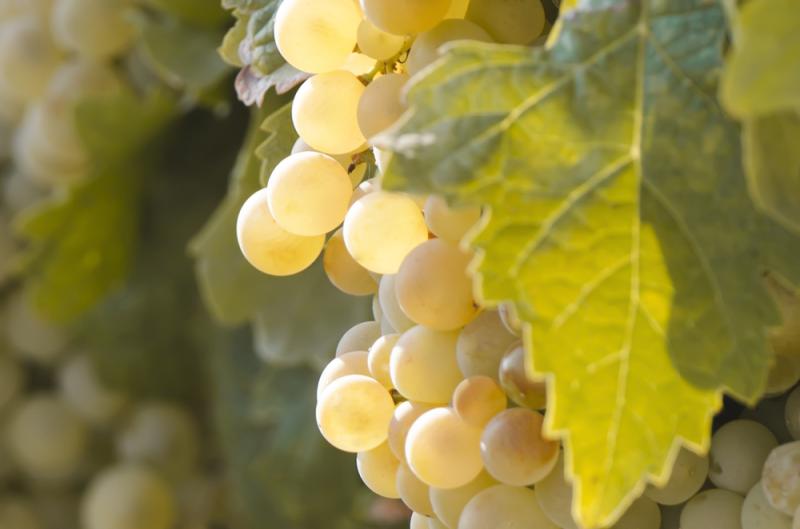
The cylindrical, or cone-shaped, bunch is medium-sized and has rather small berries with a greenish-yellow sheen. Pinot Blanc can only be distinguished from Pinot Gris and Pinot Noir once ripening begins. The berries of the other two then visibly change colour
Properties of Pinot Blanc
Growing Pinot Blanc is actually a pleasure, as the grape variety grows without problems. All it needs is an adequate supply of moisture. This variety really delivers. In vineyards with plenty of sunshine and water, Pinot becomes a quality wine that can be cellared for a long time. Frost, on the other hand, is something the vine really cannot tolerate, so the winegrower must take great care. And, as history tells us, this grape variety is susceptible to disease, which once put it at a disadvantage compared with Chardonnay.

Where Pinot Blanc Is Grown
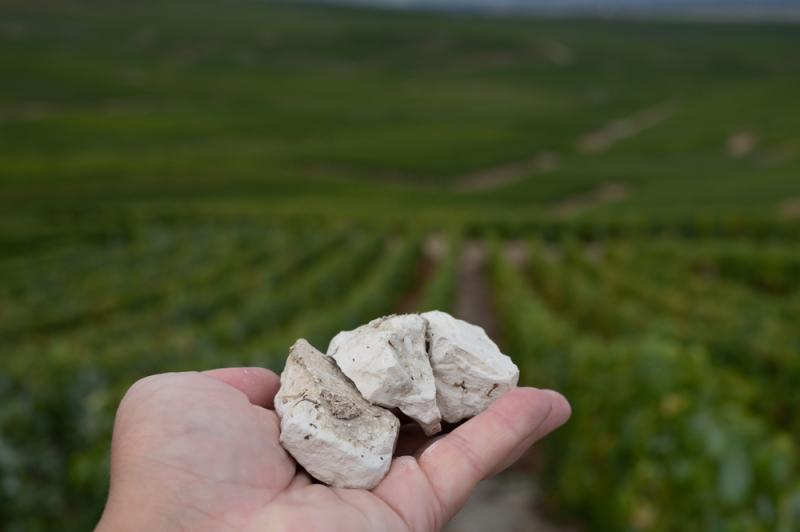
The variety needs good soils with plenty of water, which above all must be retained in the soil rather than simply draining away. A decent lime content is also desirable. On sandy and rocky soils, Pinot Blanc cannot develop its potential at all. It then amounts to no more than a white wine lacking body.
What You Can Discover in Pinot Blanc
This grape variety has a very different relationship with the wine market from others. Pinot Blanc is more like the shy but damn smart graduate in the second row. It often receives too little attention, overshadowed by the ever-present Chardonnays, Rieslings, Sauvignon Blancs and Pinot Gris. Some examples recall mirabelle plums and apricots, while others become veritable elves in an oak-scented heaven when aged in wooden barrels. White bread, vanilla and a little fruit shine through with great subtlety. There is nothing monumental in the glass; instead, delicate feeling is united with a slender foundation.
Die Weinpost