Wine encyclopedia
The Bacchus Grape Variety: A Divine, Aromatic Companion
Wonderful fruit, a powerful, distinctive aroma and very little acidity: the small but select white grape variety Bacchus evokes the god of wine and intoxication in Greek mythology.
3 min read

Among the Romans, Bacchus was the customary name for Dionysus, originally the Greek god of wine and fertility. With a glass of Bacchus, you are therefore practically dining side by side with a genuine deity who knows what tastes good. And you can happily have another glass, since less acidity also means less heartburn. Bacchus is available as a dry white wine, as well as in off-dry, medium-sweet and lusciously sweet styles.
Medium-bodied, aromatic and fruity
The grape variety, also known in some circles as “Frühe Scheurebe” (Early Scheurebe), originated in the Palatinate in the 1930s as a new crossing of Riesling, Silvaner and Müller-Thurgau, and today accounts for around 2% of Germany's vineyard area. The pale to greenish-yellow wines made from this grape are light- to medium-bodied, aromatic and fruity, though, as already mentioned, they sometimes lack a little acidity. Wines made from ripe Bacchus grapes can be rich in extract, fruity and highly fragrant. Wines with high must weights and sufficient acidity can recall a Riesling and display a subtle Muscat note (sometimes even bringing to mind a little hint of caraway). The floral Muscat aroma is occasionally reminiscent of Scheurebe, which also explains the alternative name mentioned above.
The various names of Bacchus
Unlike other grape varieties, Bacchus does not have a bewildering number of alternative names. It is also known as Geilweilerhof 33-29-133, GF. 33-29-133 and Frühe Scheurebe.
An early-ripening grape that achieves high levels of ripeness
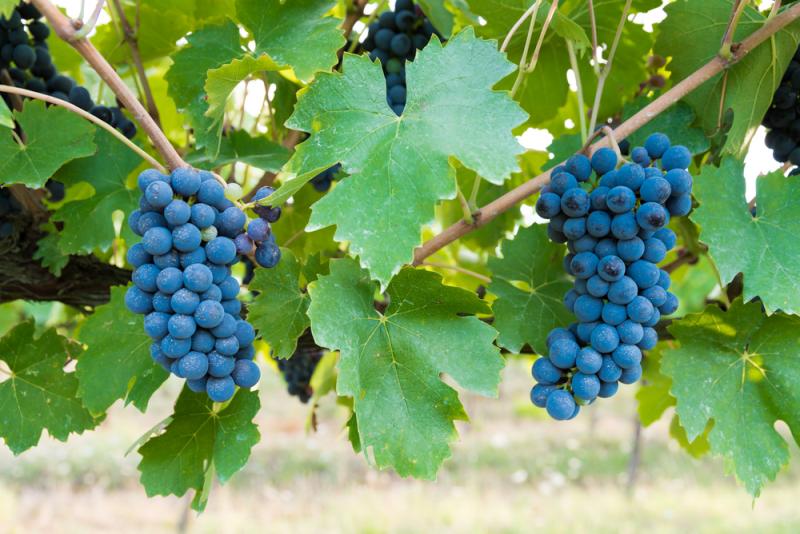
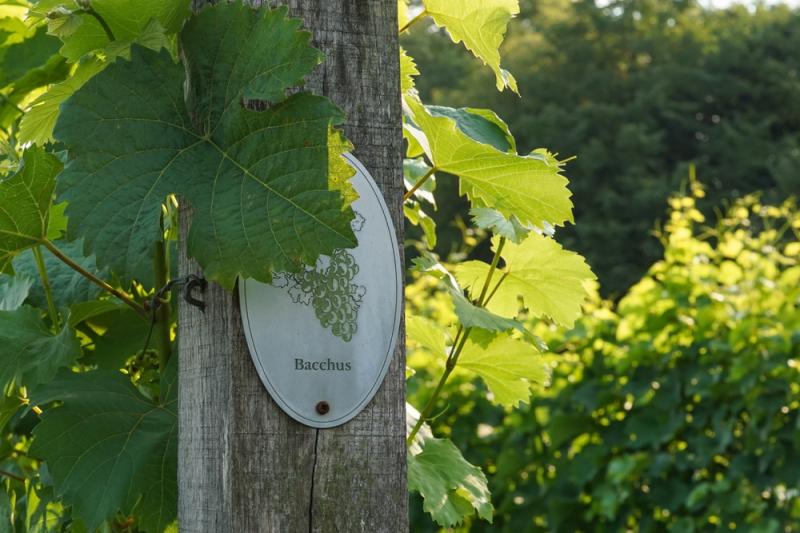
The Bacchus grape variety owes its popularity among winegrowers above all to the fact that, unlike Riesling, it is an early-ripening grape that achieves very high levels of ripeness. For this reason, it can also be grown in locations that are largely unsuitable for Germany's number-one white grape, Riesling. Bacchus vines do not tolerate excessively cold, waterlogged soils well. The berries should not be exposed to full sun, as they are susceptible to sunburn. The vines of the Bacchus variety, on the other hand, are largely resistant to winter frosts; only late frosts can harm them. Bacchus grapes grow in tightly packed, medium-sized bunches. The berries, generally slightly oval in shape, have a yellow-green colour. However, the wines made from them are aromatic and fruity only when the harvested grapes are fully ripe.
On everyone's lips since 1972
The grape variety has been approved in Germany since 1972 and is also registered under this name in the list of varieties. It is grown primarily in Germany and England. There are also small plantings in Switzerland. The variety can deliver higher yields at comparatively high must weights. Within Germany, Bacchus vines are found predominantly in the Palatinate, Franconia, Rheinhessen and the Nahe. In total, around 1,700 hectares of Bacchus are planted in Germany.
Simply divine and easy to enjoy
This divine white offers gentle drinking pleasure for young and old. The pale wine pairs well with cake, sweet and savoury pancakes, pastries and sweet desserts. It can also readily accompany Asian and spicy dishes. Among savoury pairings, Bacchus is a very good choice for fondues. It is a gentle, understanding companion for harmonious evenings and provides a good counterpart to acidity-driven white wines. The best thing about Bacchus: it is the perfect companion for convivial evenings of all kinds. Bacchus is also suitable as a light summer wine—even without any food alongside it…
The dominant aromas of the Bacchus grape are: blossom, Muscat, currant, orange, caraway, blossom.
The wine is somewhat reminiscent of the aromas of Scheurebe, Muscat and Traminer.
Die Weinpost