Wine encyclopedia
Grenache or Garnacha
The one-two pass—that is what Grenache plays to perfection. It is the twin in Cotes du Rhone and Cotes du Roussilion. It lengthens and rounds out the flavour, bringing plenty of alcohol without accompanying acidity.
4 min read
The History of Garnacha or Grenache
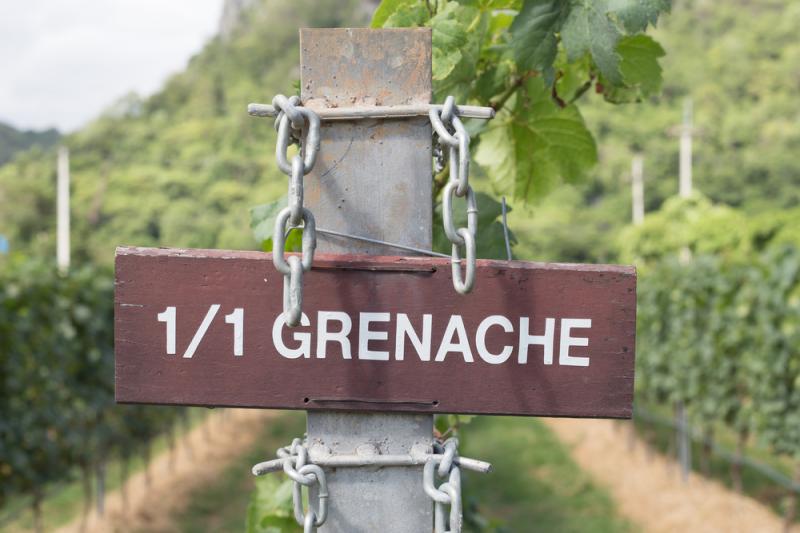
Really, its names should always be the other way round. After all, pronouncing it in French does not really get to the heart of this grape. Spain is very likely the homeland of this wild red. From the 12th to the 16th century, the Kingdom of Aragon ruled large parts of the western Mediterranean, from Spain through southern France to Sicily. And before long, Garnacha was at home throughout this territory. In Spain, the grape variety is called Garnacha or Granaza, and in the Castilla y León region north of Madrid, also Aragonés or Tinto Aragonés, hinting at its origins. However, it should not be confused with the Portuguese Aragonez or Aragonês, which is identical to Tempranillo. France and Spain are welcome to argue at length about the greater importance of their respective approaches to making this red wine.
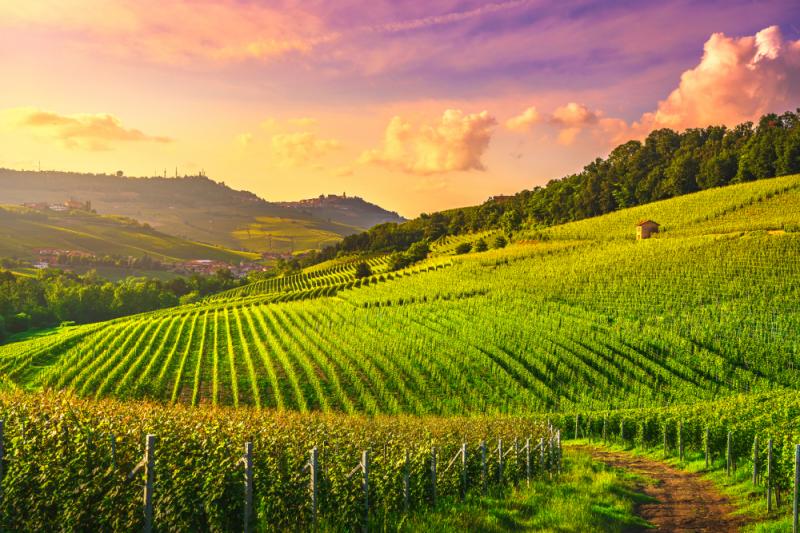
With Grenache on the label, the French wine region of Roussilion and the southern Rhone Valley are tailor-made for this deeply dark grape. Along the Rhone, it serves as the principal variety in the wines of Gigondas and Châteauneuf du Pape. As early as the 19th century, the “Grenache” grape crossed the ocean to America and Oceania. There, the Californian and South Australian climates proved ideally suited to growing it, often for single-varietal wines.
What can be said with certainty is that Grenache ranks among the world's top five red wines, alongside Pinot Noir, Syrah, Cabernet Sauvignon and Merlot.
The Many Names of Grenache
Since this red grape variety also has a history stretching back centuries, countless winegrowers in France and around the world have given it a name of their own. Here is a whole mountain of alternative names for one and the same wine. Have fun learning them by heart.
Grenache is also known as:
Abundante, Abundante de Reguengos, Aleante, Aleante di Rivalto, Aleante Poggiarelli, Alicant Blau, Alicante, Alicante de Pays, Alicante di Egua, Alicante di Spagna, Alicante Grenache, Alicante Noir, Alicante Roussillon, Alicantina, Alikante, Aniga di Lanusei, Aragonais, Aragones, Aragones Macho, Aragonesa, Bernacha Negra, Black Spanish, Black Valentina, Blaue Alicante, Bois Jaune, Cananao di Sardegna, Cannonaddu, Cannonadu, Cannonadu Nieddu, Cannonao, Cannonatu, Cannonau, Cannonau di Villasor, Cannonau Nero, Cannono, Canonao, Canonao Nero, Canonazo, Carignan Rouge, Carignane, Carignane Rosso, Carignane Rousse, Crannaxia, D'alicante, Elegante, Espagnin Noir, Francese, Gamay, Gamay Perugino, Garnaccho Negro, Garnaccia, Garnacha, Garnacha Comun, Garnacha de Aragon, Garnacha de Rioja, Garnacha del Pais, Garnacha Fina, Garnacha Negra, Garnacha Negra del Pais, Garnacha Pais, Garnacha Roja, Garnachilla, Garnacho, Garnacho Negro, Garnatxa Negra, Garnatxa Ni, Garnatxa Pais, Garnatxa Tinta, Garnaxa, Gironet, Granaccia, Granacha, Granacha Fina, Granache, Granaxa, Granaxia, Granaxo, Granazzo, Grenache, Grenache A Fleurs Femelles, Grenache Black, Grenache Crni, Grenache de Alicante, Grenache de Cosperon, Grenache Nero, Grenache Noir, Grenache Rouge, Grenas Crni, Grenash de Kaspero, Grenash Noar, Guarnaccia, Iladoner, Kek Grenache, Licante, Lladoner, Lladoner Aragonase, Lladoner Negre, Lladoner Negro, Lladonet, Mencida, Navalcarnero, Navaro, Navarra, Navarre de La Dordogne, Navarro, Negra, Negru Calvese, Ranaccio, Ranconnat, Red Grenache, Redondal, Retagliadu Nieddu, Rivesaltes, Rivos Altos, Rool Grenache, Rousillon Tinto, Roussillon, Rouvaillard, Sans Pareil, Santa Maria de Alcantara, Schwarze Alicanttraube, Tai Rosso, Tentillo, Tinta, Tinta Aragoneza, Tinta Menuda, Tintella, Tintilla, Tinto, Tinto Aragon, Tinto Aragones, Tinto Basto, Tinto de Navalcarnero, Tinto Menudo, Tinto Navalcarnero, Tintore di Spagna, Tintoria, Tocai Rosso, Toccai Rosso, Toledana, Uva di Spagna, Vernaccia di Serrapetrona, Vernaccia Nera, Vernatxa, Vidueno Negro, Vrannaxia
The Characteristics of the Wine
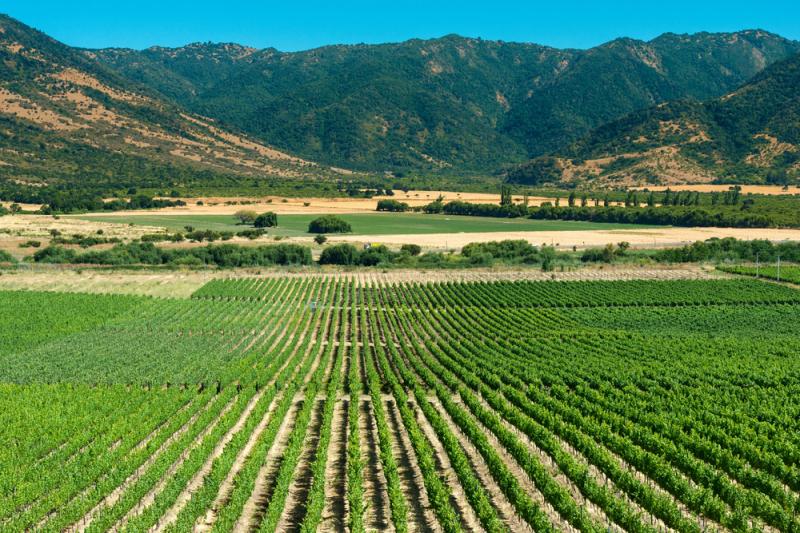
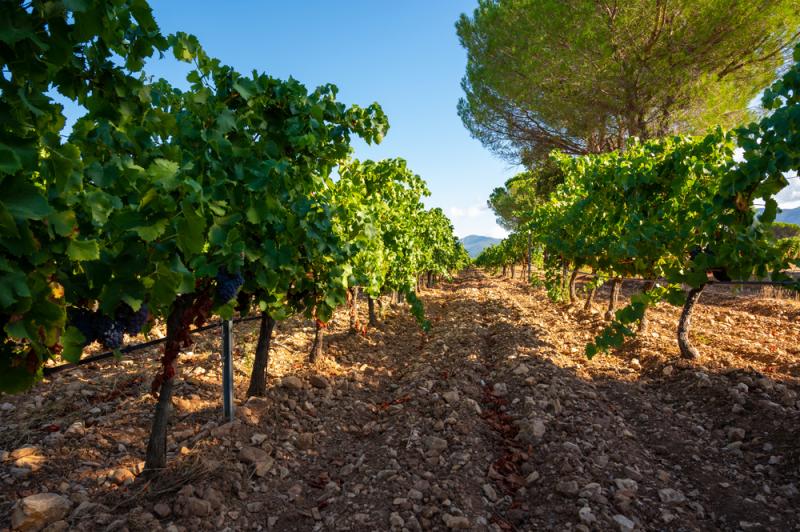
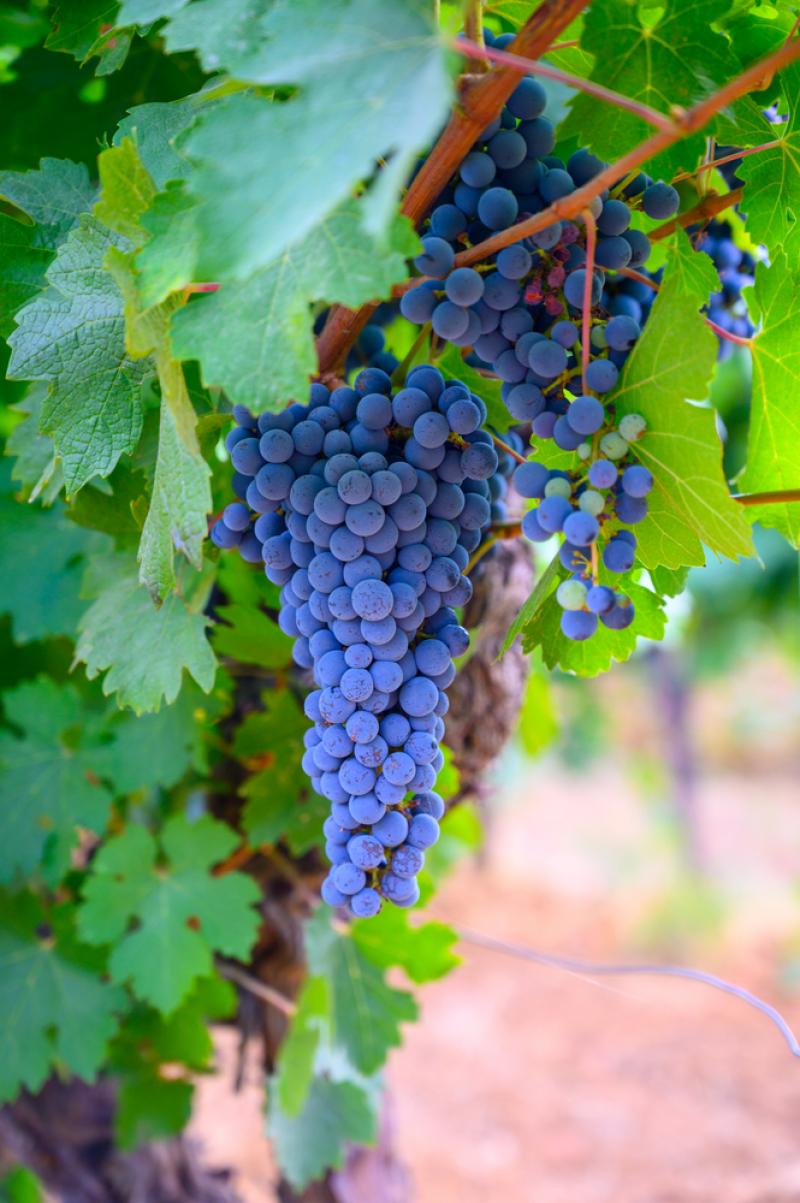
This grape variety is completely at home in dry, warm regions with persistent winds. The vine stands out for its vigorous woody growth and grows at a rapid pace. Under these natural conditions, it needs to protect itself against an inadequate water supply and vulnerable cane surfaces. In the vineyard, it is trained in the gobelet style so typical of France and Spain. The vine is allowed to grow as a relatively low bush, meaning that only the upper part of the plant can be pruned mechanically. This prevents too much upward foliage growth, keeping the plant's water consumption and photosynthesis in balance. Even so, the hanging bunches and their berries have sufficient protection from overly intense sunlight. The vine buds early and achieves remarkably high sugar and extract levels, making it incredibly versatile for a red wine. Its berry skins are thin, it does not develop intense colour, and it is prone to rapid oxidation during processing. Its blending partners include varieties such as Tempranillo in Spain, and Syrah and Mourvedre in France, which in this case also come from the southern end of the Rhone Valley.
Here you can find Suitable Red Wines for Every Occasion
New Crossings with Great Partners
In the red wine world, too, the proof of the pudding is in the eating. And so, year after year, new and interesting variations make their way into bottles. One of these also involves Grenache. Although it was quite some time ago, the decidedly noteworthy Marselan is a deliberate crossing of Grenache and Cabernet Sauvignon. The 1961 experiment aimed to combine the many possibilities of CabSav with this heat-resistant Spaniard. And lo and behold, the rounded, fruity Marselan has become the dominant presence on local wine shelves in the Costière de Nîmes region.
Grenache in the Kitchen
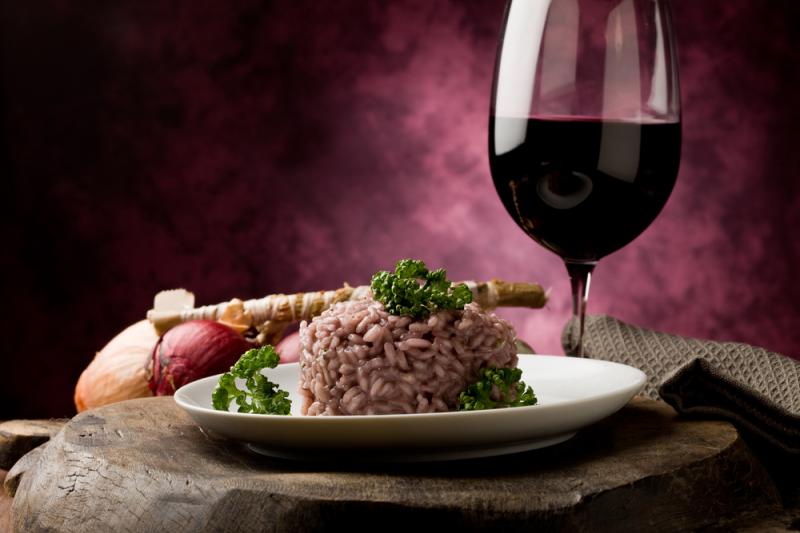
High temperatures, little water and plenty of sunshine give this red wine a solid foundation of high residual sugar levels, low acidity and distinct primary aromas reminiscent of leather, dark chocolate and pepper. This comes from the prolonged conversion of water and CO2 into oxygen and glucose. The alcohol content of this red grape variety also rises relatively high. Nevertheless, Grenache pairs wonderfully with a very juicy steak, braised lamb or risotto. Acting as a carrier and enhancer of flavour, the fat picks up the modest acidity and makes it seem more pronounced, effortlessly bringing fruity notes of strawberry and raspberry to the palate as well.
The Best Food to Pair with Grenache
Die Weinpost