Dessert · Dark chocolate with 70 percent cocoa or more
Dark Chocolate Doesn’t Need a Tough Opponent
Dark chocolate usually pairs well with sweet, intensely aromatic wines such as Ruby Port, Banyuls or a sweet red Recioto. The wine should taste at least as sweet as the chocolate, while keeping added tannic harshness low helps keep bitterness in balance.
- Sweet
- Bitter
- Rich & creamy
3 min read · Rebe & Traube editorial team
A Quiet Snap, High Expectations
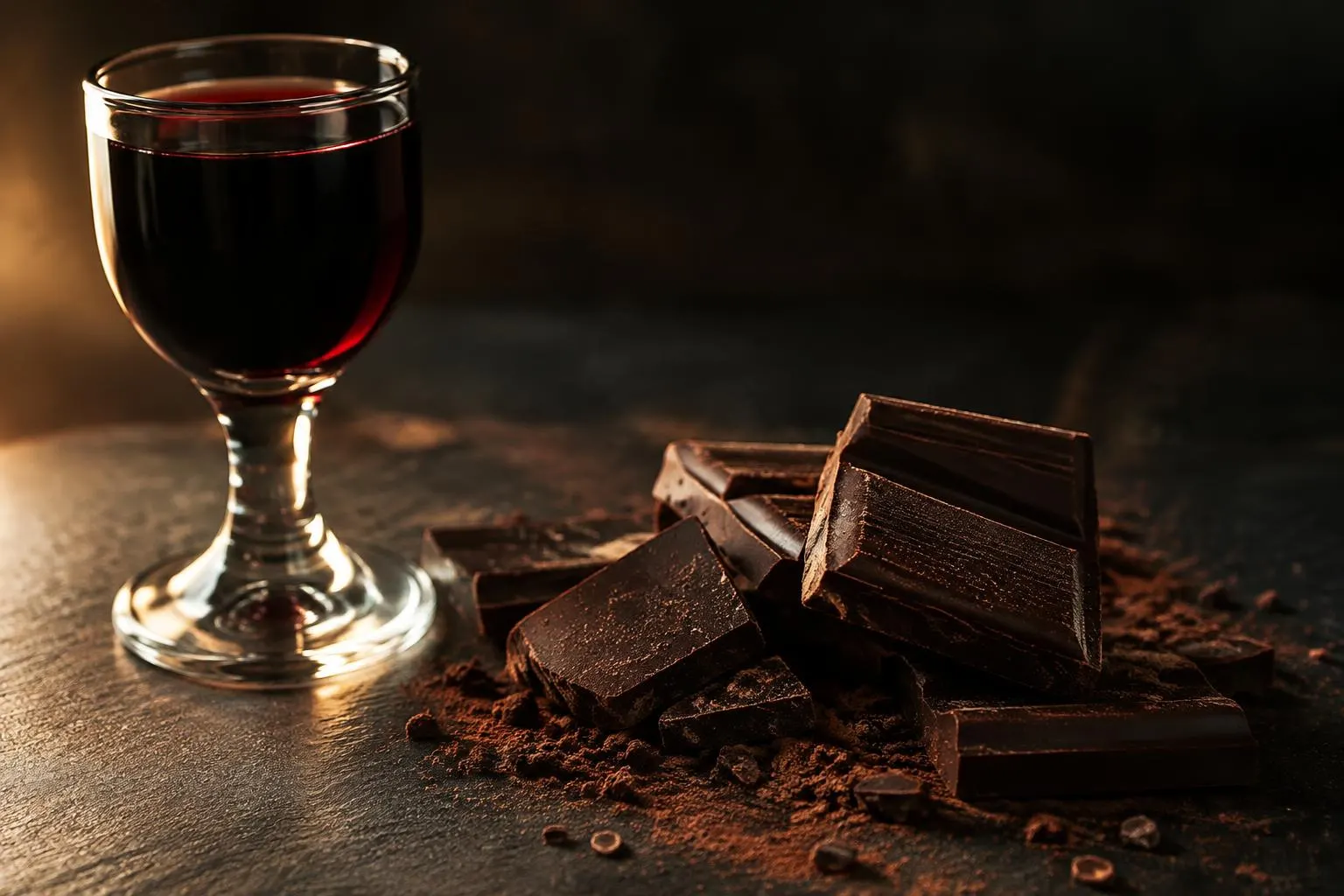
A piece of dark chocolate breaks with a crisp snap. It slowly softens on your tongue, releasing cocoa, roasted notes and perhaps a little fruit. Beside it sits a dry red wine you normally love. After the first sip, it suddenly tastes austere. That isn’t necessarily the wine’s fault, nor does it mean your palate is lacking. Chocolate is simply a demanding companion.
For dark bars with seventy percent cocoa or more, sweet, intensely aromatic wines are usually the more reliable choice. Ruby Port, Banyuls and sweet red Recioto have enough weight of their own. A deep red colour alone isn’t what matters. The deciding factors are perceptible sweetness, fruit, alcohol, tannin and the particular bar of chocolate. The percentage on the wrapper doesn’t tell you everything about its sweetness or bitterness.
Why Dry Wine Suddenly Tastes Harsher
Sweetness in food makes wine seem drier, more acidic and more bitter. That’s why a dessert wine should taste at least as sweet as the dessert. With dark chocolate, this rule is easily overlooked because it tastes less sweet than milk chocolate. Yet even a bittersweet bar can contain enough sugar to noticeably strip a dry wine back. Its previously juicy fruit then seems to disappear behind a more austere outline.
Then there’s the bitterness of cocoa. When it meets plenty of tannin, those bitter, astringent impressions can add up. A powerful Cabernet isn’t automatically a good match just because both partners have intense flavours. Young reds that are particularly rich in tannins can sometimes make the pairing feel as though both are in a bad mood. A more mature, softer wine may fare better, but without enough sweetness it remains an experiment.
The fat in cocoa butter gives chocolate its melting texture, but doesn’t simply cancel out these effects. Nor is a pinch of salt a universal fix. Salt can soften bitterness and the sensation of tannins, but it won’t turn a dry wine into a dessert wine. The principle behind salt meets acidity shows how differently salt works in a savoury setting.
Sweetness with Dark Fruit in Tow
Ruby Port typically brings sweet dark fruit and enough power for an intensely flavoured bar. Its higher alcohol deserves attention. Small sips and a serving temperature that isn’t too warm help keep the combination from tasting hot and spirituous. With chocolate cream, milk, cream and extra sugar shift the balance again. The existing page on chocolate cream with Ruby Port offers a related starting point.
Banyuls in a sweet, more fruit-led style can bring cocoa, berry fruit and spicy nuances together. Here, too, ageing styles vary considerably. A more oxidative version is more likely to suit a pairing that includes nuts or caramel notes. Sweet red Recioto is the third option, particularly if its fruit remains clearly discernible alongside the chocolate. Not every sweet red wine has enough concentration for that.
Once orange peel, chilli or roasted nuts enter the bar, the task changes. Chilli can make high alcohol seem even warmer. Very bitter orange peel accentuates the bitter side, while caramelised nuts call for extra sweetness. With fruitier desserts such as strawberries and summer desserts, the focus shifts away from cocoa and towards fruit and acidity.
Interactive wine selector
How do you prepare Dark chocolate with 70 percent cocoa or more?
The default is a typical preparation. Adjust the settings to how your dish actually tastes, and the suggestions update instantly.
Wine styles to suit your dish
Choice 1
Lusciously sweet white wine, such as Auslese or Sauternes
Why it works: acidity and freshness cut through the fat and it is at least as sweet as the dish.
Get to know the Riesling grape varietyChoice 2
Sweet red wine, such as Ruby Port
Why it works: tannins and structure stand up to fat and protein and it is at least as sweet as the dish.
Choice 3
Gewürztraminer with residual sweetness
Why it works: acidity and freshness cut through the fat.
Get to know the Gewürztraminer grape variety
Best avoided – Gamay from Beaujolais. As a rule here, sweetness in the food makes it taste sour and bitter. Individual wines may vary.
The suggestions are wine styles, not specific bottles. Taste is personal, so feel free to try something that breaks the rules.
Two Pieces Are Enough to Decide
For a small experiment at home, you need a dark chocolate bar, a dry red wine and a sweet red dessert wine. First, taste both wines without food. Then let an equally sized piece of chocolate melt before tasting each wine again. Pay particular attention to where fruit disappears and where bitterness lingers.
There’s no need to turn this into an elaborate dessert spread. A single piece and a small sip are enough to get a sense of the pairing. If you still prefer dry red wine with it, that’s a personal preference, not a broken rule. This description explains likely effects; it doesn’t grade your taste.
For an alcohol-free option, a strong, lightly sweetened Rooibos is an easy companion. It isn’t an imitation of wine, but it can accompany cocoa without adding red-wine tannins. A small splash of milk or a suitable plant-based alternative makes it softer. Unsweetened, very astringent black tea, by contrast, would not automatically be the gentler choice.
Brief and honest
- Ruby Port – Sweetness and dark fruit give powerful cocoa a partner with enough intensity.
- Sweet Banyuls – A fruit-led style brings dark fruit together with cocoa; oxidative versions are more suited to nuts.
- Sweet red Recioto – Concentrated fruit and sweetness can balance a bittersweet bar.
Wine advisor: find the right grape variety in three questions · All grape varieties at a glance
Probably not – Young, tannin-rich dry Cabernet Sauvignon. Cocoa bitterness and tannin can amplify each other. Softer examples may work better on a case-by-case basis, but often remain austere alongside sweet chocolate.
Alcohol-free – Strong, lightly sweetened Rooibos accompanies cocoa without adding red-wine tannins. It is an alternative in its own right, not an imitation of wine.
How helpful was this article?
No sign-up and no cookies. We only store the stars, the article and a non-traceable identifier that changes daily to prevent repeat ratings. Ratings appear only after editorial review.
Try this at home
First, taste a dry red wine and a sweet red dessert wine without food. Before each new sip, let an equally sized piece of dark chocolate melt in your mouth. Compare fruit, bitterness and perceived sweetness.
What this article is based on
The scenes in this article are illustrative stories, not reporting. The basic rules follow WSET teaching; personal taste may differ.