Dessert · Stollen, apple strudel and baked apples
Sweet Company for Stollen and Warm Apples
Butter stollen can hold its own with sweet Madeira or Tawny Port, whose nutty and dried-fruit aromas complement the bake. With apple strudel and baked apples, a sweet Riesling Auslese often feels fresher, especially when the apples are tart. In every case, the wine should taste at least as sweet as the dessert.
- Sweet
- Rich & creamy
- Sour
3 min read · Rebe & Traube editorial team
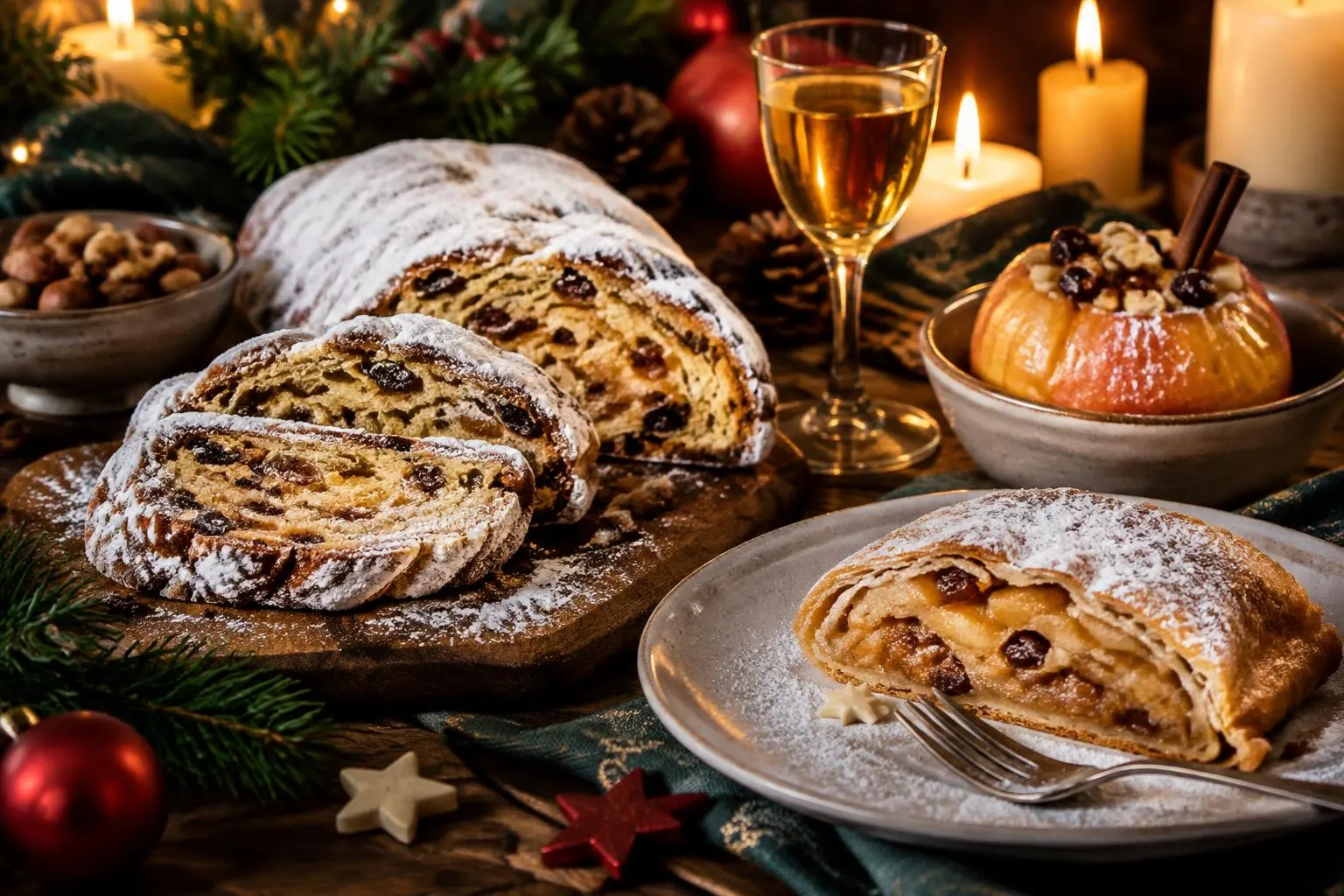
Icing sugar on your good sweater
Stollen has a remarkable ability to scatter crumbs and sugar. No sooner is a slice on the plate than the icing sugar finds its way somewhere it shouldn't. On the palate, things are more orderly: butter, dried fruit, perhaps almonds, and a rich, dense texture that slowly melts away. It calls for a wine that neither shies away from the sweetness nor disappears beneath the weight of the bake.
Sweet Madeira or Tawny Port are good starting points for classic butter stollen. With apple strudel and many baked apples, a sweet Riesling Auslese often feels livelier. These three desserts may belong to the cosy season, but they don't necessarily need the same bottle. There is quite a distance in flavour between crumbly stollen and a tart apple with only a light sprinkling of sugar.
The wine needs a sweet backbone
Sweet foods make wine seem drier, more acidic and more bitter. Alongside stollen, a dry red wine can therefore lose its fruit and taste unpleasantly astringent. Even a fragrant dry Gewürztraminer isn't automatically a good match. A sweet-smelling aroma is no substitute for sugar in the wine. As a practical guide, the wine should taste at least as sweet as the mouthful it accompanies.
With stollen, density matters too. Butter, raisins and candied fruit demand more substance than an airy apple cake. Sweet Madeira, in the Malmsey style, for example, combines concentrated sweetness with supporting acidity. Its nutty, caramel-like aromas can echo toasted almonds and the crust of the bake. The acidity provides a fresh counterpoint to the butter rather than adding to the sense of heaviness.
Tawny Port is also sweet and often brings notes of nuts and dried fruit. That makes it particularly suited to raisin-rich stollen or a baked apple with a nut filling. Both fortified wine styles do, however, contain considerably more alcohol than a light dessert wine. Small servings therefore make sense. Anyone sensitive to the warming sensation of alcohol will often find a suitable sweet Riesling Auslese a more comfortable choice.
The apple sets the pace
A strudel can stay fresh and tart inside, or become quite sweet with sugar and raisins. Then there are the crisp layers of pastry and, sometimes, a generous helping of vanilla sauce. Judge the whole plate, then, not just the fruit. A sweet Riesling Auslese brings acidity and fruit that are particularly well suited to a strudel that still tastes distinctly of apple.
The apple's acidity makes the wine seem less acidic, fuller and sweeter. If the wine itself has very little acidity, the combination can feel broad. A sweet wine with pronounced acidity is more likely to retain definition. Even so, it needs enough sweetness for the sauce and filling. A generous amount of caramel sauce may call for a more concentrated version. The same basic principle applies to strawberries and summer desserts, even if the kitchen smells quite different then.
With baked apples, the filling has a particularly strong say. Marzipan increases sweetness, walnuts bring bitterness too, and raisins add more concentrated fruit. Firm tannins in the wine can amplify the bitterness of the nuts. A sweet Madeira often makes more sense here than a tannin-rich red. If the apple is filled with dark chocolate, it is worth looking at dark chocolate and its wine companions. The chocolate version needs to be considered on its own terms.
Interactive wine selector
How do you prepare Stollen, apple strudel and baked apples?
The default is a typical preparation. Adjust the settings to how your dish actually tastes, and the suggestions update instantly.
Wine styles to suit your dish
Choice 1
Lusciously sweet white wine, such as Auslese or Sauternes
Why it works: acidity and freshness cut through the fat and it is at least as sweet as the dish.
Get to know the Riesling grape varietyChoice 2
Sweet red wine, such as Ruby Port
Why it works: tannins and structure stand up to fat and protein and it is at least as sweet as the dish.
Choice 3
Gewürztraminer with residual sweetness
Why it works: acidity and freshness cut through the fat.
Get to know the Gewürztraminer grape variety
Best avoided – Gamay from Beaujolais. As a rule here, sweetness in the food makes it taste sour and bitter. Individual wines may vary.
The suggestions are wine styles, not specific bottles. Taste is personal, so feel free to try something that breaks the rules.
Small glasses, warm plates
Serve dessert wine on the cool side rather than at room temperature, but not so cold that its aromas disappear. The warm dessert already supplies plenty of warmth. A small glass creates a lovely alternation between fragrant baking and a refreshing sip. For more seasonal inspiration, see the article on wine at Christmas.
For an experiment at home, divide a piece of apple strudel into two portions. Leave one plain and add vanilla sauce to the other. Taste the same sweet Riesling after each and notice whether it seems drier alongside the sauce. You will soon see whether the bottle suits the actual dessert or only the apple inside it.
For an alcohol-free option, a mixture of naturally cloudy apple juice and mild black tea makes a useful alternative, with a little cinnamon if you like. Steep the tea briefly so that its bitterness doesn't dominate. Use less tea with very sweet stollen. The result doesn't imitate Port, but accompanies fruit and baking in its own pleasantly understated way.
Brief and honest
- Sweet Madeira in the Malmsey style – Concentrated sweetness, acidity and nutty aromas accompany butter stollen and stuffed baked apples. Serve in small portions because of the higher alcohol content.
- Tawny Port – Sweetness and dried-fruit aromas suit raisins, almonds and dense stollen. Its alcoholic warmth can be too powerful for sensitive guests.
- Sweet Riesling Auslese – Lively acidity and fruit suit apple strudel and fruit-forward baked apples. With plenty of vanilla or caramel sauce, make sure there is enough sweetness. More about Riesling
Wine advisor: find the right grape variety in three questions · All grape varieties at a glance
Probably not – Dry, tannin-rich red wine. The sweetness of the bake can make it seem more astringent and acidic. Nut bitterness and tannins can also amplify one another.
Alcohol-free – Naturally cloudy apple juice with a little mild black tea and cinnamon, if you like, accompanies fruit and baking. Steep the tea briefly and keep the mixture sweet enough for the dessert.
How helpful was this article?
No sign-up and no cookies. We only store the stars, the article and a non-traceable identifier that changes daily to prevent repeat ratings. Ratings appear only after editorial review.
Try this at home
Divide a piece of apple strudel into two portions. Add vanilla sauce to just one and taste the same sweet Riesling after each. Compare whether the wine seems drier and less fruity with the sauce.
What this article is based on
- WSET Level 2 Award in Wines, Spezifikation mit dem Kapitel zu Wein und Speisen
- WSET, Winter wine and food matching
The scenes in this article are illustrative stories, not reporting. The basic rules follow WSET teaching; personal taste may differ.