Meat & poultry · Roast chicken
Golden Skin and a Glass of Sunday Calm
Roast chicken pairs well with a medium-bodied, subtly oaked Chardonnay, a dry Weißburgunder or a light, juicy Spätburgunder. The white wines bring body and freshness to the skin and roasting juices, while the red comes into its own with mushrooms and deeper roasted flavours.
- Salty
- Umami
- Rich & creamy
4 min read · Rebe & Traube editorial team
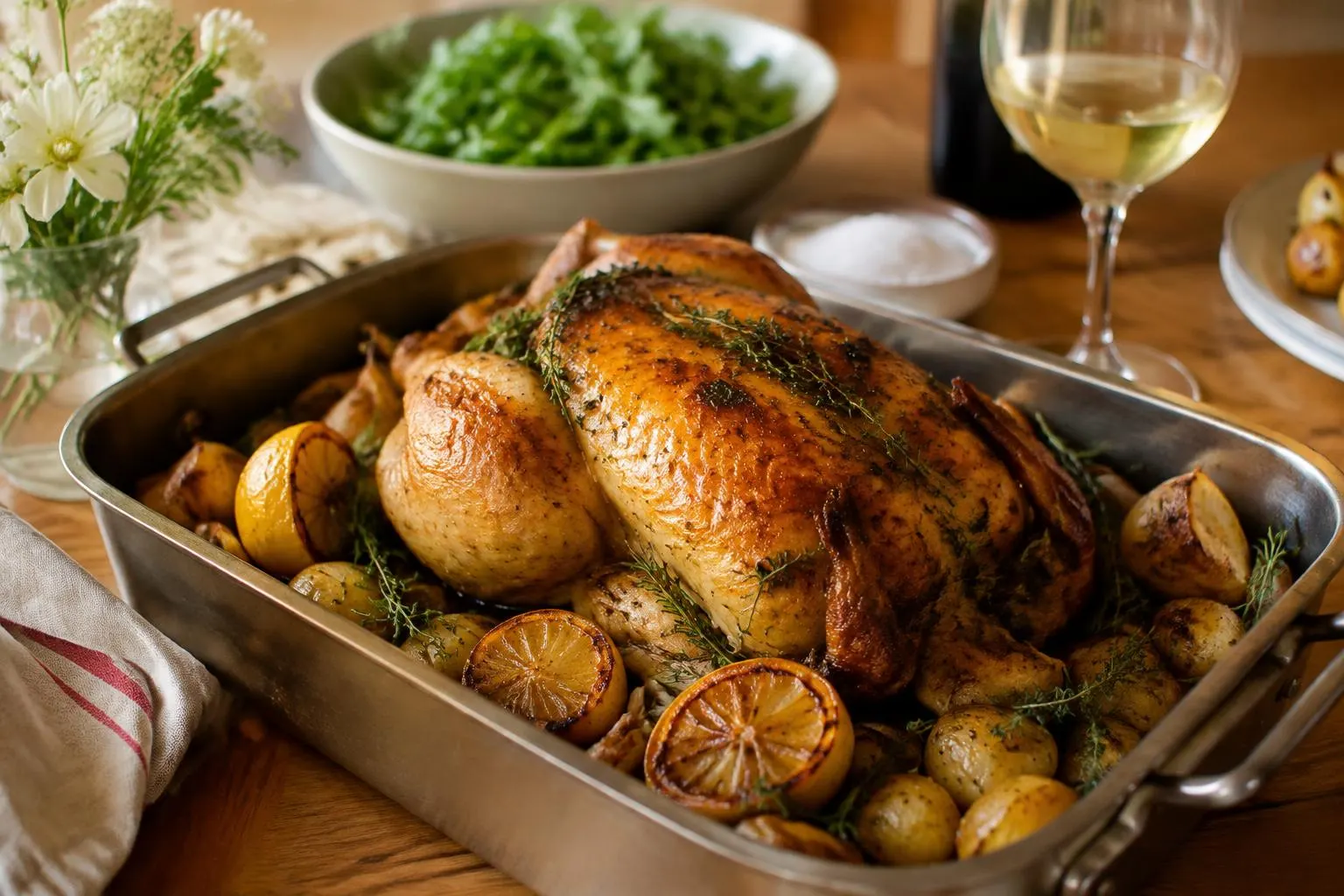
There is no particularly elegant way to carve a roast chicken. Sooner or later, a fork slips, someone claims the second crispy wing, and the potatoes quietly soak up the last of the roasting juices. Just as it should be. The wine can be uncomplicated, too. A medium-bodied, subtly oaked Chardonnay, a dry Weißburgunder or a light Spätburgunder will usually work better than a bottle the whole table has to debate first.
The choice has less to do with the word poultry than with what comes out of the oven. Lemon juice and rosemary lead in a different direction from mushrooms and cream. A simply roasted chicken leaves plenty of room to play. A sweet glaze, hot chilli or plenty of lemon narrows the options, but makes them more interesting, too.
The Skin Tells You More Than the Colour of the Meat
Breast meat is mild, the leg has a fuller flavour, and the skin brings fat, salt and roasted notes. A suitable wine need not mirror every component. It should have enough body for the skin and juices while staying fresh enough that the next bite does not feel heavy. The wine’s acidity acts as a sensory counterpoint to the fat.
Salt on the skin can soften bitterness and tannin in the wine and make it seem fuller. The roasting juices also bring umami, especially when heavily reduced or when mushrooms are added. This can make wine seem more astringent, more bitter and less fruity. A gentle Spätburgunder is therefore often more accommodating than a young, firm Cabernet. The article on umami with mushrooms and Parmesan explains the background.
Roasted flavours alone do not call for red wine. A white with a little supple richness can be wonderful with golden-brown skin. The key is moderation. Badly burnt herbs or very dark patches bring bitterness that pronounced oak and plenty of tannin can intensify further. The pleasantly crispy pieces are easier company for the wine, too.
Three Bottles for Different Roasting Trays
Chardonnay works when the chicken is roasted with butter, mild herbs and potatoes. A medium-bodied style with restrained oak brings enough richness. Subtle toasted notes can echo the skin without covering up the flavour of the meat. Very buttery, low-acid or heavily oaked versions, by contrast, can quickly feel too broad alongside a simple bird.
Weißburgunder is the easy-going choice for a tray of chicken and vegetables with little sauce. Dry, with medium body and noticeable freshness, it accompanies the meat without needing to comment on every forkful. A dry Silvaner is a good alternative when herbs and root vegetables take the lead. With either wine, make sure there is enough acidity if you are using a lot of lemon.
A light- to medium-bodied Spätburgunder makes sense when button mushrooms, dark roasting juices or more deeply browned legs define the plate. Look for juicy fruit and fine tannins, not maximum concentration. Lightly chilled, the wine stays nimble. A fresh Gamay can do the same job. A much heartier pot calls for a different balance, as with braised beef.
Lemon Is More Than a Garnish
A few lemon slices in the oven and a generous squeeze of fresh juice at the table are not the same sensory experience. Acidity in food makes wine seem less acidic, but fuller and sweeter. If the chicken is distinctly lemony, the wine needs enough acidity of its own to avoid seeming flat. A dry Riesling may then be a better fit than a soft Chardonnay. The related principle is easy to see with trout in lemon butter.
Honey on the skin changes the choice, too. Sweetness in a dish makes dry wine taste more acidic, more bitter and drier. With a distinctly sweet glaze, the wine should seem at least similarly sweet; an off-dry white may then make more sense. If chilli is added, its heat, and the way high alcohol intensifies it, also argue against a powerful red. Potatoes, bread and mild oven-roasted vegetables, by contrast, are usually easy-going companions.
Interactive wine selector
How do you prepare Roast chicken?
The default is a typical preparation. Adjust the settings to how your dish actually tastes, and the suggestions update instantly.
Wine styles to suit your dish
Choice 1
Champagne or grower-produced Sekt brut
Why it works: it is low in tannins and handles umami well and acidity and freshness cut through the fat.
Choice 2
Spätburgunder or Pinot Noir
Why it works: acidity and freshness cut through the fat and it is low in tannins and handles umami well.
Get to know the Spätburgunder / Pinot Noir grape varietyChoice 3
Sangiovese, such as Chianti Classico
Why it works: acidity and freshness cut through the fat and salt makes it softer and rounder.
Best avoided – Sweet red wine, such as Ruby Port. As a rule here, it is much sweeter than the dish and tastes cloying alongside it. Individual wines may vary.
The suggestions are wine styles, not specific bottles. Taste is personal, so feel free to try something that breaks the rules.
A Lemon Wedge as a Little Test
At home, try a bite of chicken with skin, followed by a sip of wine. Add a few drops of lemon juice to a second, comparable bite and taste the same wine again. Does it now seem rounder, or rather flat? This lets you discover how much lemony freshness your chosen wine can handle at the table without changing the seasoning of the whole chicken.
For an alcohol-free option, a dry dealcoholised white wine with lively acidity is a suitable choice. It can bring refreshment alongside the skin and roasting juices, but usually has less body and length than its alcoholic counterpart. With simple herb seasoning, cool water with a small piece of lemon peel is pleasant, too. The peel adds fragrance without shifting the balance of the dish through the extra acidity of lemon juice.
Brief and honest
- Medium-bodied, subtly oaked Chardonnay – A little supple richness and restrained toasted notes suit golden skin, butter and potatoes. Enough acidity keeps the pairing fresh. More about Chardonnay
- Dry Weißburgunder – Medium body and gentle fruit accompany the delicate meat and oven-roasted vegetables. With plenty of lemon juice, the wine should have sufficient acidity. More about Weißburgunder
- Light, juicy Spätburgunder – Fine tannins suit mild poultry, while its fruit works with mushrooms and dark roasting juices. A slight chill keeps the style lively. More about Spätburgunder
Wine advisor: find the right grape variety in three questions · All grape varieties at a glance
Probably not – Young, strongly tannic Cabernet Sauvignon. Its tannin can overwhelm the mild meat and seem astringent alongside umami-rich roasting juices. With a mature wine and a more robust sauce, the pairing can become more harmonious.
Alcohol-free – A dry dealcoholised white wine with lively acidity is a workable pairing. It is refreshing, but usually leaner and shorter on the finish than a comparable wine with alcohol.
How helpful was this article?
No sign-up and no cookies. We only store the stars, the article and a non-traceable identifier that changes daily to prevent repeat ratings. Ratings appear only after editorial review.
Try this at home
Try a bite of chicken with skin, then taste your wine. Add a few drops of lemon juice to a second bite and taste the same wine again. Notice whether it seems rounder or loses freshness.
What this article is based on
The scenes in this article are illustrative stories, not reporting. The basic rules follow WSET teaching; personal taste may differ.