Meat & poultry · Roast pork with crackling
The Crackling Cracks, the Wine Stays Calm
Roast pork with crackling pairs well with a full-bodied dry Riesling, a medium-bodied Grüner Veltliner or a juicy Zweigelt with little oak influence. The white wines bring freshness to the fat, while the red complements the gravy and roasted flavours without overwhelming the crackling with tannin.
- Salty
- Rich & creamy
- Umami
4 min read · Rebe & Traube editorial team
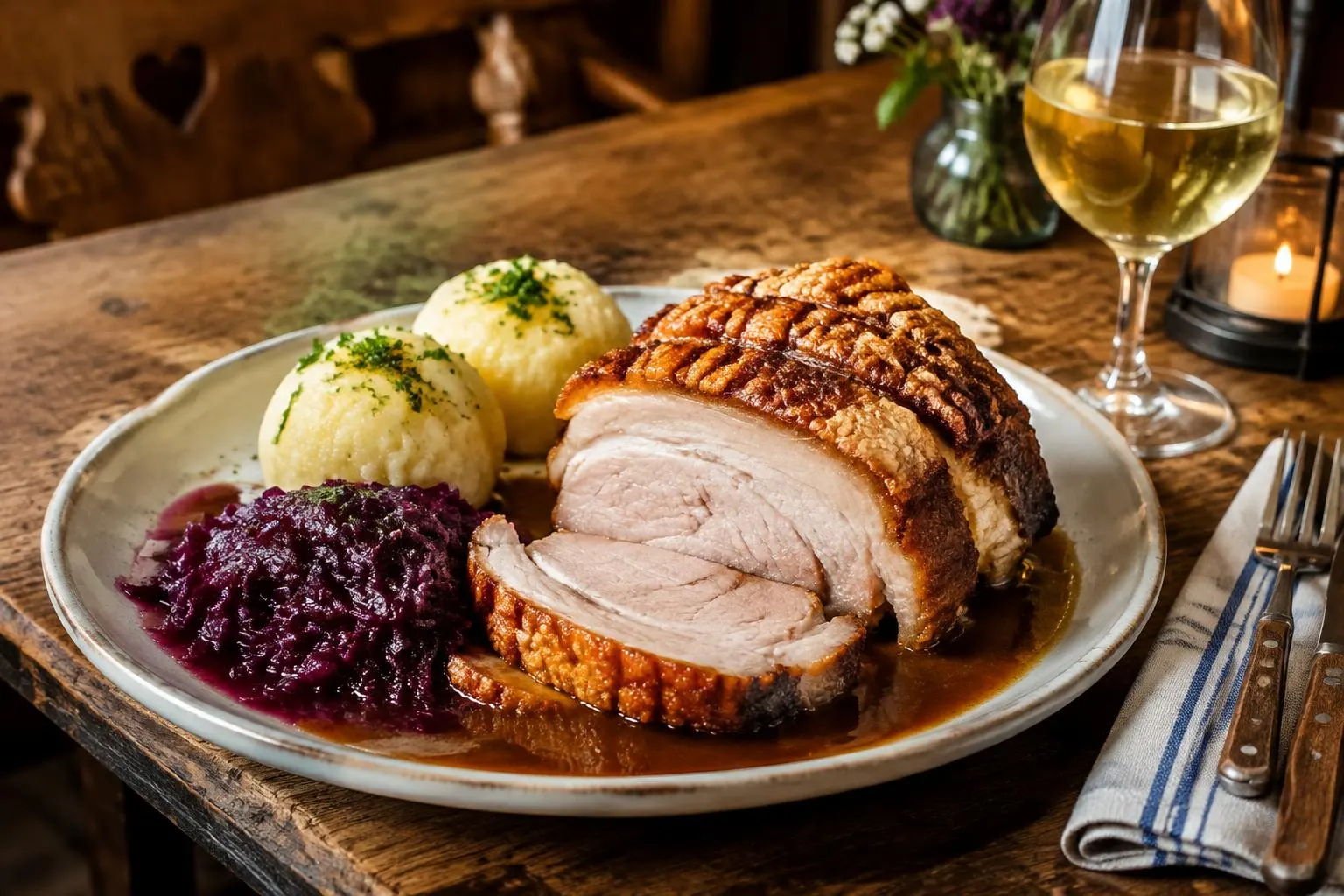
The best sound at a roast pork dinner doesn't come from the glass. It comes when the knife breaks through the crackling. Beneath it lie tender meat, a little fat and, with any luck, enough gravy for the last dumpling. A dry Riesling or Grüner Veltliner often fits this plate with surprising ease. If you prefer red wine, a juicy Zweigelt is usually a better bet than a heavyweight packed with tannin.
Why white wine with such a hearty roast? Because power doesn't only come from a dark colour. Acidity, body and spice can complement a rich plate just as well as red fruit. And while crisp pork skin has an intense flavour, it isn't an invitation to search the cellar for its loudest bottle.
Between Crunch and Melt
Several things come together in a good roast pork with crackling. Salt sits on the skin, roasted flavours develop on the surface, and fat and meat juices bring richness. A wine with lively acidity offers a refreshing counterpoint. It doesn't simply dissolve the fat; rather, it makes the mouth feel fresher again after a rich bite.
Salt often makes tannin-driven wines seem softer and fuller. That's helpful, but it's only half the story. Meat and gravy also bring umami, which can heighten bitterness and astringency in wine and mute its fruit. That's why a juicy red with restrained tannins remains the more easy-going choice. The basic principle of Salt Meets Acidity also shows how differently salt and acidity work at the table.
Crackling roasted very dark can develop bitter notes. When these meet plenty of tannin or pronounced toasty oak flavours, the bitter impression can easily build. Golden-brown and crisp is kinder to a wine pairing than dark to the point of no return. An expensive bottle won't make anything that tastes burnt more agreeable.
Three Guests with a Place at the Table
A dry Riesling with some body is especially good when cabbage, caraway and a fairly clear gravy are on the plate. Its acidity holds its own alongside the fat. Citrus or apple fruit can enliven the pairing without the wine needing to be sweet. A very lean, sharp style, on the other hand, can get lost alongside plenty of gravy.
Grüner Veltliner is a good choice for anyone who likes things a little gentler and more savoury. A medium-bodied, dry wine brings enough substance for the meat and dumplings. Its often peppery character suits hearty cooking, without there needing to be any actual pepper in the wine. A dry Silvaner with body is an equally sensible alternative, especially with vegetables that have only a little added acidity.
Zweigelt takes the red route. Fruit, moderate tannins and little new oak matter more here than maximum concentration. Lightly chilled, this style often feels livelier and less heavy. A juicy Spätburgunder can play the same role. Dark gravy can handle a little more body, but that doesn't automatically mean the wine needs more alcohol.
The Cabbage Can Change the Direction
Sauerkraut is no minor detail. Its acidity makes wine seem less acidic, fuller and sweeter. To keep the pairing from falling flat, the wine should have enough acidity of its own. A fresh Riesling usually has a better chance here than a very soft, low-acid white. It pays to choose just as carefully with Flammkuchen with Bacon and Onions, although the creamy topping shifts the balance there.
Red cabbage seasoned on the sweet side poses a different challenge. Sugar in food makes dry wine seem drier, more acidic and more bitter. If the sweetness is noticeable, a Riesling with a corresponding touch of sweetness is more helpful than a red that merely smells fruity but is dry. Dumplings without sweet additions settle things down. A reduced beer gravy, on the other hand, can bring bitterness of its own, which is why plenty of tannin is rarely the most comfortable partner here.
Interactive wine selector
How do you prepare Roast pork with crackling?
The default is a typical preparation. Adjust the settings to how your dish actually tastes, and the suggestions update instantly.
Wine styles to suit your dish
Choice 1
Nebbiolo, such as Barolo
Why it works: tannins and structure stand up to fat and protein and salt makes it softer and rounder.
Choice 2
Syrah or Shiraz
Why it works: tannins and structure stand up to fat and protein and the tannins find a match in the meat.
Get to know the Syrah / Shiraz grape varietyChoice 3
Champagne or grower-produced Sekt brut
Why it works: it is low in tannins and handles umami well and acidity and freshness cut through the fat.
Best avoided – Sweet red wine, such as Ruby Port. As a rule here, it is much sweeter than the dish and tastes cloying alongside it. Individual wines may vary.
The suggestions are wine styles, not specific bottles. Taste is personal, so feel free to try something that breaks the rules.
A Bite First, Then the Decision
For a little kitchen test, try the same wine first after meat and crackling without cabbage, then after a bite with sauerkraut. Take a sip of water between rounds. Notice how the wine's acidity changes and whether its fruit comes forward more strongly. The test makes it quite clear why the side dish deserves a say in the wine choice.
For an alcohol-free option, unsweetened apple juice generously diluted with sparkling water is a straightforward solution. It brings freshness, but remains distinctly lighter than wine. Choose a juice on the tart side and use a small proportion of juice, so that extra sweetness doesn't dominate the plate. If you'd rather skip the fruit accompaniment, sparkling water works well too. The roast has plenty of personality of its own, after all.
Brief and honest
- Full-bodied dry Riesling – Lively acidity refreshes after fatty bites and holds its own alongside sauerkraut. Some body helps with a rich gravy. More about Riesling
- Medium-bodied dry Grüner Veltliner – Spice and substance suit the meat, caraway and dumplings. It is especially harmonious with side dishes that aren't too acidic. More about Grüner Veltliner
- Juicy Zweigelt with little oak influence – Fruit and moderate tannins complement the gravy. Lightly chilled, the wine stays lively alongside the rich dish.
Wine advisor: find the right grape variety in three questions · All grape varieties at a glance
Probably not – Heavily extracted red wine with plenty of new oak. Lots of tannin and toasty oak flavours can seem harsh alongside dark crackling or slightly bitter beer gravy. A mild gravy and enough salt make these wines more approachable, but not automatically a good match.
Alcohol-free – Apple juice on the tart side, generously diluted with sparkling water, brings freshness. It is lighter than wine and should not be too sweet.
How helpful was this article?
No sign-up and no cookies. We only store the stars, the article and a non-traceable identifier that changes daily to prevent repeat ratings. Ratings appear only after editorial review.
Try this at home
Try the same wine first after meat and crackling without cabbage, then after a bite with sauerkraut. Drink a little water in between. Compare whether the wine seems less acidic and fruitier after the cabbage.
What this article is based on
The scenes in this article are illustrative stories, not reporting. The basic rules follow WSET teaching; personal taste may differ.