Spicy & international · Dal and Chana Masala
When Lentils Bring Warmth and the Wine Stays Cool
Spicy Dal and Chana Masala pair well with a fruity Riesling with a little residual sweetness and moderate alcohol. Mild, creamy Dal also works with a rounded Chenin Blanc, while a fruity, low-tannin rosé can accompany tomato-rich chickpeas.
- Spicy
- Umami
- Rich & creamy
- Sour
3 min read · Rebe & Traube editorial team
Let the Pot Gently Bubble
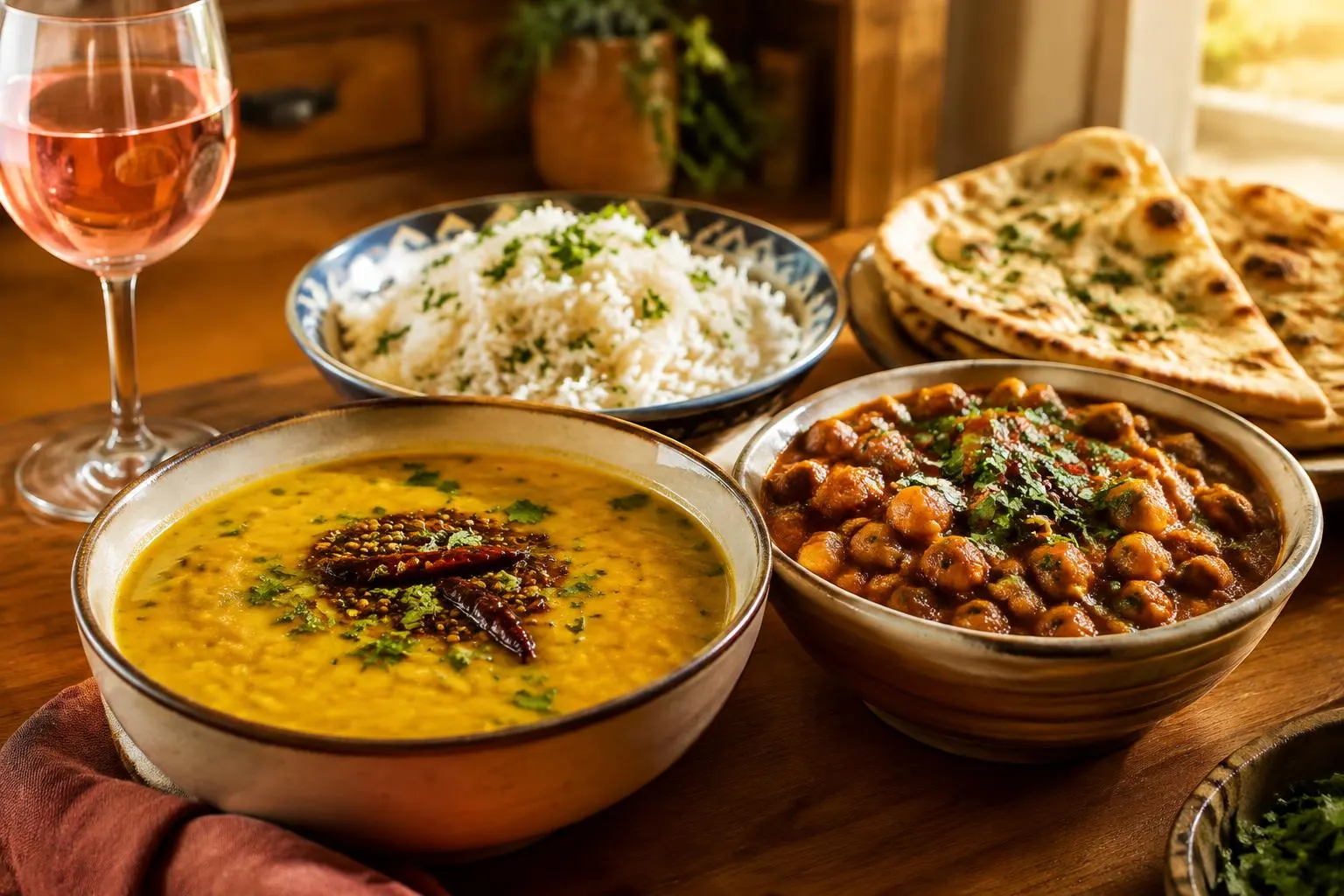
There is something soothing about a spoonful of Dal. The lentils have softened, cumin fills the air, and perhaps a little spiced oil glistens on top. Then the chili makes itself known, turning a quiet meal into quite a lively conversation. The glass beside it usually calls for a fruity wine with moderate alcohol and little tannin, rather than a powerhouse. When the heat is pronounced, a little residual sweetness is especially welcome.
Dal is not a single recipe. Red lentils can taste light and lemony; pulses cooked for a long time can be dense and creamy. With its chickpeas, tomatoes and spices, Chana Masala often brings more bite and a more distinct streak of acidity to the plate. If you want one wine for both dishes, an off-dry Riesling is often a good choice. What matters most, though, is what actually went into the pot.
Chili Needs No Amplifier
High alcohol can intensify the burn of chili, as can strong tannins. Alongside spicy Dal, a concentrated, high-alcohol red can therefore quickly feel more taxing than its soft aromas suggest. Fruit, lower alcohol and a little residual sugar offer a gentler direction. Sweetness can soften the perception of heat without making the food taste like dessert.
A fruity Riesling Kabinett with residual sweetness is a good first choice to try. Its acidity keeps each sip lively, especially when the Dal has been made with oil or coconut milk. It does not remove the fat, but provides a refreshing contrast to its creamy texture. Served well chilled, but not ice-cold, the wine's fruit remains perceptible too. Anyone particularly sensitive to chili should still reduce the heat in the food first.
The same thinking helps with fiery wok-fried Thai basil. Aromatic spice and heat are not the same thing, however. Cardamom, coriander seeds and cumin do not automatically call for a sweet wine. A mildly spiced Dal can be perfectly happy with a dry white.
Tomato, Lemon and the Last Spoonful of Oil
Chana Masala often has a tomato-driven acidity, sometimes with lemon added at the end. Acidity in food makes wine seem less acidic, fuller and sweeter. A low-acid wine can feel broad and tired alongside it. A lively Riesling or a fresh rosé has more acidity in reserve. The rosé's fruit accompanies the tomato without burying the chickpeas under a blanket of tannin.
For mild Dal without much tomato, a Chenin Blanc with ripe fruit and a little silky richness is worth trying, dry to off-dry depending on the heat. It can have substance, but should not be dominated by new oak. Coconut milk makes the dish rounder; a generous squeeze of lemon brightens it again. So adjust the seasoning first, then make your final wine choice. With pasta with tomato sauce, too, the sauce often sets the tone more than the filling base.
Umami from tomatoes or a robust vegetable stock can make wine seem more bitter, more astringent and less fruity. A little salt or acidity in the dish can cushion this effect. That is not an invitation to add salt just in case. A small comparison at the table reveals more than a blanket recommendation. The article on umami with miso, mushrooms and Parmesan explains why this works.
Interactive wine selector
How do you prepare Dal and Chana Masala?
The default is a typical preparation. Adjust the settings to how your dish actually tastes, and the suggestions update instantly.
Wine styles to suit your dish
Choice 1
Champagne or grower-produced Sekt brut
Why it works: it is low in tannins and handles umami well and acidity and freshness cut through the fat.
Choice 2
Off-dry or fruity-sweet Riesling Kabinett
Why it works: fruitiness and a little sweetness soften the heat and acidity and freshness cut through the fat.
Get to know the Riesling grape varietyChoice 3
Sauvignon Blanc
Why it works: acidity and freshness cut through the fat and it is low in tannins and handles umami well.
Best avoided – Sweet red wine, such as Ruby Port. As a rule here, it is much sweeter than the dish and tastes cloying alongside it. Individual wines may vary.
The suggestions are wine styles, not specific bottles. Taste is personal, so feel free to try something that breaks the rules.
Three Spoonfuls Instead of a Debate over Principles
For a small kitchen test, divide some mild Dal between three little bowls. Leave one unchanged, add a squeeze of lemon to another, and a little chili oil to the third. Taste the same off-dry Riesling after each spoonful. Notice how the lemon changes the wine's acidity and whether its residual sweetness feels more pleasant alongside chili. A piece of unseasoned flatbread and some water help between comparisons.
Rice and bread can make individual mouthfuls less intense, while a hot chutney quickly shifts the pairing. Sweet mango chutney also makes dry wine seem more astringent. For an alcohol-free option, a light, cooled ginger infusion with a little apple juice is an honest alternative. Use ginger sparingly if your palate is sensitive. Still water alongside remains a very sensible idea, with no grand pairing theory required.
Brief and honest
- Riesling Kabinett with Residual Sweetness – Fruit, lively acidity and moderate alcohol accompany spicy Dal. A little residual sweetness softens the perception of heat. More about Riesling
- Dry to Off-Dry Chenin Blanc – Ripe fruit and silky richness suit mild, creamy Dal. With more chili, the off-dry version is often more pleasant. More about Chenin Blanc
- Fruity, Low-Tannin Rosé – Especially suited to tomato-rich Chana Masala with moderate heat. Look for moderate alcohol.
Wine advisor: find the right grape variety in three questions · All grape varieties at a glance
Probably not – High-Alcohol, Strongly Tannic Red Wine. Alcohol and tannin can intensify chili heat unpleasantly. With mild versions, however, a light red is certainly worth trying.
Alcohol-free – A cooled, mild ginger infusion with a small splash of apple juice complements the spices. Use ginger only sparingly if you are very sensitive to heat.
How helpful was this article?
No sign-up and no cookies. We only store the stars, the article and a non-traceable identifier that changes daily to prevent repeat ratings. Ratings appear only after editorial review.
Try this at home
Divide mild Dal between three little bowls. Add a little lemon to one, chili oil to a second, and leave the third unchanged. Taste the same off-dry Riesling after each spoonful and compare the effect of the acidity and the sensation of heat.
What this article is based on
- Wine & Spirit Education Trust (WSET), How to pair wine with your favourite takeaway meals
- WSET Level 2 Award in Wines, Spezifikation mit dem Kapitel zu Wein und Speisen
The scenes in this article are illustrative stories, not reporting. The basic rules follow WSET teaching; personal taste may differ.