Cheese · Salad with Warm Goat’s Cheese
Warm Goat’s Cheese and a Glass Full of Freshness
Sauvignon Blanc and dry Chenin Blanc pair well with warm goat’s cheese on salad with a sharp dressing. When honey or sweet fruit define the plate, an off-dry Riesling with the right level of residual sugar may be the better choice.
- Sour
- Rich & creamy
- Salty
- Umami
3 min read · Rebe & Traube editorial team
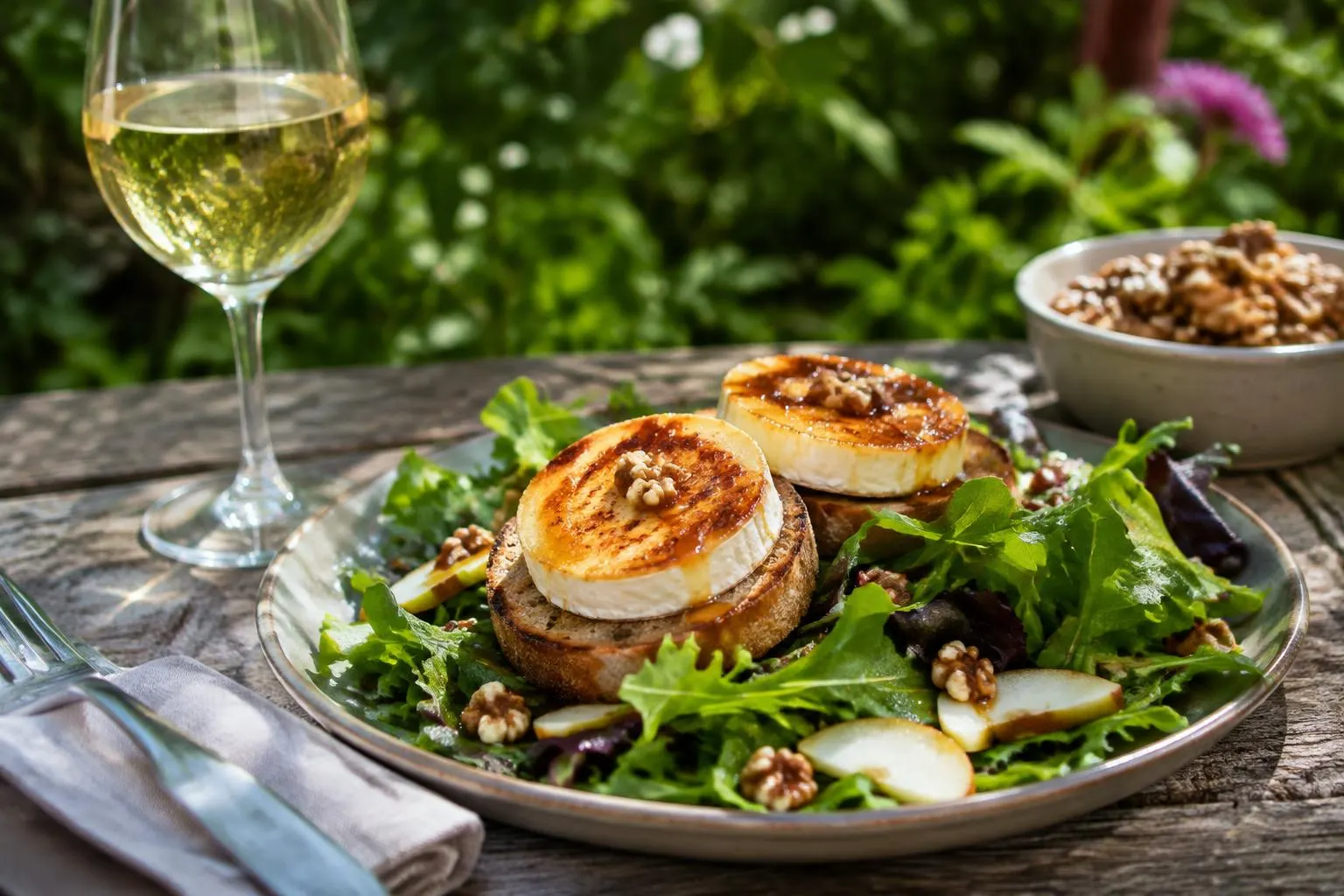
Beneath its golden surface, the goat’s cheese softens, the bread crunches and the leaves rustle. The charm of this salad lies in the contrasts: warm and cool, creamy and crisp. It is a pleasing task for a wine, as long as the dressing is not overlooked. Sauvignon Blanc with lively acidity is a good starting point. Dry Chenin Blanc offers a slightly different texture, while off-dry Riesling helps when honey or ripe fruit make their presence felt.
The Cheese Alone Does Not Decide
A mild round of goat’s cheese tastes different from a longer-aged log with a pronounced rind. As the intensity increases, the wine can have more substance too. What matters, though, is the dish as a whole. Lemon juice, vinegar, mustard, walnuts, honey and fried bacon can shift the balance more than whether the cheese spent an extra minute in the oven.
With a tangy vinaigrette, the wine should bring at least a comparable level of fresh acidity. Acidity in food makes wine seem less acidic, fuller and sweeter. An already soft, low-acid white can seem tired alongside it. If you would like to taste this effect for yourself, the principle of Salt Meets Acidity offers a useful guide. The dressing need not be timid, just balanced.
Sauvignon Offers More Than Green Aromas
A dry Sauvignon Blanc, from the Loire for example, often combines citrus fruit, herbal notes and marked freshness. This can echo the green leaves and provide a counterpoint to the creamy cheese. The aim is not to find the most piercing aromas possible. Very intense tropical fruit can dominate a simple salad just as much as excessive oak notes. A clean, medium-bodied style is often the more versatile choice.
Chenin Blanc is an appealing alternative, particularly when toasted bread and a slightly stronger cheese are part of the dish. A dry example with good acidity has enough drive for the vinaigrette and often enough substance for the warm centre of the cheese. Since Chenin is also made in distinctly sweet styles, it is worth checking the actual style description. The grape variety alone does not settle the question of what to pour.
Honey Is Not an Innocent Garnish
A thin drizzle of honey looks pretty, but it can carry considerable weight on the palate. Sweetness in food makes wine seem drier, more acidic and more bitter. If sweetness truly defines the salad, the wine should taste at least as sweet. An off-dry Riesling can do this; with plenty of honey, more residual sugar may be needed. Only tasting it with a bite that includes all the elements will reveal whether the two work together.
Walnuts and strong toasted flavours bring a bitter edge. Plenty of tannin in a red wine can amplify this. There is also the umami in aged cheese, which can make wine seem more bitter, more astringent and less fruity. Salt and acidity in the food help restore balance, and a low-tannin style is usually a more easygoing choice. Umami with Mushrooms and Parmesan also explains these connections.
So red-wine drinkers need not look wistfully past the salad. A light, juicy Gamay with little tannin can suit a savoury version without sweet honey. Here it is an alternative, not the safest default recommendation. With a very acidic dressing, the white wines mentioned above generally remain more predictable. For a broader selection of cheeses, it is also worth looking at aged hard cheese, whose intensity opens up other possibilities.
Interactive wine selector
How do you prepare Salad with Warm Goat’s Cheese?
The default is a typical preparation. Adjust the settings to how your dish actually tastes, and the suggestions update instantly.
Wine styles to suit your dish
Choice 1
Champagne or grower-produced Sekt brut
Why it works: it is low in tannins and handles umami well and acidity and freshness cut through the fat.
Choice 2
Sauvignon Blanc
Why it works: acidity and freshness cut through the fat and it is low in tannins and handles umami well.
Choice 3
Dry Riesling
Why it works: acidity and freshness cut through the fat and it has enough acidity to match the acidity in the food.
Get to know the Riesling grape variety
Best avoided – Sweet red wine, such as Ruby Port. As a rule here, it is much sweeter than the dish and tastes cloying alongside it. Individual wines may vary.
The suggestions are wine styles, not specific bottles. Taste is personal, so feel free to try something that breaks the rules.
One Plate, Two Small Variations
Start by serving part of the salad without honey. Try Sauvignon Blanc with it, then add a little honey to the cheese and taste again. Next, compare it with an off-dry Riesling. Notice not just whether it is pleasant or unpleasant, but whether the fruit disappears and the acidity suddenly seems louder. This little experiment can help you get to know your own preferences quite precisely.
For an alcohol-free option, a light apple spritzer with a little lemon juice works well. Its sweetness should follow the honey and fruit, rather than a fixed mixing ratio. With a wholly savoury version, a mild herbal infusion served cool is enough too. This lets the warm cheese keep its creamy starring role, without the salad leaves being overwhelmed by a sweet drink.
Brief and honest
- Dry Sauvignon Blanc – Lively acidity suits the vinaigrette, while herbal notes complement the leaves.
- Dry Chenin Blanc – Combines acidity and substance for warm cheese and toasted bread. More about Chenin Blanc
- Off-dry Riesling – Works when the honey’s sweetness is noticeable, provided its residual sugar keeps pace with the dish. More about Riesling
Wine advisor: find the right grape variety in three questions · All grape varieties at a glance
Probably not – Tannic, oak-driven red wine. Walnut bitterness and the cheese’s umami can amplify its astringent side. A savoury version with little dressing is less demanding.
Alcohol-free – A light apple spritzer with a little lemon juice brings fruit and freshness. Adjust its sweetness to the honey and fruit in the salad.
How helpful was this article?
No sign-up and no cookies. We only store the stars, the article and a non-traceable identifier that changes daily to prevent repeat ratings. Ratings appear only after editorial review.
Try this at home
Try Sauvignon Blanc with the salad without honey. Add a little honey to the next bite and taste again. Then compare it with off-dry Riesling, paying attention to fruit and acidity.
What this article is based on
- WSET Level 2 Award in Wines, Spezifikation mit dem Kapitel zu Wein und Speisen
- Wine & Spirit Education Trust (WSET), How to pair wine with your favourite takeaway meals
The scenes in this article are illustrative stories, not reporting. The basic rules follow WSET teaching; personal taste may differ.