Fish & seafood · Sushi with Soy Sauce and Wasabi
Between Rice, Soy Sauce and a Hint of Wasabi
A fruity Riesling, a dry sparkling wine or a lean Grüner Veltliner pairs well with sushi with soy sauce and a little wasabi. The keys are enough acidity for the seasoned rice, low tannins and, with sweet glazes or greater heat, a little residual sweetness rather than high alcohol.
- Salty
- Sour
- Umami
- Spicy
4 min read · Rebe & Traube editorial team
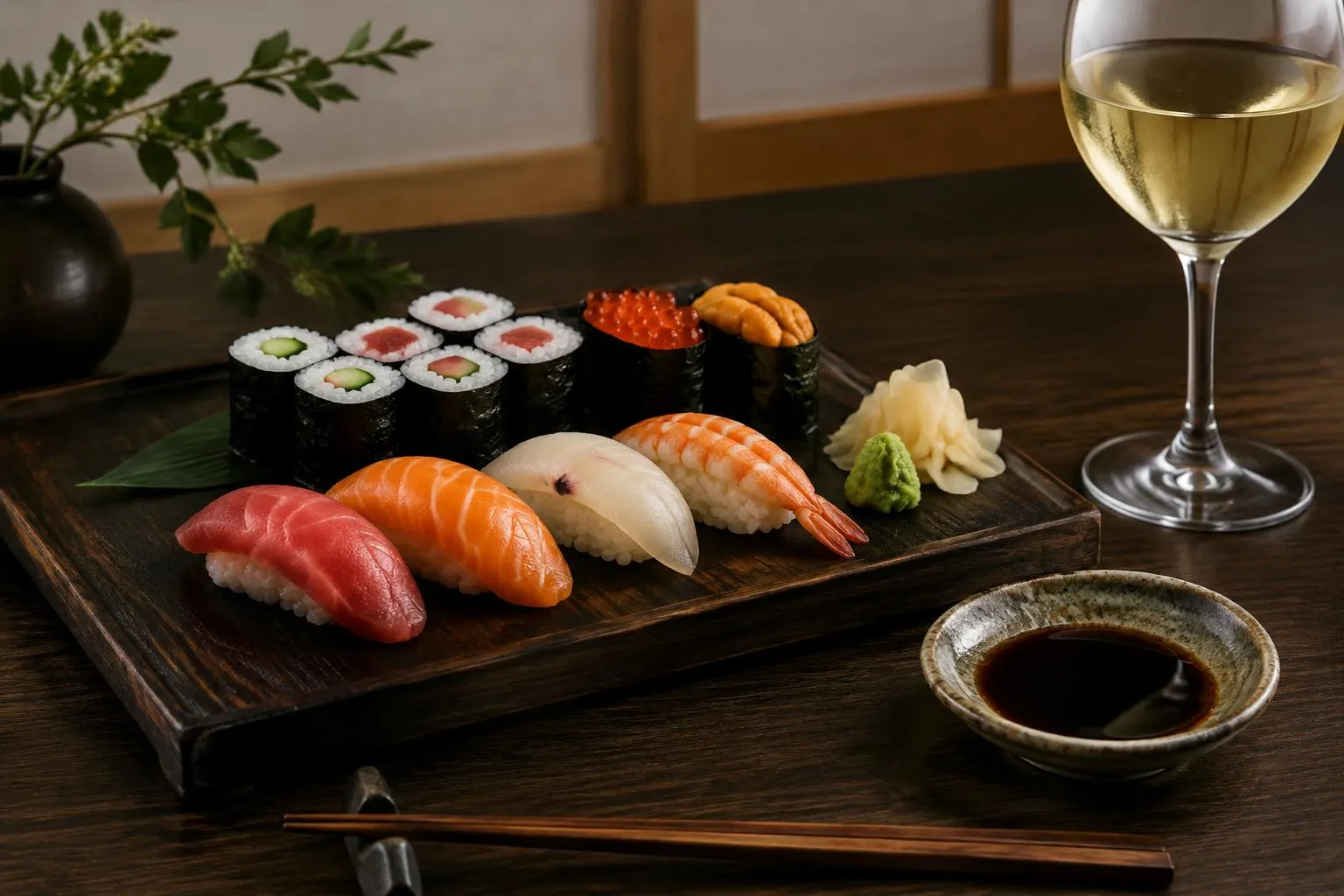
The little dipping bowl has a say
A piece of nigiri can taste almost hushed. Soft rice, cool fish, a fleeting scent of the sea. Then the little bowl of soy sauce comes into play, and suddenly the same bite has a different voice. So choosing wine for sushi means thinking beyond salmon or tuna. The rice seasoning, soy sauce, wasabi and any glazes have at least as much influence. A fruity Riesling with moderate alcohol is often the easiest starting point: dry when the seasoning is restrained, off-dry when there is more sweetness or heat.
Of course, sushi is not just one thing. A cucumber roll is lighter than a tempura-filled roll, and fatty salmon calls for different touches from lean white fish. Their shared foundation is the acidulated rice. Alongside acidity, its seasoning often brings a little sugar. That alone means a completely austere wine with little fruit is not automatically the most elegant choice.
What rice and soy sauce change
Acidity in food makes a wine seem less acidic, fuller and sweeter. Seasoned rice therefore needs a wine with enough acidity of its own. A fresh Riesling will usually hold its definition here better than a soft, low-acid white. If the rice tastes distinctly sweet, however, a bone-dry wine can seem harsher. Sweetness in food makes wine seem drier, more acidic and more bitter. In that case, a wine at least as sweet as the food is a better direction, without the glass having to taste like dessert.
Soy sauce brings plenty of umami and salt. Umami can make wine seem more bitter, more astringent and more acidic, while fruit and perceived sweetness recede. Salt counteracts some of that harshness and often makes wine seem rounder. Both effects exist side by side; neither reliably cancels the other out. That makes low tannins and discernible fruit a sound starting point. There is more on this relationship in umami with miso, mushrooms and Parmesan.
In practice, it helps to go easy with the soy sauce. Rice soaked right through quickly tastes mostly of sauce and may fall apart. A light dip is often enough. That way, fish, rice and wine remain distinct. The bottle then does not have to accommodate seasoning that is already overwhelming the food itself.
Wasabi is not simply green chili
Wasabi and many wasabi-containing pastes based largely on horseradish get their characteristic heat from isothiocyanates. The pungency rises quickly into the nose and fades differently from the longer-lasting capsaicin heat of chili. So a recommendation for spicy curry cannot be carried over to sushi unchanged. Residual sweetness is not a reliable way to extinguish wasabi heat. Using less wasabi remains the most effective approach when the heat crowds everything else out.
A wine with moderate alcohol at least avoids adding alcoholic warmth. Fruit and a little residual sweetness can make the overall combination seem milder, especially when slightly sweet sauces are also involved. With chili-mayonnaise rolls, the more familiar rules for chili also apply: high alcohol and firm tannins tend to be unhelpful. In that case, it is worth looking at spicy Thai dishes, without treating wasabi and chili as the same in flavor.
Three routes through the sushi platter
Riesling, from dry to off-dry, keeps the rice in balance with its acidity and supplies fruit to counter the savory seasoning. For a mixed platter, an off-dry, lower-alcohol style is particularly flexible. Eel with a very sweet glaze, however, may call for considerably more sweetness than a simple salmon nigiri. One glass need not pair equally well with every roll.
Dry sparkling wine made by traditional bottle fermentation works particularly well with lightly seasoned sushi and crisp tempura. Acidity and bubbles refresh the palate after fat, while delicate yeasty notes can harmonize with the rice. Very taut styles with little fruit can quickly seem severe alongside sweet glazes. Grüner Veltliner is the quieter alternative for cucumber, avocado and mild fish, provided it is lean, fresh and not high in alcohol. Those who mainly enjoy salmon will find a related, though considerably smokier, pairing challenge in smoked salmon and wine.
Interactive wine selector
How do you prepare Sushi with Soy Sauce and Wasabi?
The default is a typical preparation. Adjust the settings to how your dish actually tastes, and the suggestions update instantly.
Wine styles to suit your dish
Choice 1
Champagne or grower-produced Sekt brut
Why it works: it is low in tannins and handles umami well and salt makes it softer and rounder.
Choice 2
Sauvignon Blanc
Why it works: it is low in tannins and handles umami well and acidity and freshness cut through the fat.
Choice 3
Grüner Veltliner
Why it works: it is low in tannins and handles umami well and it has enough acidity to match the acidity in the food.
Get to know the Grüner Veltliner grape variety
Best avoided – Sweet red wine, such as Ruby Port. As a rule here, it is much sweeter than the dish and tastes cloying alongside it. Individual wines may vary.
The suggestions are wine styles, not specific bottles. Taste is personal, so feel free to try something that breaks the rules.
First plain, then with more punch
Try a sip of wine with a piece of sushi without any extra seasoning. With the next piece, use a little soy sauce, and only then add a tiny dab of wasabi. This makes it easier to spot when fruit disappears, acidity comes forward or there is simply too much heat involved.
For an alcohol-free option, lightly brewed green tea that has been left to cool works well, provided its bitterness stays restrained. Tea brewed too strongly can seem bitter and severe alongside umami. Still water is the more neutral choice and gives a finely balanced sushi platter plenty of room to shine.
Brief and honest
- Dry to off-dry Riesling – Acidity suits the seasoned rice, while fruit softens the overall savory impression. With slightly sweet glazes, a little residual sweetness is more helpful than a very austere style. More about Riesling
- Dry sparkling wine made by traditional bottle fermentation – Acidity and bubbles are particularly refreshing with fattier fish and tempura. Very sweet sauces, however, can make a taut Brut seem harsh.
- Lean Grüner Veltliner – Freshness and subtle spice suit cucumber, avocado and mild fish. Moderate alcohol keeps the pairing lighter. More about Grüner Veltliner
Wine advisor: find the right grape variety in three questions · All grape varieties at a glance
Probably not – High-tannin, high-alcohol red wine. Umami can bring bitterness and astringency further to the fore. With chili mayonnaise, alcohol's intensifying effect on chili heat also comes into play.
Alcohol-free – Lightly brewed green tea that has been left to cool can work, as long as it is not very bitter. With plenty of wasabi, still water is the more neutral accompaniment.
How helpful was this article?
No sign-up and no cookies. We only store the stars, the article and a non-traceable identifier that changes daily to prevent repeat ratings. Ratings appear only after editorial review.
Try this at home
Try the wine with a piece of sushi without any extra seasoning. Compare it with a second piece with a little soy sauce and a third with a tiny dab of wasabi. Notice whether fruit, acidity or heat shapes the overall impression.
What this article is based on
- WSET Level 2 Award in Wines, Spezifikation mit dem Kapitel zu Wein und Speisen
- Wine & Spirit Education Trust (WSET), How to pair wine with your favourite takeaway meals
The scenes in this article are illustrative stories, not reporting. The basic rules follow WSET teaching; personal taste may differ.