Vegetables & plant-based food · Parmigiana di Melanzane
Aubergine Beneath a Golden Cheese Crust
Parmigiana di Melanzane pairs well with juicy Barbera, young Sangiovese with moderate tannins or a full-bodied dry Rosato. The tomato sauce calls for acidity, while the aubergine and cheese benefit more from fruit than from lots of tannin.
- Sour
- Salty
- Umami
- Rich & creamy
- Bitter
4 min read · Rebe & Traube editorial team
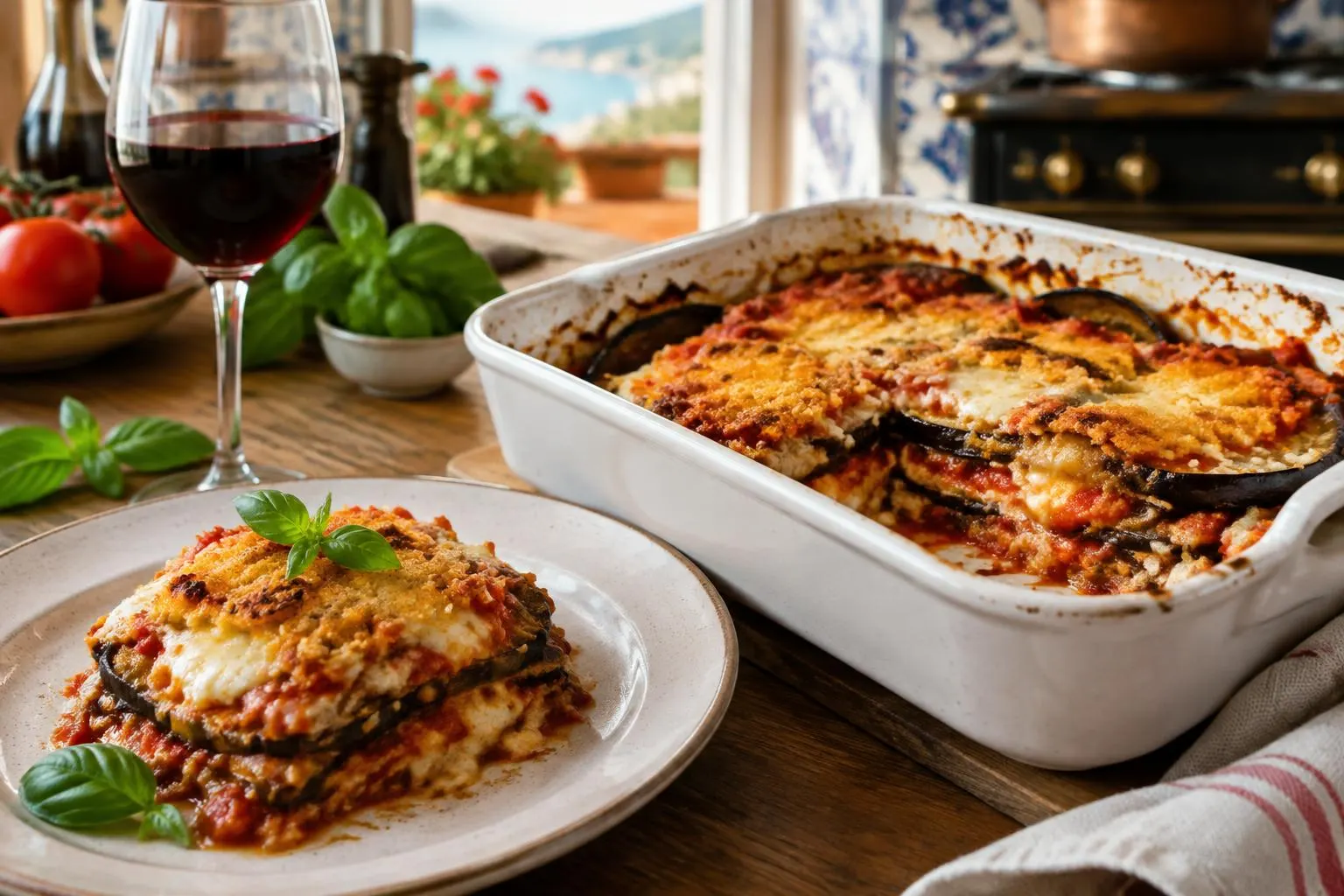
A Parmigiana is not easily hurried. Fresh from the oven, it tends to slide apart, the tomato sauce still bubbling at the edges and the cheese stretching into strings longer than any sensible serving. A few minutes of rest does it good. The same goes for the wine, incidentally, if the bottle of red is still sitting beside the stove, warm from the summer heat.
The ideal glass holds a juicy red with lively acidity and restrained tannins. Barbera is a particularly convincing candidate, with young Sangiovese a classic alternative. If you prefer something paler, choose a full-bodied dry Rosato. All three can meet the tomato on its own terms without burying the delicate aubergine beneath a heavy cloak of oak and tannin.
The Tomato Leads the Conversation
Parmigiana di Melanzane is not simply vegetables with cheese. Its appeal lies in the interplay of soft aubergine flesh, tomato sauce, melted cheese and a browned top. Mozzarella and an aged hard cheese often feature together. How rich the dish feels also depends on whether the aubergine slices have been pan-fried, deep-fried or precooked in the oven.
When choosing the wine, the sauce sets the tone first. Acidity in food makes wine seem less acidic, fuller and sweeter. A wine with little acidity of its own can therefore seem flat beside a lively tomato sauce. Barbera usually brings a good foundation of acidity without necessarily delivering much tannin. Here, that is no minor detail but a genuinely useful double advantage.
Sangiovese can also work very well, provided it is young, fruit-led and not overly extracted. An uncomplicated Chianti is often a better fit for the dish than a concentrated top-end bottling aged at length in new oak. Spaghetti al pomodoro already shows how tomato can be the deciding factor. The cheese simply makes the task a little richer here.
Cheese Does Not Soften Every Red Wine
Aged cheese and cooked tomatoes provide umami. This is savoury and appetising, but it can make wine seem more bitter, astringent and acidic, while fruit and sweetness recede. Plenty of tannin is therefore by no means automatically the right answer to plenty of cheese. Beside a heavily reduced sauce in particular, a dry, angular red can become surprisingly austere.
Salt can partly soften this effect and make tannins seem less harsh. The tomato's acidity also helps the pairing work more favourably. Even so, it is worth checking how salty the finished dish is before showering it generously with more hard cheese. More salt is not an end in itself. This relationship is explored in more detail in Umami, Miso, Mushrooms and Parmesan.
The oil in the aubergine and the fat in the cheese also call for freshness. The wine's acidity makes the next bite feel lighter, but it does not literally dissolve the fat. With deep-fried slices, the wine can have a little more body. With lightly oiled, oven-cooked aubergine, a leaner version often works. The dark cheese crust brings additional toasted notes; burnt patches, by contrast, bring bitterness that can combine unfavourably with strong tannins.
Red Is Welcome, and So Is Pink
Barbera without dominant oak influence would be my first choice for a juicy, tomato-led Parmigiana. Young Sangiovese works particularly well when basil and a savoury cheese crust make their presence felt. Look for an approachable style with moderate tannins. Served lightly chilled, both usually seem fresher than they do straight from a warm kitchen shelf.
A dry Rosato from southern Italy is not a fallback for people who dislike red wine. With enough body, clear fruit and lively acidity, it can find a very good middle ground between sauce and cheese. A delicately scented, distinctly light version is more likely to get lost beside an oil-rich Parmigiana. For a comparison with another oven-baked dish, Lasagne Bolognese raises similar questions about sauce, fat and crust.
Interactive wine selector
How do you prepare Parmigiana di Melanzane?
The default is a typical preparation. Adjust the settings to how your dish actually tastes, and the suggestions update instantly.
Wine styles to suit your dish
Choice 1
Champagne or grower-produced Sekt brut
Why it works: it is low in tannins and handles umami well and acidity and freshness cut through the fat.
Choice 2
Sauvignon Blanc
Why it works: acidity and freshness cut through the fat and it is low in tannins and handles umami well.
Choice 3
Dry Riesling
Why it works: acidity and freshness cut through the fat and it is low in tannins and handles umami well.
Get to know the Riesling grape variety
Best avoided – Sweet red wine, such as Ruby Port. As a rule here, it is much sweeter than the dish and tastes cloying alongside it. Individual wines may vary.
The suggestions are wine styles, not specific bottles. Taste is personal, so feel free to try something that breaks the rules.
Let the First Bite Decide
Try a young Barbera on its own first, then after a bite of tomato sauce, aubergine and cheese. Next, take a small bite of just the browned cheese topping and taste again. Notice whether the fruit, acidity or a dry feeling on your gums stands out more. This will tell you whether you want more juiciness or less tannin.
For an alcohol-free option, unsweetened rosehip tea, left to cool, is an honest choice. Its fruity, tart character is refreshing alongside the oil, though it does not replicate the structure of a red wine. Very sweet grape juice, by contrast, can quickly seem cloying beside the savoury sauce. And then, at last, you can cut into the Parmigiana, even if the first serving is rarely the neatest.
Brief and honest
- Young Barbera without dominant oak – Its lively acidity suits the tomato sauce, while moderate tannins are gentle on the umami-rich combination. Juicy fruit keeps the dish approachable. More about Barbera
- Young Sangiovese with moderate tannins – Acidity and red fruit accompany the tomato, basil and cheese crust. A lightly extracted style without a strong oak influence is often a better choice here.
- Full-bodied dry Rosato from southern Italy – Brings freshness and fruit without contributing much tannin. Enough body helps alongside oil-rich aubergine and melted cheese.
Wine advisor: find the right grape variety in three questions · All grape varieties at a glance
Probably not – Heavily extracted, oak-led red wine. Lots of tannin can seem harsh alongside umami and bitter, browned patches. With a less concentrated sauce and a wine that has already softened with age, the combination can be gentler.
Alcohol-free – Unsweetened rosehip tea, left to cool, provides fruity acidity and refreshes alongside oil-rich aubergine. It does not replace the structure of a red wine, but avoids the cloying sweetness of some grape juices.
How helpful was this article?
No sign-up and no cookies. We only store the stars, the article and a non-traceable identifier that changes daily to prevent repeat ratings. Ratings appear only after editorial review.
Try this at home
Try a young Barbera on its own first, then after a bite of tomato sauce, aubergine and cheese. Next, taste again after a small bite of just the browned cheese topping. Compare the fruit, perceived acidity and dry feeling on your gums.
What this article is based on
- WSET Level 2 Award in Wines, Spezifikation mit dem Kapitel zu Wein und Speisen
- Wine & Spirit Education Trust (WSET), How to pair wine with your favourite takeaway meals
The scenes in this article are illustrative stories, not reporting. The basic rules follow WSET teaching; personal taste may differ.