Vegetables & plant-based food · White asparagus with butter or hollandaise
Tender Spears, the Big Sauce Question
White asparagus pairs well with dry Silvaner and Weißburgunder with moderate acidity and little oak. With plenty of hollandaise, a slightly creamier Chardonnay can join the table, provided it brings enough freshness.
- Bitter
- Rich & creamy
- Salty
3 min read · Rebe & Traube editorial team
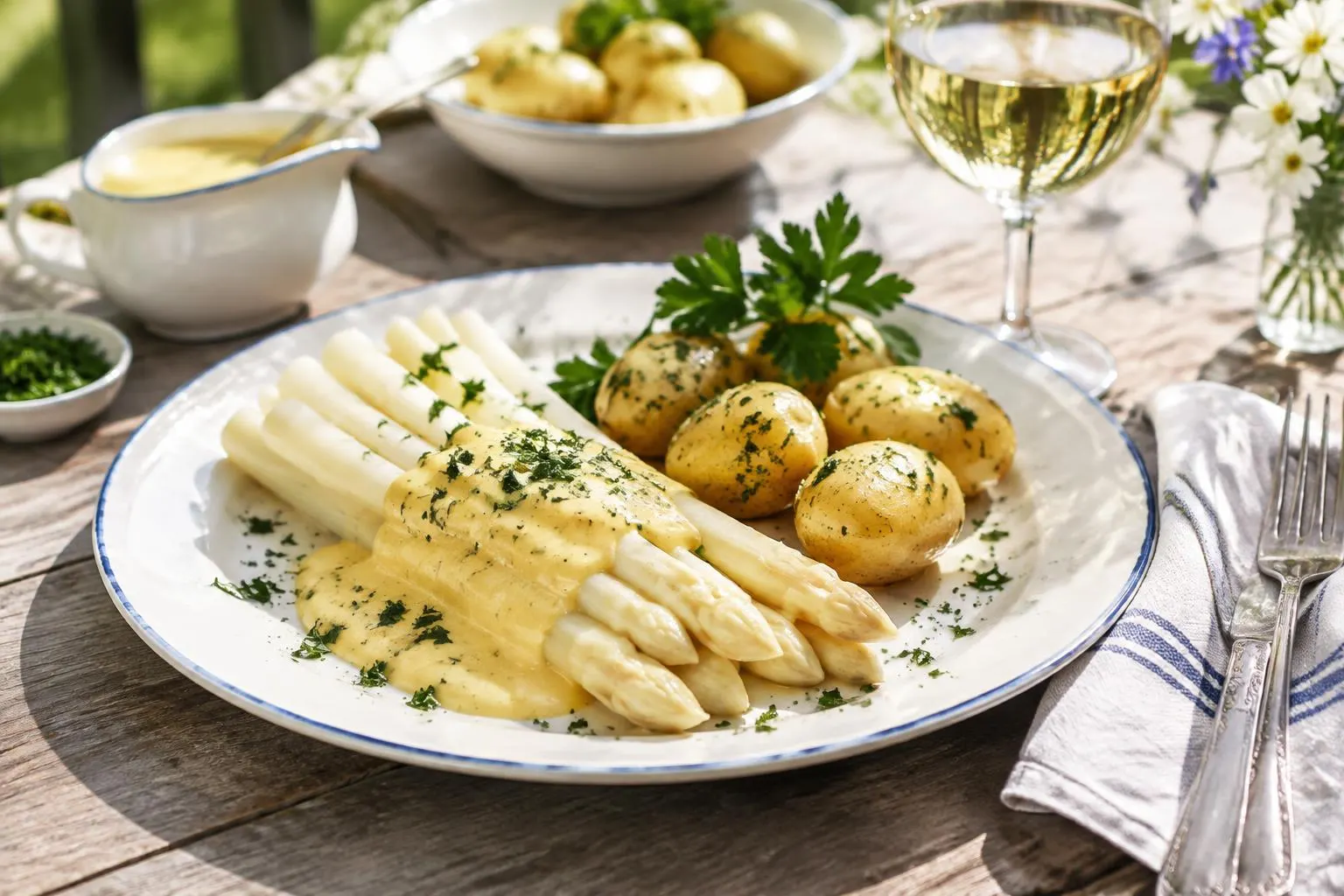
At an asparagus meal, the sauce often steals the show. The spears lie quietly on the plate while melted butter glistens and hollandaise slowly spills over their tips. This is no place for a wine that announces itself too forcefully. A dry Silvaner, an understated Weißburgunder or a Chardonnay without loud oak notes gives the vegetable room and counters the fat with a little freshness. The winning bottle depends less on the calendar than on what is actually served alongside.
Take that subtle bitterness seriously
White asparagus can taste mild, slightly sweet and pleasantly bitter. Not every spear is bitter, and not every preparation calls for the same restraint. An oak-driven red with plenty of tannin, however, brings an unnecessary risk. Bitterness in the food and tannin in the wine can add up. What seems striking on its own may feel angular and drying beside this delicate vegetable.
Still, the widespread notion that asparagus allows only one grape variety is misleading. What matters is the acidity, tannin, alcohol and aromatic intensity of the particular wine. A lean Weißburgunder can be a better match than a very high-alcohol Silvaner. A finely structured Chardonnay can be more enjoyable than a broad, low-acid white that offers barely any freshness after two buttery bites.
Butter needs a fresh counterpoint
Silvaner is especially convincing when the plate stays simple. Asparagus, potatoes, butter and a little salt leave room for its subtle fruit and herbal hints. Its usually unobtrusive character does not drown out the spears. Look for a dry, balanced style with lively but not piercing acidity. The wine need be neither particularly neutral nor particularly powerful to work well here.
Weißburgunder suits a more generous helping of butter or the addition of mild cooked ham. A little creamy roundness sits comfortably with the soft texture of the food. At the same time, the wine’s acidity refreshes the palate after the fat. This is a sensory contrast, not a literal dissolving of fat. With fish in lemon butter, the same contrast becomes more pronounced because additional citric acid comes into play.
Hollandaise and ham have their say
Hollandaise is not just about creaminess. Its lemon or other acidic component can noticeably change the wine choice. Acidity in food makes wine seem less acidic, fuller and sweeter. The bottle should therefore have enough acidity of its own to avoid seeming flabby beside a distinctly lemony sauce. A Chardonnay with freshness and restrained oak can bring body and acidity together nicely. Heavy toasted notes are not needed.
With ham, it is worth asking another question. Is it mild and cooked, or assertively smoked and cured? Salt softens perceived tannin and bitterness and often makes wine seem fuller. Smoke adds intensity. A slightly fuller-bodied Weißburgunder can then make sense, while a very delicate wine gets lost. For anyone wanting to explore the smoky direction further, smoked salmon offers a related starting point, though with different fat and a different texture.
Grilled asparagus, in turn, is a different dish from gently boiled asparagus. Toasty flavours and more prominent bitter notes can handle more body in the wine, but not automatically more tannin. A sweet glaze changes the equation further. Sweetness in food makes dry wines seem more acidic and bitter. With the classic asparagus plate, it is best to let such extras consciously inform the choice rather than dismissing them as mere decoration.
Interactive wine selector
How do you prepare White asparagus with butter or hollandaise?
The default is a typical preparation. Adjust the settings to how your dish actually tastes, and the suggestions update instantly.
Wine styles to suit your dish
Choice 1
Champagne or grower-produced Sekt brut
Why it works: acidity and freshness cut through the fat and it is low in tannins and handles umami well.
Choice 2
Sauvignon Blanc
Why it works: acidity and freshness cut through the fat and it is low in tannins and handles umami well.
Choice 3
Dry Riesling
Why it works: acidity and freshness cut through the fat and it is low in tannins and handles umami well.
Get to know the Riesling grape variety
Best avoided – Sweet red wine, such as Ruby Port. As a rule here, it is much sweeter than the dish and tastes cloying alongside it. Individual wines may vary.
The suggestions are wine styles, not specific bottles. Taste is personal, so feel free to try something that breaks the rules.
First the tip, then a sip
A small comparison tells you more than the search for the one true asparagus wine. Try the same Weißburgunder first with a piece of asparagus and butter, then with one coated in lemony hollandaise. Notice how much freshness remains after the second bite. For another round, a small piece of ham is enough. Suddenly, it becomes clear why two people at the same table might prefer different bottles.
For an alcohol-free option, a mild herbal tea, allowed to cool and finished with a small splash of lemon, makes an honest companion. Avoid long-steeped, distinctly bitter infusions. Still water alongside delicate asparagus is no surrender, either. It lets the butter’s aroma shine and the tips stay tender, taking nothing away from the meal’s quiet pleasure.
Brief and honest
- Dry Silvaner – Its restrained aromatics suit mild asparagus with butter and potatoes. More about Silvaner
- Dry Weißburgunder – A little creamy roundness and fresh acidity complement butter and mild ham. More about Weißburgunder
- Chardonnay with little oak influence – A fresh, medium-bodied style supports hollandaise without dominating with toasted notes. More about Chardonnay
Wine advisor: find the right grape variety in three questions · All grape varieties at a glance
Probably not – Bold, tannic red wine. Tannin can amplify the bitter notes in asparagus. Salty ham softens this to some extent, but does not make the pairing reliable.
Alcohol-free – A mild, cooled herbal tea with a little lemon works without much competition in aroma or flavour. Still water is also a good choice.
How helpful was this article?
No sign-up and no cookies. We only store the stars, the article and a non-traceable identifier that changes daily to prevent repeat ratings. Ratings appear only after editorial review.
Try this at home
Try Weißburgunder with a piece of asparagus and butter. Then take a piece with lemony hollandaise and taste the wine again. Compare how fresh and full the wine seems each time.
What this article is based on
- WSET Level 2 Award in Wines, Spezifikation mit dem Kapitel zu Wein und Speisen
- Wine & Spirit Education Trust (WSET), How to pair wine with your favourite takeaway meals
The scenes in this article are illustrative stories, not reporting. The basic rules follow WSET teaching; personal taste may differ.