Meat & poultry · Duck à l’orange
Crisp Duck Seeks an Orange with a Sense of Balance
Fruity Spätburgunder and juicy Gamay suit duck with an orange sauce that is only lightly sweet. If the sauce is noticeably sweeter, an off-dry to residually sweet Riesling is often a better fit: its sweetness accommodates the sauce, while its acidity refreshes the palate alongside the duck fat.
- Rich & creamy
- Sweet
- Sour
- Umami
3 min read · Rebe & Traube editorial team
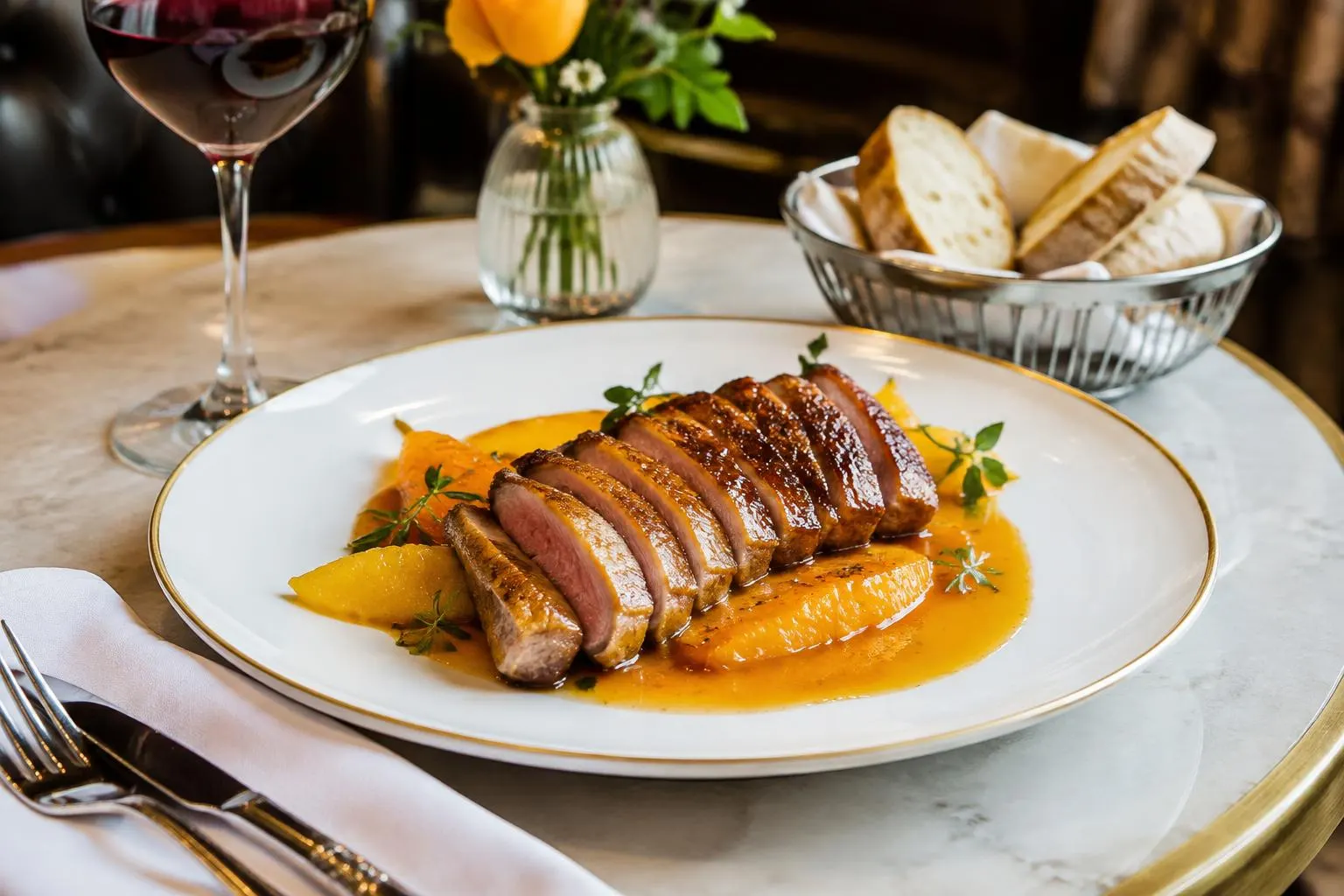
The skin crackles, the meat yields, and a glossy drop of orange sauce clings to the fork. That single drop often has more say in the wine pairing than the whole duck. Automatically reach for the most powerful red on the shelf, and you overlook a small citrus fruit with considerable influence. For a savoury, subtly sweet sauce, fruity Spätburgunder and Gamay are good candidates. For a sweeter version, a Riesling with noticeable residual sweetness can step forward.
The Sauce Leads the Conversation
Duck à l’orange can taste surprisingly different from one version to the next. A sauce made from stock, orange juice and a little caramelised sugar may stay savoury and tangy. A generous helping of marmalade, honey or heavily reduced juice shifts the dish distinctly towards sweetness. That makes it worth waiting until the sauce is fully seasoned before choosing the wine. A spoonful straight from the pan offers more guidance than the recipe photograph.
Sweetness in food makes wine seem drier, more acidic and more bitter. With a noticeably sweet sauce, the wine should therefore taste at least as sweet. A bone-dry red can quickly lose its charming fruit, leaving tannin at the forefront. At the same time, the orange’s acidity calls for a wine with sufficient acidity of its own. Acidity in food makes wine seem less acidic, fuller and sweeter. Salt Meets Acidity also explores how this interplay works.
Three Guests for the Crisp Skin
A fruit-forward Spätburgunder with restrained oak use is particularly good with duck breast cooked pink and a lightly sweetened sauce. Its red fruit offers a pleasing contrast to the deep roasted flavours. The acidity refreshes the palate after a bite of skin, without the wine needing to overpower the tender meat beneath. Lots of new oak and harsh tannins are usually less helpful here than juiciness and a supple feel.
Gamay, from Beaujolais, for example, offers a second red-wine direction. Think lively and not overly extracted, rather than the heaviest possible powerhouse. With roasted duck legs and a savoury orange sauce, this can feel wonderfully effortless. If you see the crisp skin rather than the citrus note as the centre of attention, Roast Pork with Crackling offers a related line of thought, though the sauce has a different say there.
An off-dry Riesling is not a fallback but a choice in its own right. Its citrus fruit echoes the orange, while its acidity provides a counterpoint to the fat. A more heavily sweetened sauce may require a style with considerably more residual sweetness. The designation feinherb alone does not guarantee any particular level of sweetness. When in doubt, a sip alongside a small spoonful of sauce is more useful than the prettiest label.
When the Orange Shows Its Bitter Side
Orange peel brings fragrance, but also bitterness. Too much white pith or heavily reduced peel can give the pairing a harder edge. Bitterness in food and tannin in wine have a cumulative effect on the palate. A tannin-rich Cabernet is therefore not a reliable default choice. A little salt can soften perceived bitterness and tannin, but it is no substitute for a balanced sauce. Adding salt should serve the dish, not have to rescue an ill-suited wine.
The side dishes change the picture, too. Mashed potatoes leave the sauce relatively undisturbed, whereas caramelised carrots increase the overall impression of sweetness. Heavily sweetened red cabbage can shift even a pairing that began on savoury ground. The sauce also matters with Roast Chicken, though duck usually brings more fat and intensity.
Interactive wine selector
How do you prepare Duck à l’orange?
The default is a typical preparation. Adjust the settings to how your dish actually tastes, and the suggestions update instantly.
Wine styles to suit your dish
Choice 1
Nebbiolo, such as Barolo
Why it works: tannins and structure stand up to fat and protein and the tannins find a match in the meat.
Choice 2
Off-dry or fruity-sweet Riesling Kabinett
Why it works: acidity and freshness cut through the fat and it is low in tannins and handles umami well.
Get to know the Riesling grape varietyChoice 3
Gewürztraminer with residual sweetness
Why it works: it is at least as sweet as the dish and it is low in tannins and handles umami well.
Get to know the Gewürztraminer grape variety
Best avoided – Weißburgunder. As a rule here, sweetness in the food makes it taste sour and bitter. Individual wines may vary.
The suggestions are wine styles, not specific bottles. Taste is personal, so feel free to try something that breaks the rules.
A Little Sauce Comparison at the Table
Serve the red wine lightly chilled rather than leaving it to warm up beside the stove. Riesling should be cool, but not so icy that its fruit is barely discernible. For an alcohol-free option, an apple-orange spritz that is not too bitter works well, with its sweetness adjusted to the sauce. It does not imitate wine, but it does bring fruit and refreshment.
For a home test, divide a little sauce between two spoons and lightly sweeten just one. Taste the same Spätburgunder with each, followed by a Riesling with residual sweetness. Notice when the red fruit recedes and when the Riesling feels balanced. Suddenly, the supposedly difficult duck becomes a rather easy host to understand.
Brief and honest
- Fruity Spätburgunder – Suits a savoury orange sauce with little sweetness. Moderate tannins give the fruit room. More about Spätburgunder
- Juicy Gamay from Beaujolais – Accompanies roasted flavours and duck meat without weighing them down with lots of tannin. More about Gamay
- Off-dry to residually sweet Riesling – Its acidity refreshes the palate alongside the fat. The residual sweetness needed depends on the sweetness of the sauce. More about Riesling
Wine advisor: find the right grape variety in three questions · All grape varieties at a glance
Probably not – Tannin-rich, heavily oaked Cabernet Sauvignon. Sweetness and bitter orange peel can accentuate its bitterness. With a very savoury sauce, the pairing is less challenging.
Alcohol-free – A mellow apple-orange spritz with water offers fruit and freshness. Adjust its sweetness to the sauce and avoid intensely bitter orange peel.
How helpful was this article?
No sign-up and no cookies. We only store the stars, the article and a non-traceable identifier that changes daily to prevent repeat ratings. Ratings appear only after editorial review.
Try this at home
Divide orange sauce between two spoons and lightly sweeten one. With each, taste a fruity Spätburgunder first, then a Riesling with residual sweetness. Compare the fruit, bitterness and perceived acidity.
What this article is based on
- WSET Level 2 Award in Wines, Spezifikation mit dem Kapitel zu Wein und Speisen
- Wine & Spirit Education Trust (WSET), How to pair wine with your favourite takeaway meals
The scenes in this article are illustrative stories, not reporting. The basic rules follow WSET teaching; personal taste may differ.