Vegetables & plant-based food · Roasted pumpkin with tahini, chili and pumpkin seeds
When Pumpkin Turns Golden at the Edges
Roasted pumpkin with tahini pairs well with a fruity Grauburgunder that is not too dry, or an off-dry Chenin Blanc. When there is a noticeable hit of chili, an off-dry Riesling with moderate alcohol is often the more easygoing choice, as a little residual sugar cushions the heat.
- Sweet
- Bitter
- Rich & creamy
- Spicy
- Smoky
4 min read · Rebe & Traube editorial team
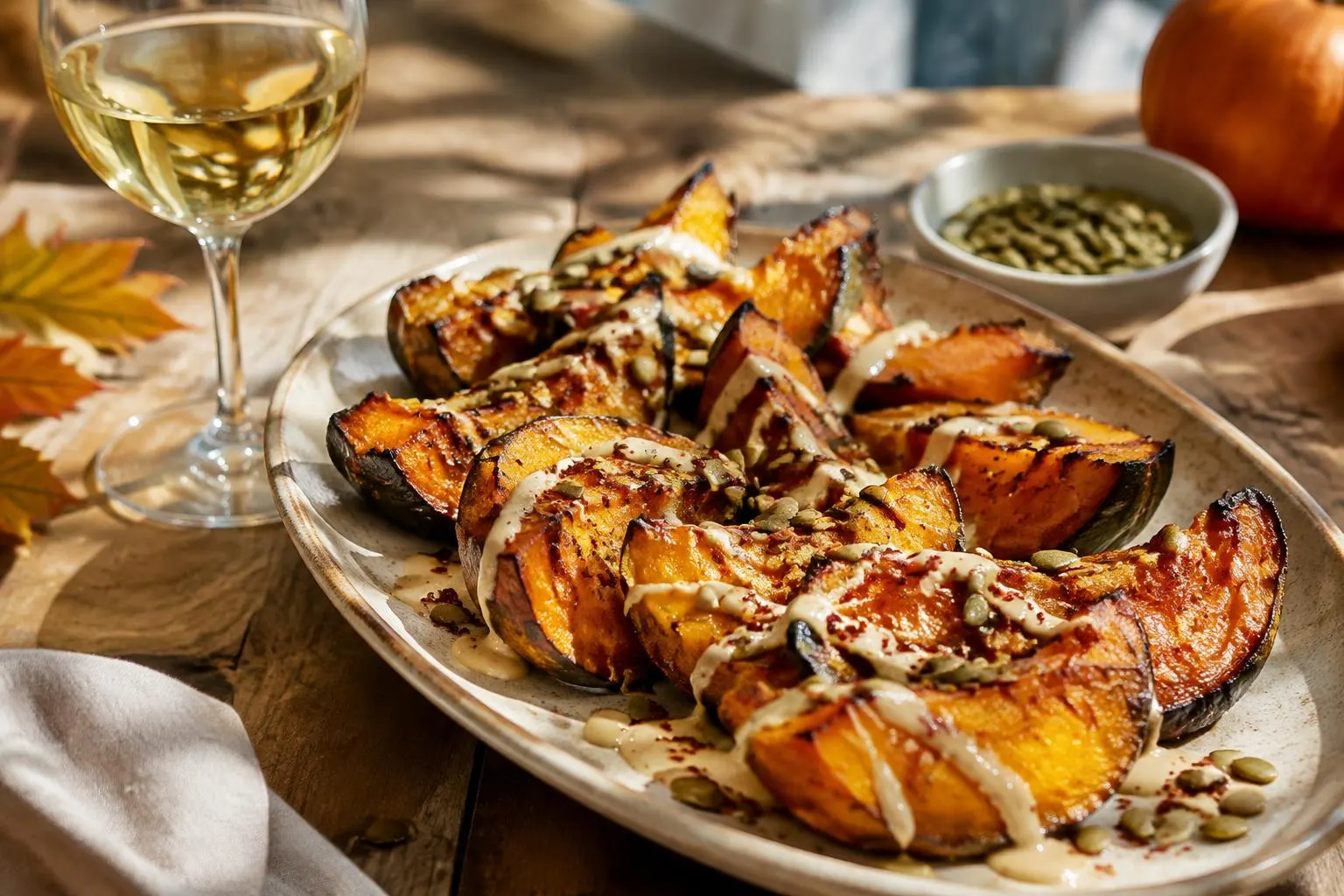
The best pieces of pumpkin are often the ones that have clung to the baking tray a little. Their edges turn brown and crisp, while the insides stay soft. Tahini runs over them, a few pumpkin seeds crunch between your teeth, and somewhere a chili flake is hiding. It sounds like an uncomplicated dinner. For the wine, though, it is a small meeting with several voices asking to be heard.
The most reliable direction is white, fruity and not bone-dry. A supple Grauburgunder suits the soft texture; an off-dry Chenin Blanc brings the sweetness and sesame together. When the heat is noticeable, an off-dry Riesling with fairly low alcohol has more going for it. What matters is less the color of the pumpkin than what goes on top after roasting.
Sweet Flesh, Dark Edges
Pumpkin is naturally a little sweet. As it roasts, it loses water, its flavor becomes more concentrated, and browning aromas develop on surfaces that are sufficiently hot and dry. That does not turn the vegetable into dessert. Even so, its sweetness can make a very dry wine seem harsher: less fruity, more acidic and more bitter. Deeply roasted butternut squash, in particular, therefore calls for something other than a lean, austere white wine.
The practical guideline is that the wine should taste at least as sweet as the food. With only mildly sweet pumpkin seasoned in a savory way, the fruitiness of a dry wine may be enough. It will not, however, reliably balance a distinctly sweet taste. If the pumpkin tastes clearly sweet, a little residual sugar is the safer choice. Honey or maple syrup shifts that threshold further. If you drizzle either over the tray, choose a correspondingly sweeter wine or leave out the extra sweetness.
Dark roasted patches also bring bitterness. A few are appealing; blackened edges, less so. Combined with plenty of tannin in the wine, this can taste bitter and leave your gums feeling dry. A powerful Cabernet is therefore not automatically the right partner simply because something has come out of the oven.
Tahini Has a Say
Sesame paste coats the tongue with a creamy film and brings its own, sometimes pronounced, bitterness. Acidity in the wine provides freshness alongside it, without chemically removing the fat from the food. A Grauburgunder with juicy pear fruit and little oak influence can work beautifully here. A particularly high-alcohol version that tastes bitter would be less helpful.
If the tahini sauce is made with plenty of lemon, the wine needs enough acidity of its own. Acidity in food makes wine seem softer, fuller and sweeter. That can pleasantly round out a lively Chenin Blanc, but leave an already low-acid wine seeming a little tired. Salt Meets Acidity also explains the basic principle. Salt in the sauce can soften perceived bitterness. It is still no remedy for burnt sesame.
With chili, the amount matters. High alcohol can intensify the burning sensation; a little residual sugar can cushion it. Roasted flavors do not necessarily demand a powerful wine, then. A light-footed Riesling, in particular, can hold the evening together when sweetness, fat and heat all share the plate.
Three Routes to a Golden Tray
For the mild version, with little lemon and barely any chili, a fruity Grauburgunder is the approachable choice. With more lemon juice and a rich sesame sauce, an off-dry Chenin Blanc is worth considering, perhaps from the Loire. Its acidity keeps the combination lively. A subtle touch of oak can suit the toasted seeds; pronounced new oak is not needed for that.
If chili takes the lead, I would reach for an off-dry Riesling. If you are serving creamy rice instead of pumpkin, Truffle and Porcini Risotto offers a related texture but a different flavor challenge. And once the tray-baked dish gives way to a spiced pulse dish, it is worth looking at Dal and Chickpeas.
Interactive wine selector
How do you prepare Roasted pumpkin with tahini, chili and pumpkin seeds?
The default is a typical preparation. Adjust the settings to how your dish actually tastes, and the suggestions update instantly.
Wine styles to suit your dish
Choice 1
Off-dry or fruity-sweet Riesling Kabinett
Why it works: fruitiness and a little sweetness soften the heat and it is at least as sweet as the dish.
Get to know the Riesling grape varietyChoice 2
Prosecco extra dry
Why it works: it is at least as sweet as the dish and fruitiness and a little sweetness soften the heat.
Get to know the Glera (Prosecco) grape varietyChoice 3
Gewürztraminer with residual sweetness
Why it works: it is at least as sweet as the dish and fruitiness and a little sweetness soften the heat.
Get to know the Gewürztraminer grape variety
Best avoided – Syrah or Shiraz. As a rule here, alcohol and tannins intensify the heat. Individual wines may vary.
The suggestions are wine styles, not specific bottles. Taste is personal, so feel free to try something that breaks the rules.
Divide First, Then Season
For a small experiment at the table, leave two pieces of pumpkin without sauce to begin with. Top one with just salted tahini, and add lemon and a small pinch of chili to the other as well. Taste the same off-dry Riesling after each bite. You will quickly notice how much the seasoning changes the wine's effect, even though the vegetable stays the same.
For an alcohol-free pairing, try a cool apple tea that is not too sweet, with a splash of cloudy apple juice and a little lemon. It offers fruit and freshness, but not the fullness of a wine. With plenty of chili, a little more juice can go into the glass. The tray will still come back empty.
Brief and honest
- Fruity Grauburgunder with little oak influence – Suits the soft pumpkin texture and mild tahini sauce. With distinctly sweet pumpkin, a version with a little residual sugar is a better choice. More about Grauburgunder
- Off-dry Chenin Blanc from the Loire – Combines fruit and a little sweetness with lively acidity. That is particularly helpful with a lemony sesame sauce. More about Chenin Blanc
- Off-dry Riesling with moderate alcohol – A little residual sugar cushions the chili, while the acidity provides freshness alongside the sesame paste. With very sweet pumpkin, the wine should be correspondingly sweeter too. More about Riesling
Wine advisor: find the right grape variety in three questions · All grape varieties at a glance
Probably not – High-alcohol, tannin-forward Cabernet Sauvignon. Its tannin can intensify the bitterness of tahini and dark roasted patches, and its alcohol can amplify the chili heat. Without chili and with little sesame, a softer red wine can certainly work.
Alcohol-free – Cool apple tea with a little cloudy apple juice and a little lemon provides fruit and freshness. With plenty of chili, a little more juice helps, though the drink does not match the fullness of a wine.
How helpful was this article?
No sign-up and no cookies. We only store the stars, the article and a non-traceable identifier that changes daily to prevent repeat ratings. Ratings appear only after editorial review.
Try this at home
Leave two pieces of pumpkin without sauce to begin with. Top one with salted tahini, and add lemon and a small pinch of chili to the second as well. Taste the same off-dry Riesling after each bite and compare the fruit, perceived acidity and heat.
What this article is based on
- WSET Level 2 Award in Wines, Spezifikation mit dem Kapitel zu Wein und Speisen
- Wine & Spirit Education Trust (WSET), How to pair wine with your favourite takeaway meals
The scenes in this article are illustrative stories, not reporting. The basic rules follow WSET teaching; personal taste may differ.